
Cobalt 60
Cobalt 60 is a radioactive isotope with a long-established role in oncology, used to deliver targeted radiation to cancerous tumors. Its application in external beam radiation therapy has shaped the foundation of modern cancer treatment for decades.
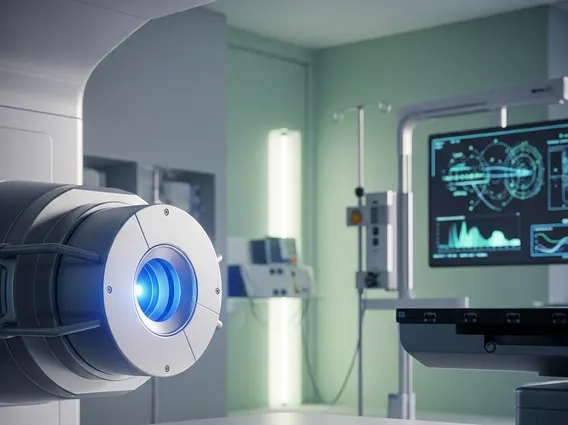
Key Takeaways
- Cobalt 60 emits gamma rays that destroy cancer cells by damaging their DNA.
- It is primarily used in teletherapy machines to treat solid tumors from outside the body.
- Linear accelerators have largely replaced Cobalt 60 units in high-income countries due to superior dose precision.
- Cobalt 60 remains in active use in low- and middle-income countries because of its reliability and lower maintenance requirements.
- Its role in modern oncology is focused but limited, with continued relevance in specific clinical and resource-limited settings.
How Cobalt 60 Radiation Therapy Works in Cancer Treatment
Cobalt 60 radiation therapy delivers high-energy gamma rays produced by the radioactive decay of the Cobalt 60 isotope. These gamma rays penetrate tissue and damage the DNA of rapidly dividing cancer cells, preventing them from reproducing. The radiation is directed at the tumor site from outside the body, making it a non-invasive treatment approach.
In clinical practice, a Cobalt 60 source is housed within a shielded machine. During treatment, the source is exposed to allow a focused beam of gamma rays to reach the target area. The energy emitted — approximately 1.17 and 1.33 megaelectron volts — is sufficient to treat deep-seated tumors while sparing some surrounding healthy tissue. Treatment sessions are typically short, and patients may receive multiple fractions over several weeks depending on their diagnosis.
Cobalt 60 is used in cancer treatment for a range of tumor types, including cancers of the head and neck, cervix, lung, and breast. According to the International Atomic Energy Agency (IAEA), teletherapy units using this isotope have been essential tools for radiation oncology programs in developing regions for many years.
Cobalt 60 Teletherapy vs. Linear Accelerator: Key Differences
Cobalt 60 teletherapy refers to external beam radiation delivered via a machine containing a Cobalt 60 radioactive source, while a linear accelerator (LINAC) generates X-rays electronically without a radioactive isotope. Both approaches target tumors externally, but they differ significantly in technical capability, maintenance, and clinical precision.
| Feature | Cobalt 60 Teletherapy | Linear Accelerator |
|---|---|---|
| Radiation source | Radioactive isotope (Cobalt 60) | Electrically generated X-rays |
| Beam energy | Fixed (~1.25 MeV average) | Variable (4–25 MeV) |
| Dose conformity | Moderate | High (IMRT, VMAT capable) |
| Maintenance needs | Low; no electricity required to produce radiation | High; requires consistent technical support |
| Cost | Lower initial and operating cost | Higher capital and maintenance cost |
| Primary use setting | Low- and middle-income countries | High-income, specialized centers |
The Cobalt 60 vs linear accelerator comparison in radiation treatment highlights a trade-off between accessibility and precision. LINACs offer advanced techniques such as intensity-modulated radiation therapy, which allows clinicians to sculpt radiation dose around complex tumor shapes. Cobalt 60 units, while less flexible, operate independently of electrical infrastructure, making them more dependable in settings where power supply is inconsistent.
Current Role and Limitations in Modern Oncology
In high-income countries, Cobalt 60 teletherapy in oncology has largely been replaced by linear accelerators, which offer greater dosimetric control and the ability to spare adjacent healthy structures more effectively. However, Cobalt 60 retains a meaningful role in global cancer care. The IAEA estimates that over half of the world’s cancer patients who need radiation therapy lack access to it, and Cobalt 60 units help bridge this gap in underserved regions.
Key limitations of Cobalt 60 include:
- The radioactive source decays over time (half-life of approximately 5.27 years), requiring periodic replacement.
- Fixed beam energy limits the ability to customize dose distribution for complex cases.
- Radiation is emitted continuously, requiring robust shielding when the machine is not in use.
Despite these constraints, Cobalt 60 continues to serve an important function in oncology programs where LINACs are not available or sustainable. Regulatory bodies and international health organizations continue to oversee its safe use, ensuring that patients in resource-limited settings can still access effective radiation therapy for cancer treatment.



















