Beckwith Wiedemann Syndrome
Beckwith Wiedemann Syndrome (BWS) is a rare genetic overgrowth disorder characterized by a range of distinctive features and an increased risk of certain childhood cancers. This condition is typically diagnosed at birth or shortly thereafter, requiring careful monitoring and management.

Key Takeaways
- Beckwith Wiedemann Syndrome is a rare genetic disorder causing overgrowth and various physical characteristics.
- It is primarily caused by genetic changes on chromosome 11, often involving the regulation of growth-related genes.
- Common symptoms include macrosomia, macroglossia, omphalocele, and an increased risk of specific tumors like Wilms tumor.
- Management involves regular screening for tumors, surgical correction of certain features, and supportive care.
- Early diagnosis and multidisciplinary care are crucial for optimizing outcomes for individuals with BWS.
What is Beckwith Wiedemann Syndrome?
Beckwith Wiedemann Syndrome (BWS) is a congenital overgrowth disorder primarily affecting growth and development. It is characterized by a predisposition to tumor development, particularly during childhood, and a variety of physical features. This rare condition affects approximately 1 in 10,000 to 1 in 13,700 live births worldwide, as reported by the National Organization for Rare Disorders (NORD).
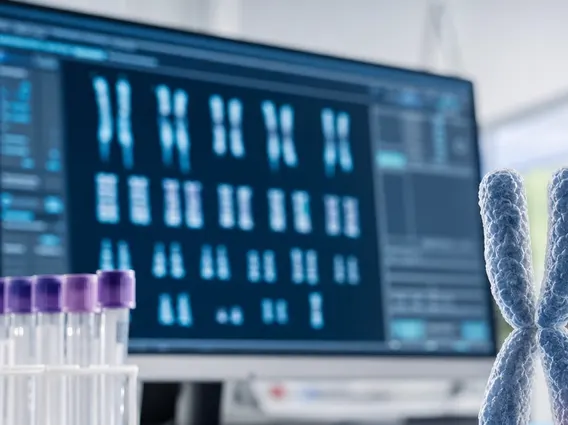
BWS is considered an epigenetically regulated disorder, meaning it involves changes in gene expression rather than alterations in the DNA sequence itself. The syndrome is associated with abnormalities on chromosome 11p15.5, a region that contains genes crucial for regulating growth. These genetic changes can occur spontaneously (sporadic cases) or be inherited, with various molecular mechanisms leading to the characteristic features of the syndrome.
Beckwith Wiedemann Syndrome Symptoms and Causes
The Beckwith Wiedemann Syndrome symptoms and signs vary, but commonly include macrosomia (larger body size at birth), macroglossia (enlarged tongue), and omphalocele (abdominal wall defect). Other features may involve earlobe creases or pits, facial nevus flammeus, and neonatal hypoglycemia. Affected individuals also face an increased risk of childhood tumors, such as Wilms tumor (a kidney cancer) and hepatoblastoma (a liver cancer), necessitating regular screening.
The primary causes of Beckwith Wiedemann Syndrome are genetic and epigenetic alterations on chromosome 11p15.5, a region vital for growth regulation. These changes often involve imprinting centers (IC1 and IC2) and can manifest as:
- Loss of methylation at IC2 (approximately 50% of cases), leading to overexpression of growth-promoting genes.
- Paternal uniparental disomy of 11p15.5 (approximately 20% of cases), where both copies of chromosome 11p15.5 are inherited from the father.
- Gain of methylation at IC1 (approximately 5-10% of cases), affecting the expression of the H19 and IGF2 genes.
- Mutations in the CDKN1C gene (approximately 5-10% of cases), which is a cell cycle inhibitor.
Approximately 15-20% of BWS cases lack an identified molecular cause, suggesting other genetic or epigenetic factors. Understanding these underpinnings is crucial for accurate diagnosis and genetic counseling.
Beckwith Wiedemann Syndrome Treatment Options
Management for individuals with Beckwith Wiedemann Syndrome treatment options is multidisciplinary and highly individualized, focusing on specific symptoms and tumor risk mitigation. A rigorous tumor surveillance protocol is crucial, typically involving regular abdominal ultrasounds and blood tests (e.g., alpha-fetoprotein for hepatoblastoma) from birth through early childhood, often until 7-8 years of age.
Surgical interventions address physical anomalies, such as glossectomy for macroglossia to improve feeding and speech, and repair of omphalocele and umbilical hernias. Neonatal hypoglycemia is managed with glucose monitoring and supplementation to prevent neurological complications.
Ongoing care involves a team of specialists, including pediatricians, geneticists, oncologists, and surgeons. Physical therapy may address hemihyperplasia, and genetic counseling helps families understand inheritance patterns. Proactive management and early intervention significantly improve quality of life and long-term outcomes for affected children, with regular follow-up essential for prompt complication detection and treatment.