Hurthle Cell Neoplasm
Hurthle Cell Neoplasm is a type of thyroid tumor characterized by the presence of specific cells known as Hurthle cells. Understanding this condition is crucial for proper diagnosis and management, as it can be either benign or malignant.

Key Takeaways
- Hurthle Cell Neoplasm is a growth in the thyroid gland composed of Hurthle cells, which can be benign or cancerous.
- Common symptoms include a palpable thyroid nodule or a lump in the neck, with many cases being asymptomatic.
- Diagnosis typically involves physical examination, imaging, and fine needle aspiration (FNA) biopsy, though definitive diagnosis often requires surgical removal.
- The primary treatment for Hurthle Cell Neoplasm, especially when malignancy cannot be ruled out, is surgical removal of part or all of the thyroid gland.
- Ongoing monitoring is essential due to the potential for recurrence or the development of new nodules.
What is Hurthle Cell Neoplasm?
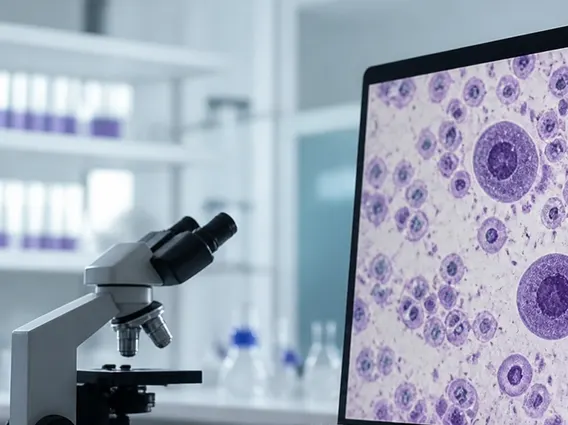
Hurthle Cell Neoplasm refers to a growth within the thyroid gland characterized by an accumulation of Hurthle cells. These cells are a specific type of follicular cell that have undergone changes, appearing larger and with abundant eosinophilic (pink-staining) cytoplasm under a microscope. While the term “neoplasm” indicates an abnormal growth, it does not inherently mean cancer. Hurthle cell neoplasms can be either benign (non-cancerous) or malignant (cancerous), with the malignant form being known as Hurthle cell carcinoma, a subtype of follicular thyroid cancer. Distinguishing between benign and malignant forms often requires surgical removal and detailed pathological examination of the entire tumor, as fine needle aspiration (FNA) biopsies may not always provide a definitive answer regarding malignancy due to the need to assess capsular or vascular invasion.
Hurthle cell carcinoma accounts for approximately 3-5% of all differentiated thyroid cancers, making it a relatively rare but significant diagnosis. According to the American Thyroid Association, these tumors tend to be more aggressive than other forms of differentiated thyroid cancer and may not respond as well to radioactive iodine therapy, which is a common treatment for other thyroid cancers.
Symptoms and Causes of Hurthle Cell Neoplasm
The presence of a Hurthle cell neoplasm often presents with few, if any, noticeable symptoms in its early stages. Many individuals discover they have a thyroid nodule incidentally during routine physical examinations or imaging tests performed for other conditions. When symptoms do occur, they are typically related to the physical presence of a mass in the neck. Common indicators that might suggest the presence of a Hurthle cell neoplasm include:
- A palpable lump or nodule in the front of the neck.
- Difficulty swallowing (dysphagia) if the nodule is large enough to compress the esophagus.
- Hoarseness or changes in voice, which may indicate pressure on the recurrent laryngeal nerve.
- Neck discomfort or a feeling of pressure.
Regarding the hurthle cell neoplasm symptoms causes, the exact causes for the development of Hurthle cell neoplasms are not fully understood. Like many thyroid conditions, a combination of genetic and environmental factors is thought to play a role. Exposure to radiation, particularly during childhood, is a known risk factor for thyroid cancers in general, including Hurthle cell carcinoma. Family history of thyroid disease may also increase an individual’s susceptibility. However, in many cases, no clear cause can be identified, and the neoplasm appears to arise spontaneously.
Diagnosing and Treating Hurthle Cell Neoplasm
Diagnosing Hurthle Cell Neoplasm involves a multi-step process to evaluate the thyroid nodule and determine its nature. The initial assessment typically includes a physical examination of the neck, blood tests to check thyroid hormone levels, and an ultrasound of the thyroid gland to characterize the nodule’s size, shape, and features. If the ultrasound findings are suspicious, a fine needle aspiration (FNA) biopsy is often performed. During an FNA, a thin needle is used to collect cells from the nodule, which are then examined under a microscope by a pathologist. While FNA can identify Hurthle cells, it often cannot definitively distinguish between a benign Hurthle cell adenoma and a malignant Hurthle cell carcinoma because this distinction relies on identifying capsular or vascular invasion, which requires examination of the entire tumor.
Due to the diagnostic limitations of FNA, surgical removal of the thyroid nodule or a portion of the thyroid gland is frequently necessary for definitive diagnosis and is the primary approach for hurthle cell neoplasm treatment options. The extent of surgery depends on the size and characteristics of the nodule, as well as the initial FNA results. Options range from a lobectomy (removal of one lobe of the thyroid) to a total thyroidectomy (removal of the entire thyroid gland). If Hurthle cell carcinoma is confirmed after surgery, further treatment with radioactive iodine (RAI) therapy may be considered, although Hurthle cell carcinomas are often less responsive to RAI compared to other differentiated thyroid cancers. Lifelong thyroid hormone replacement therapy is necessary after a total thyroidectomy. Regular follow-up with an endocrinologist is crucial for monitoring thyroid hormone levels and detecting any potential recurrence.
| Aspect | Description |
|---|---|
| Initial Assessment | Physical exam, thyroid function tests, thyroid ultrasound. |
| Primary Diagnostic Tool | Fine Needle Aspiration (FNA) biopsy, often inconclusive for malignancy. |
| Definitive Diagnosis | Surgical removal of the nodule/thyroid lobe for pathological examination. |
| Main Treatment | Surgery (lobectomy or total thyroidectomy). |
| Adjuvant Therapy (if malignant) | Radioactive iodine (RAI) therapy, though effectiveness can vary. |
| Post-Treatment Care | Lifelong thyroid hormone replacement (if total thyroidectomy), regular monitoring. |