
Gross Description
Gross Description is a fundamental process in medicine, particularly in pathology, involving the macroscopic examination and detailed documentation of biological specimens. This initial visual assessment is crucial for understanding the nature of tissues and guiding further diagnostic steps.
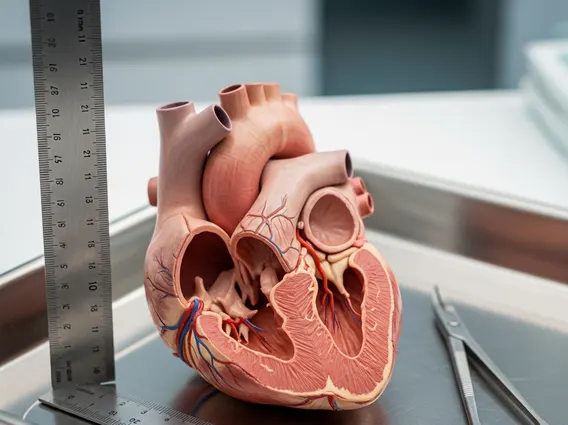
Key Takeaways
- Gross Description involves the visual examination and detailed recording of surgical tissues or autopsy findings without the aid of a microscope.
- It serves as the critical first step in the pathological diagnostic process, providing essential context for microscopic analysis.
- The primary gross description meaning and purpose is to create an objective, comprehensive record of a specimen’s macroscopic features.
- Effective documentation requires a systematic approach, precise terminology, and attention to detail regarding size, shape, color, and texture.
- Accurate gross descriptions are vital for guiding tissue sampling, ensuring correct diagnosis, and informing patient treatment plans.
What is Gross Description?
Gross Description refers to the process of visually examining and documenting the macroscopic features of a surgical specimen, biopsy, or organ from an autopsy. This examination is performed with the naked eye, without the use of a microscope, focusing on characteristics that are observable at a large scale. It involves a systematic assessment of the specimen’s size, shape, weight, color, consistency, and any visible abnormalities or lesions. The objective is to create a comprehensive and objective record that accurately reflects the specimen’s appearance before any further processing, such as sectioning for microscopic examination, takes place.
This initial assessment provides critical information that helps pathologists understand the overall context of the disease process. It guides the selection of specific areas for microscopic analysis, ensuring that representative and abnormal tissues are sampled appropriately. A well-executed gross description lays the groundwork for an accurate pathological diagnosis, serving as a vital link between the clinical presentation and the microscopic findings.
Gross Description in Pathology: Purpose and Importance
The role of gross description in pathology is paramount, serving as the foundational step in the diagnostic workflow for virtually all surgical and autopsy specimens. Its primary purpose is to provide a detailed, objective, and permanent record of the specimen’s macroscopic appearance. This record is essential for several reasons, including guiding subsequent microscopic examination, facilitating accurate diagnosis, and ensuring proper patient care. The gross description meaning and purpose are intertwined, as its significance lies in creating a comprehensive visual narrative that supports the entire diagnostic process.
Key aspects documented during a gross description include:
- Specimen Type and Orientation: Identifying the organ or tissue and its anatomical position if relevant.
- Dimensions and Weight: Precise measurements of the specimen’s size and mass.
- External Appearance: Describing the surface features, color, and texture.
- Cut Surfaces: Documenting the internal architecture, presence of lesions, and their characteristics (e.g., size, color, consistency, relationship to margins).
- Pathological Findings: Highlighting any abnormalities, tumors, cysts, or inflammatory changes.
This meticulous documentation ensures that all relevant macroscopic details are captured, allowing for a thorough correlation with clinical data and microscopic findings. It also serves as a crucial reference point for future consultations or research, underscoring its importance in maintaining high standards of diagnostic accuracy and patient safety.
How to Write a Gross Description
Learning how to write a gross description effectively is a core skill for pathologists and pathology residents, requiring a systematic approach, keen observation, and precise language. The goal is to convey all relevant macroscopic information clearly and concisely, enabling anyone reading the description to visualize the specimen accurately. A well-written gross description is objective, avoiding interpretive language and focusing strictly on observable facts.
Here are key principles for writing an effective gross description:
- Systematic Approach: Always follow a consistent order (e.g., specimen type, dimensions, weight, external features, cut surfaces, pathological findings). This ensures completeness and readability.
- Objective Language: Describe what is seen, not what is inferred. Use descriptive adjectives for color, consistency, and texture (e.g., “tan-white,” “rubbery,” “granular”).
- Precise Measurements: Provide accurate dimensions in centimeters (cm) and weight in grams (g). For lesions, measure all three dimensions.
- Anatomical Orientation: If applicable, clearly state the orientation of the specimen (e.g., “medial margin,” “superior aspect”) to aid in understanding surgical margins.
- Detailed Lesion Description: For any abnormalities, describe their size, shape, color, consistency, location, and relationship to surrounding tissues or margins.
- Sectioning Protocol: Document how the specimen was sectioned and which areas were submitted for microscopic examination, including the number of cassettes.
Using standardized terminology and abbreviations, where appropriate, enhances clarity and consistency across different reports. Training and experience are vital in developing the skill to efficiently and accurately document the diverse range of specimens encountered in pathology.



















