Fiberoptic
Fiberoptic technology is a cornerstone in modern medicine, revolutionizing diagnostic procedures and surgical interventions by enabling unparalleled visualization of internal body structures. This advanced method utilizes thin, flexible fibers to transmit light, providing clinicians with crucial insights without the need for extensive invasive surgery.
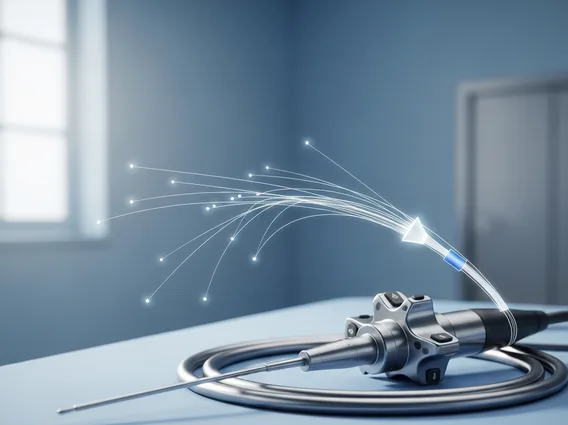
Key Takeaways
- Fiberoptic technology in medicine involves using thin fibers to transmit light for internal body visualization.
- It operates on the principle of total internal reflection, guiding light through a core and cladding.
- Medical applications include endoscopy, minimally invasive surgery, and various diagnostic imaging techniques.
- Fiberoptic cables offer significant advantages over copper, such as higher bandwidth, immunity to electromagnetic interference, and enhanced safety in clinical environments.
- The global endoscopy devices market, heavily reliant on fiberoptic advancements, continues to grow, underscoring its importance in healthcare.
What is Fiberoptic Technology?
Fiberoptic technology refers to the use of optical fibers—extremely thin strands of glass or plastic—to transmit light signals over distances. In a medical context, this technology is fundamental to instruments like endoscopes, which allow healthcare professionals to view the inside of the body without major incisions. These devices are crucial for diagnosing conditions, performing biopsies, and conducting minimally invasive surgical procedures across various specialties, including gastroenterology, pulmonology, and urology.
The application of Fiberoptic technology extends beyond direct visualization. It is also integral to various diagnostic tools that require precise light delivery or signal transmission, such as certain types of sensors used for monitoring physiological parameters. Its ability to deliver high-resolution images and light into confined spaces has made it indispensable for advancing patient care and reducing recovery times associated with traditional open surgeries.
How Does Fiber Optic Cable Work?
The fundamental principle behind how a fiber optic cable works is total internal reflection. Each optical fiber consists of a transparent core, typically made of glass, surrounded by a cladding material with a lower refractive index. When light enters the core at a certain angle, it strikes the boundary between the core and the cladding. Because the cladding has a lower refractive index, the light does not escape but is instead reflected back into the core. This process repeats continuously, allowing light to travel along the fiber, even around bends, with minimal signal loss.
In medical instruments, such as endoscopes, bundles of these tiny fibers are used. Some fibers transmit light from an external source into the body cavity, illuminating the area of interest. Other fibers collect the reflected light or images and transmit them back to an eyepiece or a camera, allowing the clinician to observe the internal anatomy on a monitor. This intricate mechanism enables detailed examination and precise intervention within the body.
Fiber Optic vs. Copper Cable: Advantages
When comparing fiber optic vs copper cable in medical settings, fiber optics present several critical advantages that enhance safety, efficiency, and diagnostic capabilities. Traditional copper cables transmit electrical signals, making them susceptible to electromagnetic interference (EMI) from other medical equipment, which can compromise data integrity. Fiberoptic cables, by contrast, transmit light signals and are immune to EMI, ensuring stable and reliable data transmission, which is paramount in critical care and diagnostic imaging.
Furthermore, the benefits of fiber optics include significantly higher bandwidth, allowing for the transmission of large volumes of high-resolution image and video data quickly and efficiently. This is vital for advanced diagnostic imaging and real-time surgical guidance. Fiberoptic cables are also lighter, smaller, and more flexible than copper, facilitating the design of more delicate and maneuverable medical instruments. Their non-electrical nature also eliminates the risk of sparking or electrical shock, a crucial safety consideration in operating rooms and patient environments.
According to Grand View Research, the global endoscopy devices market, heavily reliant on fiberoptic technology, was valued at USD 35.8 billion in 2022 and is projected to grow at a compound annual growth rate (CAGR) of 7.2% from 2023 to 2030, highlighting the increasing adoption and importance of these advanced systems in healthcare worldwide.
| Feature | Fiber Optic Cable (Medical) | Copper Cable (Medical) |
|---|---|---|
| Signal Type | Light pulses | Electrical signals |
| Bandwidth | Very High (supports high-res imaging) | Lower (can limit data transfer) |
| EMI Immunity | Excellent (no interference from other devices) | Poor (susceptible to interference) |
| Safety | No electrical current, no spark risk | Risk of electrical shock/sparking |
| Size & Weight | Smaller, lighter, more flexible | Larger, heavier, less flexible |
| Data Security | Difficult to tap without detection | Easier to tap electronically |