Micelle
A Micelle is a self-assembling aggregate of amphiphilic molecules, crucial in various biological processes and medical applications. These structures form spontaneously in solutions, playing a vital role in solubility and transport mechanisms.
Key Takeaways
- Micelle is a spherical aggregate of amphiphilic molecules with a hydrophobic core and hydrophilic shell.
- They form above a critical micelle concentration (CMC) due to the hydrophobic effect in aqueous solutions.
- Micelles are stable structures capable of solubilizing poorly water-soluble substances.
- They are essential in natural processes like fat digestion and widely used in drug delivery systems.
- Their unique structure makes them valuable tools in medicine for enhancing drug bioavailability and targeted therapy.
What is a Micelle? Definition and Formation
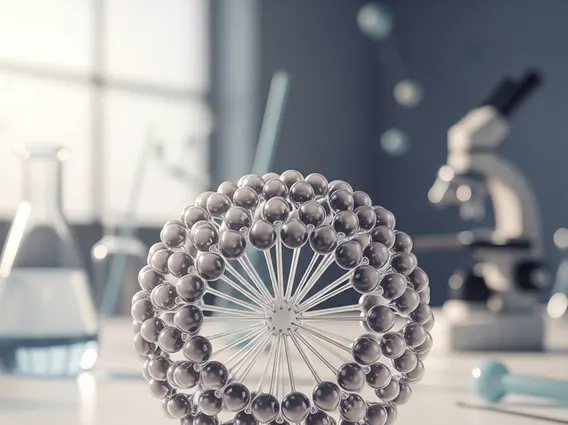
A Micelle refers to a colloidal aggregate of amphiphilic molecules (molecules possessing both hydrophilic, water-loving, and hydrophobic, water-fearing, properties) that spontaneously form in aqueous solutions. The term micelle definition and formation describes how these structures arise from the tendency of hydrophobic parts of molecules to minimize contact with water, while hydrophilic parts interact with water.
This self-assembly process typically occurs above a specific concentration known as the critical micelle concentration (CMC) and above a certain temperature, the Krafft temperature. Below the CMC, the amphiphilic molecules exist individually as monomers. As their concentration increases past the CMC, the hydrophobic effect drives the molecules to aggregate, forming a spherical structure. In this arrangement, the hydrophobic tails cluster together in the core, shielded from the water, while the hydrophilic heads face outwards, interacting with the surrounding aqueous environment.
Micelle Structure and Properties
The characteristic micelle structure and properties are central to their function. Typically, micelles adopt a spherical shape in aqueous solutions, with a diameter ranging from 5 to 100 nanometers. The core of the micelle is entirely hydrophobic, providing a sequestered environment for non-polar substances. Surrounding this core is a shell composed of the hydrophilic head groups, which are solvated by water molecules, ensuring the overall stability and water-solubility of the micelle.
Key properties of micelles include their ability to solubilize hydrophobic compounds, their dynamic nature (constantly forming and dissociating), and their relatively small size. These properties make them ideal carriers for substances that are otherwise insoluble in water. The stability of a micelle is influenced by factors such as the concentration of amphiphiles, temperature, pH, and the presence of electrolytes. In non-polar solvents, inverse micelles can form, where the hydrophilic heads are in the core and the hydrophobic tails extend outwards.
- Hydrophobic Core: Provides a non-polar microenvironment for encapsulating water-insoluble drugs or molecules.
- Hydrophilic Shell: Ensures the overall solubility and dispersibility of the micelle in aqueous media.
- Dynamic Equilibrium: Micelles are not static; they continuously form and break apart, maintaining equilibrium with individual monomers.
- Size: Typically in the nanometer range, allowing them to navigate biological systems effectively.
Micelle Examples and Applications
The versatility of micelles is evident in their numerous natural occurrences and technological applications. In biology, a prime example is the role of bile salts, which form micelles in the digestive system to aid in the absorption of dietary fats and fat-soluble vitamins. Similarly, detergents and soaps form micelles to encapsulate grease and dirt, facilitating their removal during washing. These natural and everyday examples highlight the fundamental principle of micellar action.
In the medical and clinical fields, micelle examples and applications are particularly significant, especially in drug delivery. Micelles are extensively used to enhance the solubility and bioavailability of poorly water-soluble drugs, which constitute a large percentage of new drug candidates. By encapsulating these hydrophobic drugs within their core, micelles enable their stable dispersion in the bloodstream, improving their therapeutic efficacy and reducing side effects. For instance, micellar formulations are explored for anticancer drugs, allowing for targeted delivery to tumor sites and minimizing systemic toxicity. Research continues to advance micellar technology for various therapeutic areas, including gene therapy and diagnostics, underscoring their potential to revolutionize modern medicine.