Sedimentation Rate
The sedimentation rate, also known as the erythrocyte sedimentation rate (ESR), is a common blood test that can reveal inflammatory activity in the body. It serves as a non-specific marker to help detect and monitor various conditions associated with inflammation.
Key Takeaways
- The Sedimentation Rate (ESR) is a blood test measuring how quickly red blood cells settle in a tube over an hour, indicating inflammation.
- A high ESR suggests the presence of inflammation, which can be caused by by infections, autoimmune diseases, or certain cancers.
- The sedimentation rate test explained involves drawing a blood sample and observing the rate at which red blood cells settle.
- Normal sedimentation rate values vary by age and sex, typically being lower for men and younger individuals.
- An elevated ESR is not diagnostic on its own but prompts further investigation to identify the underlying cause of inflammation.
What is Sedimentation Rate (ESR)?
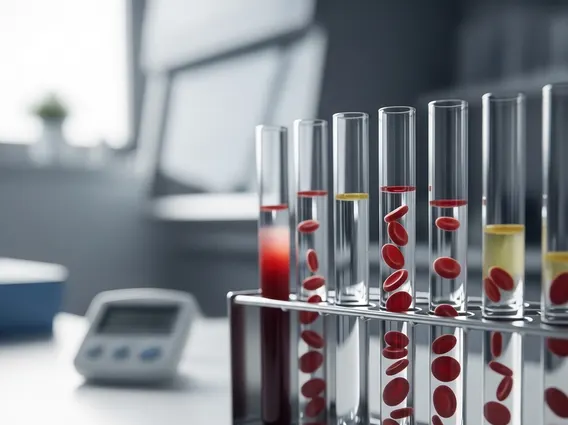
The Sedimentation Rate, often referred to as the erythrocyte sedimentation rate (ESR), is a blood test that measures the rate at which red blood cells (erythrocytes) settle to the bottom of a test tube in one hour. This process is influenced by the presence of certain proteins in the blood, particularly acute-phase reactants, which increase during inflammation. When inflammation is present, these proteins cause red blood cells to clump together and become heavier, making them fall faster. Therefore, a higher ESR typically indicates increased inflammatory activity within the body. It is a non-specific test, meaning it can signal inflammation but does not pinpoint the exact location or cause of that inflammation, requiring further diagnostic evaluation.
Sedimentation Rate Test Explained and Normal Values
The sedimentation rate test explained involves a simple blood draw, usually from a vein in the arm. The blood sample is then placed into a tall, thin tube, and the distance the red blood cells fall in one hour is measured in millimeters (mm). This measurement, expressed as mm/hour, represents the ESR. The principle behind the test is that in inflammatory conditions, increased levels of proteins like fibrinogen and immunoglobulins cause red blood cells to aggregate, increasing their density and leading to a faster sedimentation rate.
Understanding normal sedimentation rate values is crucial for interpreting results. These values can vary based on several factors, including age, sex, and certain medical conditions. Generally, normal ranges are lower for men and younger individuals. It’s important to note that these values are guidelines, and slight deviations may not always indicate a significant health issue. Conversely, an ESR within the normal range does not necessarily rule out disease.
| Category | Normal ESR Range (mm/hr) |
|---|---|
| Men under 50 years | 0–15 |
| Men over 50 years | 0–20 |
| Women under 50 years | 0–20 |
| Women over 50 years | 0–30 |
| Children | 0–10 |
(Source: American College of Rheumatology)
Causes of High Sedimentation Rate
An elevated ESR is a strong indicator of inflammation or tissue damage somewhere in the body. While it doesn’t diagnose a specific condition, it prompts healthcare providers to investigate further. The causes of high sedimentation rate are diverse and can range from mild, self-limiting conditions to serious chronic diseases. Common categories include:
- Infections: Bacterial infections (e.g., pneumonia, urinary tract infections), viral infections, and fungal infections can all trigger an inflammatory response, leading to an increased ESR.
- Autoimmune Diseases: Conditions where the immune system mistakenly attacks healthy tissues, such as rheumatoid arthritis, lupus (systemic lupus erythematosus), and inflammatory bowel disease (Crohn’s disease, ulcerative colitis), are frequently associated with high ESR levels.
- Inflammatory Conditions: Other inflammatory states like giant cell arteritis, polymyalgia rheumatica, and vasculitis can significantly elevate the ESR.
- Cancers: Certain types of cancer, particularly lymphomas, multiple myeloma, and some solid tumors, can cause chronic inflammation and an elevated ESR.
- Kidney Disease: Chronic kidney disease can also lead to an increased ESR due to associated inflammation.
- Thyroid Disease: Conditions like hyperthyroidism or hypothyroidism can sometimes influence ESR levels.
It is crucial to remember that a high ESR is a symptom, not a diagnosis. Further tests, such as C-reactive protein (CRP) levels, specific antibody tests, imaging studies, and biopsies, are often necessary to identify the underlying cause of the elevated sedimentation rate and guide appropriate treatment.