Pi3k
Phosphoinositide 3-Kinase (PI3K) represents a pivotal family of enzymes fundamental to numerous cellular processes, acting as a central hub in intracellular signaling networks. Its intricate involvement in cell growth, survival, and metabolism makes it a critical area of study in medicine and oncology.
Key Takeaways
- Phosphoinositide 3-Kinase (PI3K) is a family of enzymes crucial for regulating fundamental cellular processes.
- The PI3K pathway is a major intracellular signaling cascade activated by various growth factors and hormones.
- Key functions include promoting cell growth, proliferation, survival, and regulating metabolism.
- Dysregulation of the PI3K pathway is frequently implicated in the development and progression of many cancers.
- Understanding PI3K’s mechanisms is vital for developing targeted therapeutic strategies.
What is PI3K (Phosphoinositide 3-Kinase)?
Phosphoinositide 3-Kinase (PI3K) refers to a family of lipid kinases that play a fundamental role in intracellular signal transduction. These enzymes are crucial mediators of signals from various receptors on the cell surface, translating external cues into internal cellular responses. The primary pi3k function in cell biology involves the phosphorylation of phosphatidylinositol-4,5-bisphosphate (PIP2) at the D3 position of the inositol ring to generate phosphatidylinositol-3,4,5-trisphosphate (PIP3).
This enzymatic activity is essential for controlling a wide array of cellular activities, including cell growth, proliferation, differentiation, survival, metabolism, and migration. The PI3K family is broadly categorized into three classes (Class I, II, and III) based on their structure, substrate specificity, and regulatory mechanisms. Class I PI3Ks, in particular, are the most extensively studied due to their significant roles in mediating responses to growth factors and hormones, and their frequent dysregulation in human diseases, especially cancer. Their ability to integrate diverse signals positions them as central regulators of cellular fate and function.
PI3K Signaling Pathway: Mechanisms and Cellular Roles
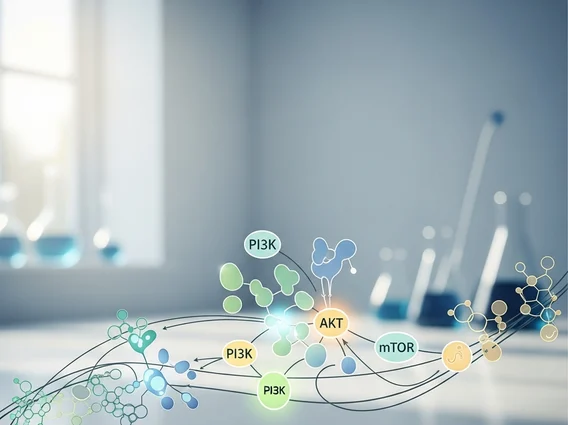
The pi3k signaling pathway explained describes a complex cascade of molecular events initiated by the activation of PI3K enzymes. This pathway is typically activated when growth factors, cytokines, or hormones bind to their respective receptor tyrosine kinases (RTKs) or G-protein coupled receptors (GPCRs) on the cell surface. Upon receptor activation, PI3K is recruited to the plasma membrane, where it catalyzes the phosphorylation of PIP2 into PIP3. This conversion is a critical step, as PIP3 serves as a crucial second messenger, creating specific docking sites for a variety of pleckstrin homology (PH) domain-containing proteins.
Among the most important proteins recruited to PIP3 are Akt (also known as Protein Kinase B) and PDK1 (Phosphoinositide-dependent kinase-1). The membrane localization facilitates their phosphorylation and subsequent activation. Activated Akt is a central and highly influential effector of the PI3K pathway, mediating many of its diverse downstream effects. Its broad range of cellular roles includes:
- Promoting cell survival by inhibiting pro-apoptotic proteins and pathways.
- Stimulating cell growth and proliferation, often through the activation of the mTOR (mammalian Target of Rapamycin) pathway.
- Regulating glucose metabolism by enhancing glucose uptake and glycogen synthesis, thereby influencing cellular energy balance.
- Modulating cell migration, invasion, and angiogenesis, processes critical for tissue development and wound healing.
An overview of pi3k pathway reveals its critical involvement in maintaining normal physiological functions. However, precise regulation is paramount, and dysregulation of this pathway is a hallmark of many human diseases, particularly cancer. Mutations that lead to constitutive activation of PI3K or loss of function in its negative regulators, such as the tumor suppressor PTEN (Phosphatase and Tensin Homolog), are among the most common genetic alterations observed in various cancers, including breast, prostate, colon, and lung cancers. For instance, activating mutations in the PIK3CA gene, which encodes the catalytic subunit of Class I PI3K, are found in approximately 15-30% of certain solid tumors (Source: National Cancer Institute). This sustained activation drives uncontrolled cell growth, proliferation, and survival, making the PI3K pathway a significant target for the development of novel cancer therapeutics.