Pet Ct Scan
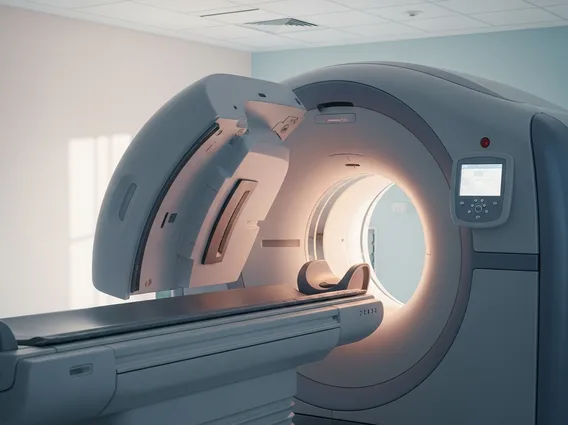
A PET/CT Scan is an advanced medical imaging technique that combines two powerful diagnostic tools into one procedure. This integrated approach provides highly detailed information about both the anatomy and metabolic function within the body, offering critical insights for diagnosis and treatment planning.
Key Takeaways
- A PET/CT Scan merges Positron Emission Tomography (PET) and Computed Tomography (CT) into a single imaging device.
- It uses a small amount of radioactive tracer to detect metabolic activity, often indicating disease.
- The CT component provides precise anatomical location, while PET reveals functional changes.
- This combined imaging is invaluable for diagnosing, staging, and monitoring various conditions, particularly cancers.
- It offers superior diagnostic accuracy compared to separate PET or CT scans alone.
What is a PET/CT Scan?
A PET/CT Scan is a sophisticated medical imaging procedure that integrates a Positron Emission Tomography (PET) scan with a Computed Tomography (CT) scan. This combination allows healthcare professionals to obtain both functional and anatomical information about the body in a single examination. The PET component reveals metabolic activity at the cellular level, while the CT component provides detailed images of organs, bones, and soft tissues, showing their size, shape, and location. By fusing these two types of images, physicians can pinpoint areas of abnormal metabolic activity and precisely locate them within the body’s anatomy.
This diagnostic tool is particularly vital in oncology, where it helps in the detection, staging, and monitoring of cancer. Beyond cancer, PET/CT scans are also used in cardiology to assess heart muscle viability and in neurology to evaluate conditions like Alzheimer’s disease, epilepsy, and Parkinson’s disease by observing brain activity. The ability to visualize both structure and function simultaneously makes PET/CT an indispensable part of modern diagnostic medicine.
How PET/CT Scans Work
The process of a PET/CT Scan involves several key steps, designed to capture both metabolic and structural details. The procedure begins with the administration of a small amount of a radioactive tracer, most commonly fluorodeoxyglucose (FDG), which is a glucose analog. This tracer is typically injected into a vein and travels through the bloodstream, accumulating in cells that have high metabolic activity. Since many diseases, including cancer, exhibit increased metabolic rates, these areas will absorb more of the tracer.
After a waiting period, allowing the tracer to distribute throughout the body, the patient lies on a table that slides into the PET/CT scanner. The PET scanner detects the gamma rays emitted by the tracer as it decays. Simultaneously, the CT scanner takes a series of X-ray images. A computer then processes these signals to create detailed, cross-sectional images. The PET images show areas of increased tracer uptake, indicating metabolic hotspots, while the CT images provide the exact anatomical context for these hotspots. The fusion of these images allows clinicians to accurately identify and characterize abnormalities. For instance, in cancer diagnosis, this helps differentiate between benign and malignant lesions, assess the extent of disease spread, and evaluate treatment effectiveness.
Benefits of PET/CT Imaging
The integration of PET and CT technologies offers significant advantages over performing each scan separately, leading to improved diagnostic accuracy and better patient outcomes. The primary benefits of PET/CT imaging include its ability to provide comprehensive information in a single session, reducing the need for multiple appointments and exposures. This combined approach is particularly powerful in:
- Early Disease Detection: PET/CT can identify metabolic changes indicative of disease often before structural changes are visible on other imaging tests.
- Accurate Staging: For cancers, it helps determine the exact extent of the disease, including whether it has spread to lymph nodes or other organs, which is crucial for treatment planning.
- Treatment Monitoring: It allows physicians to assess how well a treatment is working by observing changes in metabolic activity, enabling timely adjustments to therapy.
- Differentiation of Lesions: PET/CT can help distinguish between benign (non-cancerous) and malignant (cancerous) lesions, potentially avoiding unnecessary biopsies or invasive procedures.
- Recurrence Detection: It is highly effective in detecting disease recurrence, even when other imaging methods might not show clear evidence.
According to the American Cancer Society, imaging tests like PET/CT are crucial tools in the diagnosis and management of various cancers, significantly aiding in personalized treatment strategies and improving patient prognosis.