Percutaneous Transhepatic Biliary Drainage
Percutaneous Transhepatic Biliary Drainage is a minimally invasive medical procedure designed to relieve obstruction in the bile ducts. This intervention is crucial for patients experiencing conditions that impede the normal flow of bile from the liver.
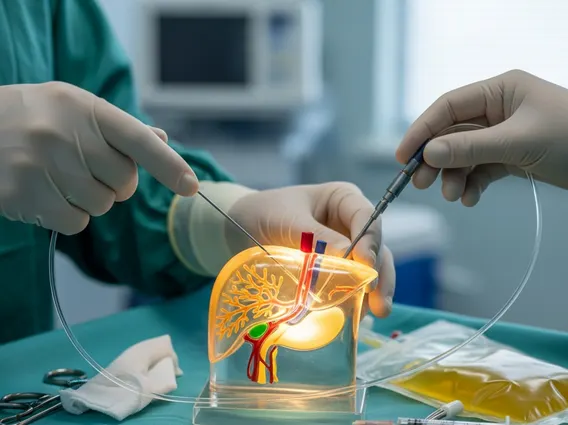
Key Takeaways
- Percutaneous Transhepatic Biliary Drainage (PTBD) is a procedure to decompress obstructed bile ducts.
- It is performed under imaging guidance to place a drainage catheter through the skin and liver into the bile duct.
- The primary purpose is to alleviate jaundice, manage infections, and improve patient comfort or prepare for further treatment.
- Common indications include malignant or benign blockages of the biliary system.
- Potential risks, though generally low, include infection, bleeding, and bile leakage.
What is Percutaneous Transhepatic Biliary Drainage (PTBD)?
Percutaneous Transhepatic Biliary Drainage (PTBD) is a medical procedure that involves placing a catheter through the skin (percutaneous) and liver (transhepatic) into the bile ducts to drain obstructed bile. This minimally invasive technique is typically performed by interventional radiologists using imaging guidance, such as fluoroscopy, ultrasound, or CT scans, to navigate safely to the bile ducts. The procedure aims to relieve pressure caused by bile duct blockages, which can lead to jaundice, infection, and liver damage. PTBD provides a temporary or sometimes long-term solution for patients who cannot undergo immediate surgical intervention or for whom surgery is not an option.
Purpose and Procedure of PTBD
The purpose of percutaneous transhepatic biliary drainage is primarily to restore bile flow when the bile ducts are obstructed. This obstruction can be caused by various conditions, including tumors (e.g., pancreatic cancer, cholangiocarcinoma), gallstones, strictures (narrowing of the ducts), or inflammation. By draining the accumulated bile, PTBD helps to alleviate symptoms such as jaundice (yellowing of the skin and eyes), itching, and abdominal pain. It also plays a vital role in managing cholangitis (bile duct infection) and can serve as a bridge to definitive surgical treatment or other therapies by improving the patient’s overall condition.
The percutaneous transhepatic biliary drainage procedure involves several key steps. After local anesthesia is administered, the interventional radiologist uses real-time imaging to guide a needle through the skin and liver into a dilated bile duct. A guidewire is then advanced through the needle into the bile duct, and the needle is removed. Over the guidewire, a drainage catheter is threaded into the bile duct, with its tip positioned above the obstruction. The catheter is then secured to the skin and connected to an external drainage bag, allowing bile to flow out of the body. In some cases, an internal-external catheter may be placed, which allows bile to drain into the intestine while also having an external port for flushing or exchange.
- Patient preparation and local anesthesia.
- Imaging guidance (ultrasound/fluoroscopy) to locate bile ducts.
- Needle insertion through skin and liver into a bile duct.
- Guidewire advancement through the needle.
- Catheter placement over the guidewire into the bile duct.
- Securing the catheter and connecting it to a drainage system.
Potential Risks and Complications of PTBD
While generally safe and effective, there are percutaneous transhepatic biliary drainage risks and potential complications associated with the procedure. These can include:
- Infection: This is one of the most common complications, as the biliary system can already be infected, or bacteria can be introduced during the procedure. Catheter-related infections or cholangitis can occur.
- Bleeding: As the procedure involves passing a needle through the liver, there is a risk of bleeding, which can range from minor bruising to more significant hemorrhage.
- Bile Leakage: Bile can leak from the puncture site in the liver or around the catheter, potentially causing pain or peritonitis (inflammation of the abdominal lining).
- Catheter Dislodgement or Obstruction: The drainage catheter can accidentally come out or become blocked by debris, requiring repositioning or replacement.
- Pain: Patients may experience pain at the catheter insertion site or abdominal discomfort.
To minimize these risks, strict sterile techniques are employed, and patients are closely monitored post-procedure. Antibiotics are often administered before and after PTBD to prevent infection. The benefits of relieving biliary obstruction often outweigh these potential risks, especially in patients with severe symptoms or life-threatening conditions.