
Erythropoiesis
Erythropoiesis is a vital biological process responsible for the continuous production of red blood cells, essential for oxygen transport throughout the body. Understanding this intricate mechanism is crucial for comprehending various hematological conditions and their treatments.
Key Takeaways
- Erythropoiesis is the process of red blood cell production primarily in the bone marrow.
- It involves a series of differentiation steps from hematopoietic stem cells to mature erythrocytes.
- The process is primarily regulated by erythropoietin (EPO), a hormone produced by the kidneys.
- Adequate iron, vitamins B12, and folate are essential nutrients for healthy red blood cell formation.
What Is Erythropoiesis?
Erythropoiesis refers to the highly regulated process by which new red blood cells, also known as erythrocytes, are produced in the bone marrow. These cells are critical for transporting oxygen from the lungs to the body’s tissues and carrying carbon dioxide back to the lungs for exhalation. This continuous production is necessary because red blood cells have a relatively short lifespan of approximately 100-120 days, requiring a constant supply to maintain physiological oxygen levels.
The Erythropoiesis Process: How Red Blood Cells Are Made
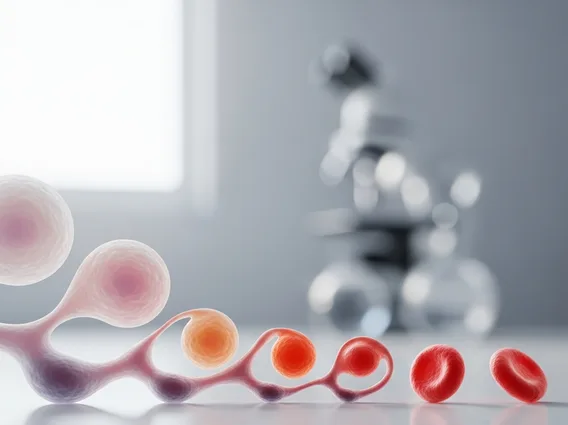
The erythropoiesis process steps involve a complex series of cellular differentiation and maturation, starting from multipotent hematopoietic stem cells (HSCs) in the bone marrow. This intricate journey ensures that the body maintains a steady supply of functional red blood cells. Here is a simplified overview of how red blood cells are made:
- Hematopoietic Stem Cell (HSC): The process begins with HSCs, which have the capacity to differentiate into various blood cell types, including myeloid progenitor cells.
- Common Myeloid Progenitor (CMP): HSCs differentiate into CMPs, which can further develop into several myeloid cell lines, including erythroid progenitors.
- Erythroid Burst-Forming Unit (BFU-E): CMPs give rise to BFU-Es, which are highly responsive to growth factors and represent an early stage of erythroid commitment.
- Erythroid Colony-Forming Unit (CFU-E): BFU-Es mature into CFU-Es, which are more committed to the erythroid lineage and have a high number of erythropoietin receptors.
- Proerythroblast: Under the influence of erythropoietin, CFU-Es differentiate into proerythroblasts, the first morphologically recognizable erythroid precursor. These cells are large and actively synthesize hemoglobin.
- Later Erythroblast Stages: These include basophilic, polychromatophilic, and orthochromatophilic erythroblasts. During these stages, the cells progressively accumulate hemoglobin, reduce in size, and condense their nucleus, which is eventually extruded.
- Reticulocyte: After nuclear extrusion, the cell is called a reticulocyte. These immature red blood cells still contain residual ribosomal RNA, which gives them a reticular appearance. Reticulocytes are released from the bone marrow into the bloodstream.
- Mature Erythrocyte: Within 1-2 days of circulating in the blood, reticulocytes lose their residual RNA and mature into biconcave, anucleated erythrocytes, ready to perform their oxygen-carrying function.
Regulation of Erythropoiesis: Key Factors
The precise control of red blood cell production is vital for maintaining oxygen homeostasis and preventing conditions like anemia or polycythemia. Several erythropoiesis regulation factors ensure this balance. The primary regulator is the hormone erythropoietin (EPO).
Erythropoietin is a glycoprotein hormone primarily produced by the kidneys in response to tissue hypoxia, which is a decrease in oxygen levels. When oxygen levels in the blood drop, the kidneys detect this change and increase EPO secretion. EPO then travels to the bone marrow, where it stimulates the proliferation and differentiation of erythroid progenitor cells, particularly CFU-Es and proerythroblasts. This accelerated production leads to an increased output of red blood cells, thereby enhancing the blood’s oxygen-carrying capacity and alleviating hypoxia.
Beyond EPO, other factors are crucial for healthy erythropoiesis:
- Iron: Essential for hemoglobin synthesis. Without adequate iron, red blood cells cannot effectively carry oxygen, leading to iron-deficiency anemia.
- Vitamins: Vitamin B12 (cobalamin) and folate (vitamin B9) are crucial for DNA synthesis in red blood cell precursors. Deficiencies can lead to megaloblastic anemia.
- Other Hormones and Growth Factors: Thyroid hormones, androgens, and growth factors like stem cell factor and interleukins can also influence erythropoiesis, often by sensitizing progenitor cells to EPO or supporting their survival and proliferation.
The interplay of these factors ensures that the body can adapt its red blood cell production to meet varying physiological demands, such as those experienced at high altitudes or during periods of increased physical activity.



















