Electron
An Electron is a fundamental subatomic particle that plays a critical role across various scientific disciplines, including medicine. Characterized by its negative electrical charge, it is a key component of atoms and is essential for understanding numerous biological processes and medical technologies.
Key Takeaways
- An Electron is a negatively charged subatomic particle, fundamental to atomic structure and chemical reactions.
- Its unique properties, such as charge, mass, and wave-particle duality, are leveraged in various medical applications.
- Electrons in an atom are responsible for chemical bonding and interactions, which are vital for biological functions.
- In medicine, electrons are crucial for technologies like radiation therapy (e.g., electron beam therapy) and diagnostic imaging.
- Understanding electron behavior is essential for comprehending the effects of radiation on biological tissues.
What is an Electron?
An electron is a stable subatomic particle carrying a negative elementary electric charge. It is one of the primary constituents of an atom, orbiting the nucleus alongside protons and neutrons. The electron definition and function are central to understanding matter at its most fundamental level, influencing everything from chemical reactions to the generation of electricity. In medical contexts, the behavior of electrons is harnessed in various diagnostic and therapeutic applications, such as in radiation oncology where electron beams are precisely controlled to treat certain types of cancers.
The electron’s incredibly small mass, approximately 1/1836th that of a proton, combined with its charge, makes it highly mobile and reactive. This mobility is crucial for its function in conducting electricity and facilitating chemical bonds. In biological systems, the movement of electrons is fundamental to metabolic processes, such as the electron transport chain in cellular respiration, which generates energy for life.
Key Properties and Characteristics of Electrons
The unique electron properties and characteristics make them indispensable in both natural phenomena and technological applications, particularly in medicine. Understanding these attributes helps explain their utility in clinical settings.
- Negative Charge: Each electron carries a single unit of negative electric charge (-1.602 x 10⁻¹⁹ coulombs). This charge is fundamental to electromagnetic interactions, enabling electrons to form chemical bonds and respond to electric and magnetic fields.
- Small Mass: With a rest mass of approximately 9.109 x 10⁻³¹ kg, electrons are significantly lighter than protons and neutrons. This low mass allows them to be accelerated to very high speeds, which is exploited in technologies like electron accelerators used in radiation therapy.
- Spin: Electrons possess an intrinsic angular momentum called “spin.” This quantum mechanical property is crucial in determining how electrons occupy atomic orbitals and is a key principle behind magnetic resonance imaging (MRI), where the spin of atomic nuclei (influenced by their electrons) is manipulated.
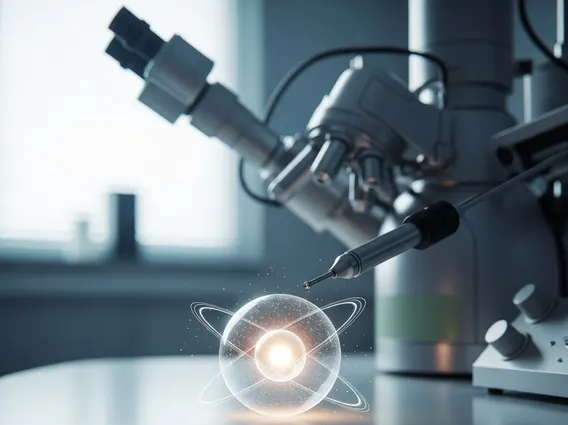
- Wave-Particle Duality: Electrons exhibit characteristics of both particles and waves. This duality is foundational to quantum mechanics and is utilized in electron microscopy, where the wave nature of electrons allows for much higher resolution imaging than light microscopy, enabling detailed visualization of cellular structures and pathogens.
These properties allow electrons to be manipulated for specific medical purposes. For instance, in electron beam therapy, high-energy electrons are used to treat superficial tumors, as their limited penetration depth spares underlying healthy tissues. The precise control over electron energy and direction is vital for effective and safe treatment.
Electrons in Atomic Structure
The arrangement of an electron in an atom is fundamental to its chemical behavior and interaction with energy, which has profound implications for medical science. Electrons occupy specific energy levels or shells around the nucleus, dictating how atoms bond with each other to form molecules, including the complex molecules of living organisms.
When atoms are exposed to energy, such as radiation, their electrons can be excited to higher energy levels or even ejected from the atom entirely, a process known as ionization. This ionization is the primary mechanism by which ionizing radiation (like X-rays or gamma rays) damages biological tissues, leading to the principles behind radiation protection and radiation oncology. In diagnostic imaging, the interaction of X-rays with electrons in different tissues allows for the creation of images that reveal internal structures.
Furthermore, the outermost electrons (valence electrons) determine an atom’s chemical reactivity. These electrons participate in forming covalent and ionic bonds, which are the basis of all biochemical reactions in the body. Understanding how electrons are shared or transferred between atoms is crucial for comprehending drug interactions, enzyme functions, and the overall physiology of the human body. The stability and reactivity of biological molecules are directly linked to the configuration and behavior of their constituent electrons.