
18f Fludeoxyglucose
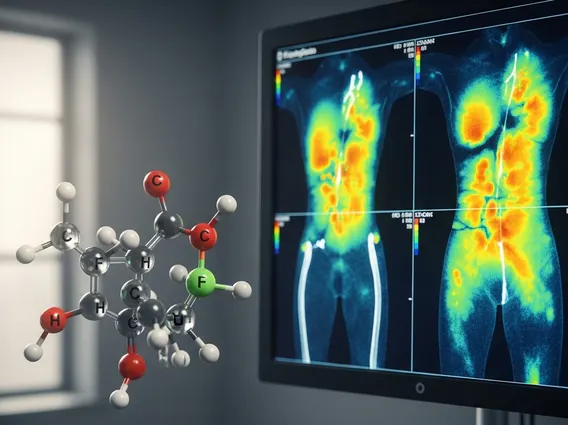
18F-Fludeoxyglucose (FDG) is a critical radiopharmaceutical widely employed in positron emission tomography (PET) scans, primarily for diagnosing and monitoring various medical conditions, especially cancers. Its ability to mimic glucose allows clinicians to visualize metabolic activity within the body, providing invaluable insights into disease processes.
Key Takeaways
- 18F-Fludeoxyglucose (FDG) is a radioactive glucose analog used in PET scans.
- It helps visualize areas of high metabolic activity, such as cancerous tumors.
- FDG is absorbed by cells but cannot be fully metabolized, leading to its accumulation.
- Its primary applications are in oncology for diagnosis, staging, and monitoring treatment response.
- FDG PET scans also have significant roles in cardiology and neurology.
What is 18F-Fludeoxyglucose (FDG)?
18F-Fludeoxyglucose (FDG) is a radiopharmaceutical, specifically a glucose analog labeled with the positron-emitting radionuclide fluorine-18. It is designed to mimic glucose, the body’s primary energy source, allowing it to be taken up by cells that have high metabolic rates. Unlike regular glucose, once FDG enters a cell and is phosphorylated, it cannot be further metabolized through glycolysis. This “metabolic trapping” causes FDG to accumulate within metabolically active tissues, making them visible during a PET scan. This unique property makes FDG an indispensable tool in nuclear medicine for assessing metabolic function at a molecular level.
Mechanism of Action of 18F-Fludeoxyglucose (FDG)
The mechanism of action for 18F-Fludeoxyglucose (FDG) is rooted in its structural similarity to glucose. After intravenous injection, FDG circulates throughout the body and is transported into cells via the same glucose transporters (GLUTs) that facilitate glucose uptake. Once inside the cell, hexokinase enzymes phosphorylate FDG, converting it into 18F-FDG-6-phosphate. However, unlike glucose-6-phosphate, 18F-FDG-6-phosphate is not a substrate for subsequent enzymes in the glycolytic pathway, such as glucose-6-phosphatase or phosphoglucose isomerase. Consequently, it remains trapped within the cell, unable to exit or be further metabolized. The fluorine-18 isotope within the trapped FDG-6-phosphate then undergoes positron decay, emitting positrons that annihilate with electrons, producing gamma rays detected by the PET scanner. This process allows for the creation of detailed images that highlight areas of increased glucose metabolism, which are often indicative of disease.
Clinical Uses and Applications of 18F-Fludeoxyglucose (FDG)
The primary 18F-Fludeoxyglucose uses and purpose center on its extensive utility in oncology. FDG PET scans are crucial for detecting and staging various cancers, evaluating treatment response, and identifying cancer recurrence. Malignant cells typically exhibit increased glucose metabolism due to their rapid growth and proliferation, a phenomenon known as the Warburg effect, making them readily detectable with FDG. For instance, FDG PET is widely used in lymphomas, lung cancer, colorectal cancer, melanoma, and head and neck cancers to determine the extent of the disease and guide therapeutic strategies. According to the Society of Nuclear Medicine and Molecular Imaging (SNMMI), millions of PET scans, predominantly utilizing FDG, are performed globally each year, underscoring its widespread clinical importance.
Beyond oncology, 18F-Fludeoxyglucose medical applications extend to other significant areas of medicine. In cardiology, FDG PET is used to assess myocardial viability, helping to distinguish between scarred tissue and viable but hibernating myocardium in patients with coronary artery disease, which can inform revascularization decisions. In neurology, FDG PET helps in the diagnosis and differentiation of various neurological disorders by mapping regional brain glucose metabolism. Specific applications include:
- Epilepsy: Identifying seizure foci in patients with refractory epilepsy.
- Dementia: Aiding in the differential diagnosis of neurodegenerative diseases like Alzheimer’s disease, frontotemporal dementia, and Lewy body dementia by showing characteristic patterns of hypometabolism.
- Infection and Inflammation: Localizing sites of infection or inflammation, particularly in cases of fever of unknown origin or vascular graft infections.
These diverse applications highlight FDG’s versatility as a diagnostic tool, providing functional information that complements anatomical imaging.



















