Skin Cancer Stages
Understanding the skin cancer stages is crucial for effective diagnosis, treatment planning, and predicting prognosis. This guide provides a comprehensive overview of how skin cancer is classified, helping patients and caregivers navigate the complexities of this common disease.
Key Takeaways
- Skin cancer stages are determined by factors like tumor size, depth, lymph node involvement, and metastasis.
- Staging helps healthcare professionals determine the most appropriate treatment plan and predict the patient’s outlook.
- Melanoma, basal cell carcinoma, and squamous cell carcinoma each have distinct staging systems, reflecting their unique biological behaviors.
- Early detection and accurate staging are vital for improving treatment outcomes and survival rates across all types of skin cancer.
- Diagnostic procedures, including biopsies and imaging, are essential for precisely determining how skin cancer is staged.
Understanding Skin Cancer Stages
The process of classifying skin cancer stages is a critical step following a diagnosis. It provides a standardized way for medical professionals to describe the extent of the cancer’s spread, from its origin to any distant sites. This classification system is essential for guiding treatment decisions and offering insights into a patient’s prognosis.
Why Staging is Crucial
Staging serves multiple vital purposes in oncology. Firstly, it helps doctors determine the most effective treatment strategy, whether it involves surgery, radiation, chemotherapy, or targeted therapies. Secondly, staging provides a common language for healthcare providers to communicate about a patient’s condition, ensuring consistent care. Thirdly, it allows for the prediction of a patient’s outlook (prognosis) and helps in evaluating the effectiveness of different treatments in clinical trials. Understanding skin cancer progression through staging offers clarity on the disease’s severity.
General Principles of Staging
While specific criteria vary by cancer type, the general principles of skin cancer staging explained often rely on the TNM system, developed by the American Joint Committee on Cancer (AJCC). This system evaluates three key components:
- T (Tumor): Describes the primary tumor’s size, depth, and extent of local invasion. For melanoma, depth (Breslow thickness) is particularly important.
- N (Nodes): Indicates whether the cancer has spread to nearby lymph nodes. The number of affected nodes and the extent of involvement are considered.
- M (Metastasis): Determines if the cancer has spread to distant parts of the body, such as the lungs, liver, or brain.
Combining these factors results in an overall stage, typically ranging from 0 to IV, with higher numbers indicating more advanced disease. According to the American Academy of Dermatology, early detection significantly improves outcomes for most skin cancers.
Melanoma Staging Explained
Melanoma, while less common than other skin cancers, is more aggressive and has a higher potential for metastasis. Therefore, precise staging for melanoma is paramount. The AJCC staging system for melanoma is detailed and considers several factors to determine the different stages of melanoma.
Melanoma Stages 0-IV
The staging for melanoma is complex, but generally follows these categories:
- Stage 0 (Melanoma in situ): Cancer cells are confined to the epidermis (the outermost layer of the skin) and have not invaded deeper.
- Stage I: The tumor is relatively thin (up to 2.0 mm thick) and has not spread to lymph nodes or distant sites. There may or may not be ulceration.
- Stage II: The tumor is thicker (more than 2.0 mm but up to 4.0 mm) or has ulceration, but still no spread to lymph nodes or distant sites.
- Stage III: The melanoma has spread to nearby lymph nodes or to small areas of skin close to the primary tumor (in-transit metastases), but not to distant organs.
- Stage IV: The cancer has spread to distant lymph nodes, skin areas far from the primary tumor, or distant organs like the lungs, liver, brain, or bones.
Factors Determining Melanoma Stage
Several critical factors influence the precise staging of melanoma:
- Tumor Thickness (Breslow Depth): This is the most important factor for early-stage melanoma, measuring the depth of the tumor invasion into the skin.
- Ulceration: The presence of ulceration (a break in the skin over the tumor) indicates a more aggressive tumor and a higher stage.
- Mitotic Rate: The number of dividing cancer cells seen under a microscope can also be a factor, especially for thinner melanomas.
- Lymph Node Involvement: Whether cancer cells are found in sentinel lymph nodes (the first nodes to which cancer is likely to spread) or other regional lymph nodes.
- Distant Metastasis: Evidence of spread to other organs or distant skin sites.
- Lactate Dehydrogenase (LDH) Levels: Elevated LDH levels in the blood can indicate more advanced disease in Stage IV melanoma.
Each of these elements contributes to a comprehensive assessment, guiding treatment and prognosis. According to the National Cancer Institute, the 5-year survival rate for localized melanoma is 99%, emphasizing the importance of early detection.
Basal and Squamous Cell Carcinoma Stages
Basal cell carcinoma stages (BCC) and squamous cell carcinoma stages (SCC) are generally less complex than melanoma staging because these cancers are less likely to spread. However, staging is still important, especially for high-risk tumors or those in sensitive areas.
Staging for Non-Melanoma Cancers
For BCC and SCC, the AJCC staging system (8th edition) focuses primarily on the size and characteristics of the primary tumor (T), along with any spread to regional lymph nodes (N) or distant sites (M). Most BCCs and SCCs are diagnosed at an early stage and are treated with local excision, often without requiring extensive staging.
However, certain features can classify a tumor as “high-risk,” warranting more detailed staging:
- Size: Larger tumors (e.g., >2 cm in diameter).
- Location: Tumors on the head, neck, hands, feet, or genitals.
- Depth: Invasion into deeper tissues, nerves, or blood vessels.
- Aggressive Histology: Certain microscopic patterns indicate a more aggressive tumor type.
- Recurrence: Cancers that have returned after initial treatment.
- Immunosuppression: Patients with weakened immune systems are at higher risk for aggressive non-melanoma skin cancers.
For these high-risk cases, staging may involve imaging and lymph node evaluation similar to melanoma, though distant metastasis remains rare. The American Cancer Society reports that BCC and SCC are highly curable when detected and treated early.
Risk Factors for Advanced BCC/SCC
While most BCCs and SCCs are localized, certain factors increase the risk of these cancers becoming advanced or metastatic:
- Large Tumor Size: Tumors exceeding 2 cm have a higher risk of local invasion and recurrence.
- Perineural Invasion: Cancer cells spreading along nerves, which can indicate a more aggressive tumor and potential for deeper spread.
- Immunosuppression: Patients who are immunocompromised (e.g., organ transplant recipients) have a significantly higher risk of developing aggressive and metastatic SCCs.
- Location: Tumors on the ear, lip, or areas around the eyes and nose tend to be more aggressive due to proximity to vital structures and lymphatic drainage.
- Recurrent Tumors: Cancers that have previously been treated and have returned often show more aggressive behavior.
- Poorly Differentiated Histology: Under the microscope, if cancer cells look very abnormal and disorganized, it suggests a more aggressive form.
These factors prompt a more thorough evaluation and potentially more aggressive treatment strategies to prevent further progression.
How Skin Cancer is Staged
The process of determining what are the stages of skin cancer involves a combination of clinical examination, diagnostic procedures, and pathological analysis. Accurate staging is fundamental for effective treatment planning.
Diagnostic Procedures
The initial step in staging is a thorough physical examination by a dermatologist or oncologist. They will inspect the primary tumor, assess its size and characteristics, and check for any enlarged lymph nodes. Depending on the suspected type and extent of the cancer, further diagnostic procedures may include:
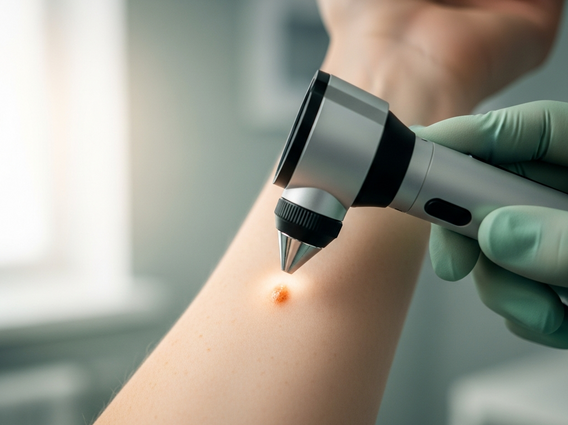
- Dermoscopy: A non-invasive technique using a specialized magnifying tool to examine skin lesions in detail.
- Excisional Biopsy: The complete removal of the suspicious lesion for microscopic examination. This is often both diagnostic and therapeutic for early-stage cancers.
- Incisional or Punch Biopsy: Removal of a portion of the lesion for diagnosis, particularly for larger tumors where complete excision is not feasible initially.
- Sentinel Lymph Node Biopsy (SLNB): For melanoma, if there’s a concern about lymph node involvement, a radioactive tracer and/or blue dye is injected near the tumor to identify the first lymph nodes (sentinel nodes) to which cancer cells would likely spread. These nodes are then surgically removed and examined for cancer cells.
- Imaging Tests: For advanced cancers, imaging such as CT scans, MRI, PET scans, or ultrasound may be used to look for spread to distant organs or deeper tissues.
Role of Biopsy and Imaging
Biopsy is the cornerstone of skin cancer diagnosis and staging. The pathological examination of the biopsied tissue provides crucial information, including the type of cancer, tumor thickness (for melanoma), presence of ulceration, mitotic rate, and invasion depth. This microscopic analysis is essential for assigning the ‘T’ component of the TNM staging system.
Imaging studies become vital when there is suspicion of regional or distant spread. For instance, a CT scan of the chest, abdomen, and pelvis might be ordered for a patient with Stage III or IV melanoma to check for metastases in the lungs, liver, or other organs. PET scans can help identify metabolically active cancer cells throughout the body. Ultrasound is often used to evaluate regional lymph nodes for enlargement or suspicious characteristics. These imaging results are critical for determining the ‘N’ and ‘M’ components of the staging system, providing a complete picture of the cancer’s extent.
Prognosis and Treatment by Stage
The prognosis for skin cancer is highly dependent on its stage at diagnosis. Generally, cancers detected at earlier skin cancer stages have a significantly better prognosis and higher cure rates. Treatment plans are meticulously tailored to the specific stage and type of cancer, aiming to remove the cancer, prevent recurrence, and manage any spread.
For early-stage basal cell carcinoma and squamous cell carcinoma, treatment often involves simple surgical excision, Mohs micrographic surgery, or other local therapies like cryosurgery or topical medications. These treatments are highly effective, with cure rates exceeding 95% for localized lesions. For more advanced or high-risk non-melanoma skin cancers, radiation therapy, systemic therapies (e.g., targeted therapy, immunotherapy), or more extensive surgery may be required.
Melanoma treatment also varies by stage. Stage 0 and I melanomas are typically treated with wide surgical excision. As the stage advances to Stage II, the surgical margins are often wider, and a sentinel lymph node biopsy may be performed. For Stage III melanoma, treatment usually involves surgery to remove the primary tumor and affected lymph nodes, often followed by adjuvant (additional) therapy such as immunotherapy or targeted therapy to reduce the risk of recurrence. Stage IV melanoma, which has spread to distant sites, requires systemic treatments like immunotherapy, targeted therapy, chemotherapy, or radiation therapy to manage the disease and improve quality of life. Clinical trials also offer promising new treatment options for advanced cases.
Regular follow-up appointments, including skin exams, are crucial for all skin cancer patients, especially those with a history of melanoma or high-risk non-melanoma skin cancers, to monitor for recurrence or new lesions.
Frequently Asked Questions
What is the most important factor in melanoma staging?
The most crucial factor in melanoma staging is the Breslow depth, which measures the thickness of the tumor in millimeters. This depth directly correlates with the risk of metastasis and is a primary determinant for early-stage melanoma classification. Other important factors include the presence of ulceration, mitotic rate, and whether the cancer has spread to lymph nodes or distant organs. Accurate measurement of Breslow depth from a biopsy is vital for guiding treatment decisions.
Can basal cell carcinoma or squamous cell carcinoma spread?
While basal cell carcinoma (BCC) and squamous cell carcinoma (SCC) are generally less aggressive than melanoma, they can spread, especially if left untreated or if they are high-risk tumors. BCC rarely metastasizes but can be locally destructive, invading surrounding tissues. SCC has a higher potential for metastasis than BCC, particularly in immunocompromised individuals or when tumors are large, recurrent, or located in high-risk areas like the lip or ear. Early detection and treatment significantly reduce this risk.
How often should I get screened for skin cancer?
The frequency of skin cancer screenings depends on individual risk factors. For the general population with no history of skin cancer, annual self-skin exams and professional check-ups as recommended by a dermatologist are advisable. Individuals with a history of skin cancer, multiple moles, fair skin, extensive sun exposure, or a family history of melanoma may require more frequent screenings, often every 3-6 months. Always consult with your dermatologist to determine a personalized screening schedule based on your specific risk profile.