Maffucci Syndrome
Maffucci Syndrome is a rare, non-hereditary congenital disorder characterized by the presence of multiple enchondromas (benign cartilage tumors) and hemangiomas (benign vascular tumors).
Key Takeaways
- Maffucci Syndrome is a very rare, non-inherited condition marked by benign bone and vascular tumors.
- It typically presents with skeletal deformities, limb length discrepancies, and bluish skin lesions.
- Diagnosis relies on clinical examination and imaging, often confirmed by genetic testing for IDH1/IDH2 mutations.
- There is a significant risk of malignant transformation of enchondromas into chondrosarcomas.
- Management involves a multidisciplinary approach focusing on symptom relief, surgical correction, and vigilant monitoring for malignancy.
What is Maffucci Syndrome?
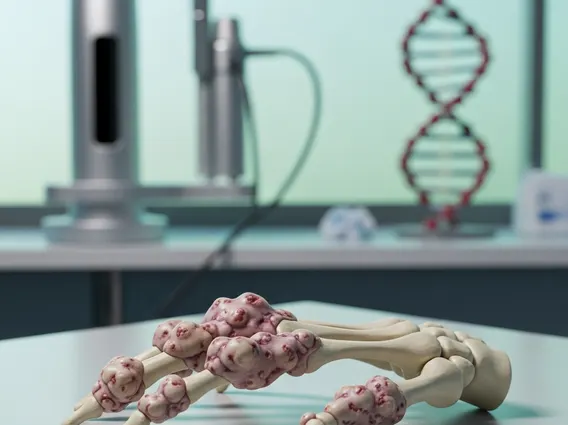
Maffucci Syndrome is a sporadic, mesenchymal dysplasia characterized by the co-occurrence of multiple enchondromas and hemangiomas. Enchondromas are benign cartilaginous tumors that develop within the bone, primarily affecting the long bones of the hands and feet, but can also appear in other skeletal sites. Hemangiomas are benign tumors composed of blood vessels, often appearing on the skin as bluish nodules, but can also affect internal organs.
This rare condition is estimated to affect approximately 1 in 1,000,000 people worldwide, with no clear gender or ethnic predisposition. The clinical manifestations typically become apparent during childhood, leading to various orthopedic issues such as bone deformities, limb length discrepancies, and an increased risk of pathological fractures due to weakened bones. The severity and distribution of enchondromas and hemangiomas can vary significantly among affected individuals.
Maffucci Syndrome: Symptoms, Diagnosis, and Etiology
The clinical presentation of Maffucci Syndrome symptoms diagnosis is diverse. Symptoms often include palpable or visible masses, pain, and functional limitations. Enchondromas can lead to bowing of long bones, short stature, and deformities, particularly in the hands and feet. Hemangiomas typically appear as soft, compressible, bluish or purplish lesions on the skin, but can also occur in muscles, viscera, or internal organs, potentially causing internal bleeding or organ dysfunction.
Diagnosis is primarily clinical, based on the characteristic presence of both enchondromas and hemangiomas. Imaging studies are crucial: X-rays reveal the typical lucent lesions of enchondromas within the bones, while MRI scans can provide more detailed information on the extent of both enchondromas and hemangiomas, and help differentiate them from malignant lesions. Biopsy of suspicious lesions may be performed to confirm diagnosis or rule out malignancy. Genetic testing can identify somatic mutations in the *IDH1* or *IDH2* genes, which are found in a majority of cases and support the diagnosis.
The etiology of Maffucci Syndrome is rooted in somatic (non-inherited) mosaic mutations, most commonly in the *IDH1* or *IDH2* genes. These mutations occur after fertilization in a developing embryo, meaning only a subset of cells carry the mutation, leading to the patchy distribution of lesions. This mosaicism explains why the condition is not typically passed down through families. The mutated IDH enzymes produce an oncometabolite, 2-hydroxyglutarate, which is thought to disrupt normal cellular differentiation and contribute to tumor formation.
Management and Prognosis of Maffucci Syndrome
The Maffucci Syndrome treatment management approach is multidisciplinary, focusing on alleviating symptoms, correcting deformities, and vigilant monitoring for potential complications. Surgical intervention is often required for enchondromas that cause pain, significant deformity, or are at high risk of fracture. Procedures may include curettage (scraping out the tumor) and bone grafting. Orthopedic surgeons manage limb length discrepancies and correct skeletal deformities. Hemangiomas, if symptomatic or cosmetically bothersome, can be treated with laser therapy, sclerotherapy, or surgical excision. Regular follow-up with imaging studies is essential to monitor the growth of existing lesions and detect new ones.
A critical aspect of Maffucci Syndrome causes prognosis is the significant risk of malignant transformation. Enchondromas, particularly larger ones or those in the axial skeleton, have a lifetime risk of transforming into chondrosarcomas, estimated to be between 25% and 50%. This necessitates lifelong surveillance, including periodic clinical examinations and imaging, to detect any signs of malignant change early. Patients with Maffucci Syndrome also have an increased risk of developing other malignancies, such as ovarian, liver, or pancreatic cancers, and gliomas, further emphasizing the need for comprehensive monitoring. While life expectancy is generally normal, the quality of life can be significantly impacted by the physical deformities, pain, and the psychological burden of living with a condition that carries a high risk of cancer. Management strategies are continuously evolving to improve patient outcomes and reduce morbidity.