Lung cancer remains one of the leading causes of cancer-related deaths worldwide, and among its various subtypes, lung adenocarcinoma is the most commonly diagnosed form. Understanding lung adenocarcinoma—its origins, warning signs, and available treatments—is essential for patients, caregivers, and anyone seeking to make informed health decisions.
Key Takeaways
- Lung adenocarcinoma is the most prevalent subtype of non-small cell lung cancer (NSCLC), often arising in the outer regions of the lung.
- Early symptoms can be subtle and are frequently mistaken for less serious respiratory conditions.
- Diagnosis relies on imaging, biopsy, and molecular testing to guide personalized treatment planning.
- Treatment options include surgery, chemotherapy, targeted therapy, immunotherapy, and radiation, often used in combination.
- Prognosis varies significantly by stage; early detection substantially improves survival outcomes.
Understanding Lung Adenocarcinoma: Definition, Types, and Stages
Lung adenocarcinoma is a type of non-small cell lung cancer (NSCLC) that originates in the mucus-secreting glandular cells lining the small airways of the lungs. It is the most frequently diagnosed histological subtype of lung cancer, accounting for approximately 40% of all lung cancer cases, according to the American Cancer Society. Unlike other lung cancer subtypes, adenocarcinoma tends to develop in the peripheral regions of the lung, which can make early detection more challenging since these areas are less likely to cause symptoms such as cough or airway obstruction early in the disease course.
Adenocarcinoma of the lung is broadly classified under NSCLC, which also includes squamous cell carcinoma and large cell carcinoma. Within adenocarcinoma itself, pathologists recognize several histological growth patterns—including lepidic, acinar, papillary, micropapillary, and solid—each associated with different clinical behaviors and prognoses. Molecular profiling has further refined classification, identifying actionable mutations such as EGFR, ALK, ROS1, KRAS, and BRAF that directly influence treatment decisions.
Staging follows the TNM (Tumor, Node, Metastasis) system established by the American Joint Committee on Cancer (AJCC). The stages range from Stage I, where the tumor is small and localized, through Stage IV, where cancer has spread to distant organs. Staging is critical because it determines the treatment approach and provides an estimate of prognosis. Risk factors include cigarette smoking, exposure to radon gas, secondhand smoke, asbestos, and certain genetic predispositions. Notably, lung adenocarcinoma is more commonly diagnosed in non-smokers compared with other lung cancer types, particularly among women and younger adults.
Early Warning Signs and Symptoms of Lung Adenocarcinoma to Know
Recognizing the adenocarcinoma of the lung symptoms to know can be lifesaving, yet the disease is often silent in its earliest stages. Because tumors commonly arise in the outer lung tissue away from major airways, they may grow for months or even years before producing noticeable signs. When symptoms do emerge, they can easily be attributed to more common conditions such as bronchitis, asthma, or a persistent cold, which is why awareness of specific warning signs is so important.
The lung adenocarcinoma early warning signs most commonly reported include a persistent or worsening cough that does not resolve, coughing up blood or rust-colored sputum, chest pain that worsens with deep breathing or laughing, unexplained shortness of breath, and hoarseness. Systemic symptoms—such as unintentional weight loss, chronic fatigue, and loss of appetite—may also occur and reflect the metabolic demands of a growing tumor. Some patients develop recurrent respiratory infections such as bronchitis or pneumonia, which can indicate that an airway is partially obstructed by tumor tissue.
In more advanced disease, cancer that has spread beyond the lung may cause bone pain, headaches, neurological changes, or swelling of the lymph nodes in the neck or above the collarbone. These symptoms signal metastatic disease and require urgent medical evaluation. Importantly, the World Health Organization (WHO) notes that lung cancer is often diagnosed at an advanced stage precisely because early symptoms are nonspecific, underscoring the value of low-dose CT screening for high-risk individuals as recommended by health authorities.
- Persistent cough lasting more than three weeks
- Coughing up blood or blood-streaked mucus
- Unexplained chest pain, especially during breathing
- Progressive shortness of breath without clear cause
- Unintentional weight loss and fatigue
- Recurring respiratory infections (pneumonia or bronchitis)
- New hoarseness or voice changes
Any of these symptoms, particularly when persistent or occurring together, should prompt prompt consultation with a healthcare provider. Early evaluation does not always mean cancer is present, but it is the only way to rule out serious underlying conditions.
Diagnosis, Treatment Options, and Advances in Lung Adenocarcinoma Care
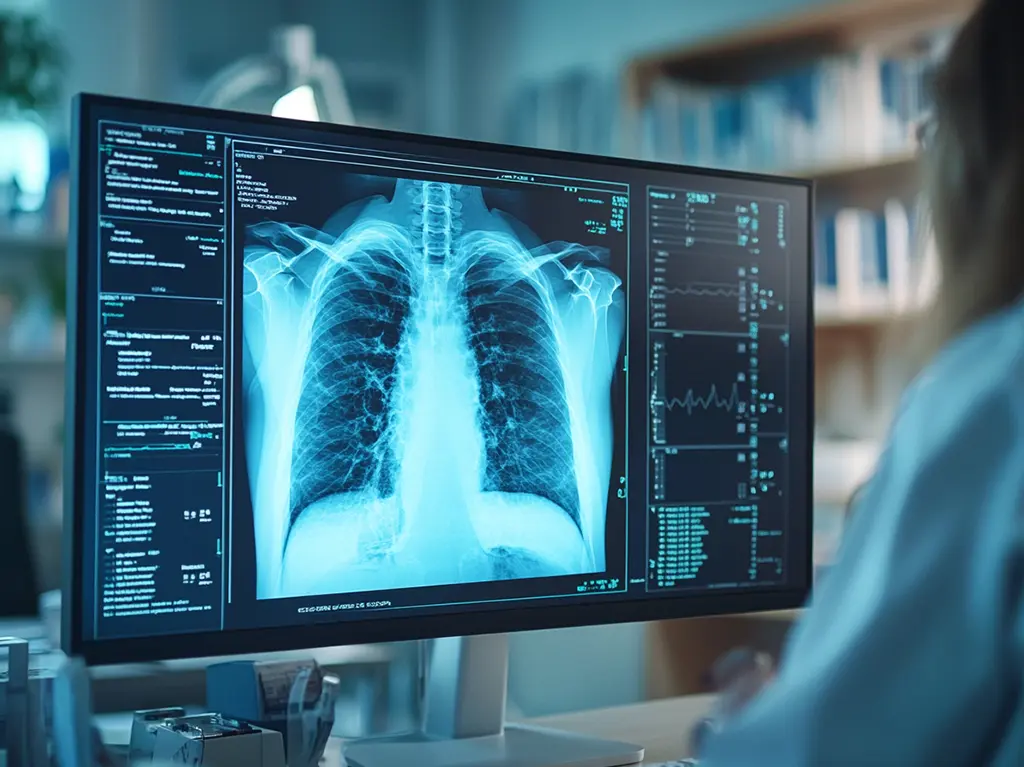
A thorough lung adenocarcinoma diagnosis and treatment options pathway begins with clinical evaluation and medical imaging. Chest X-rays may reveal a suspicious mass, but low-dose computed tomography (CT) scans provide significantly more detail and are the standard imaging tool for both screening and diagnostic workup. Positron emission tomography (PET) scans help assess whether cancer has spread to lymph nodes or distant organs, while MRI may be used to evaluate brain metastases.
Definitive diagnosis requires a tissue biopsy, obtained through bronchoscopy, CT-guided needle biopsy, or surgical sampling. The biopsy specimen undergoes histological analysis and, critically, molecular testing. Comprehensive genomic profiling identifies targetable mutations—such as EGFR exon 19 deletions or exon 21 L858R substitutions—as well as gene rearrangements involving ALK and ROS1, and programmed death-ligand 1 (PD-L1) expression levels. These biomarkers directly determine which therapies are most likely to be effective for each patient, making molecular testing a cornerstone of modern lung adenocarcinoma care.
Treatment selection depends on the cancer’s stage, molecular profile, and the patient’s overall health. Surgery—most commonly lobectomy—remains the preferred approach for early-stage, localized disease and offers the greatest chance of cure. Radiation therapy, including stereotactic body radiotherapy (SBRT), is used when surgery is not feasible. Chemotherapy, typically platinum-based doublet regimens, is employed in advanced or metastatic settings either alone or in combination with other agents.
Targeted Therapy and Immunotherapy
Targeted therapies have transformed outcomes for patients whose tumors harbor specific mutations. EGFR tyrosine kinase inhibitors (TKIs) such as osimertinib, erlotinib, and gefitinib have demonstrated significantly improved progression-free survival in EGFR-mutant lung adenocarcinoma. Similarly, ALK and ROS1 inhibitors—including alectinib, brigatinib, and crizotinib—offer durable responses in patients with the corresponding gene rearrangements. These agents are generally better tolerated than traditional chemotherapy and can be administered orally.
Immunotherapy, particularly immune checkpoint inhibitors targeting the PD-1/PD-L1 pathway, has also become a pivotal component of treatment. Pembrolizumab, atezolizumab, and nivolumab, among others, have shown meaningful survival benefits, especially in patients with high PD-L1 expression or in combination with chemotherapy. Ongoing clinical trials continue to explore novel combinations, antibody-drug conjugates, and next-generation targeted agents, reflecting the rapid pace of lung adenocarcinoma treatment advances and survival rates improvements over the past decade.
Multidisciplinary and Supportive Care
Optimal lung adenocarcinoma management involves a multidisciplinary team that includes oncologists, thoracic surgeons, radiation oncologists, pulmonologists, pathologists, and palliative care specialists. Palliative care addresses symptom management, quality of life, and psychological support and is recommended alongside active treatment at all disease stages. Smoking cessation support, pulmonary rehabilitation, and nutritional counseling further contribute to overall outcomes and well-being throughout the treatment journey.
Lung Adenocarcinoma Prognosis and Survival Rates by Stage
Lung adenocarcinoma stages and prognosis are closely intertwined, with stage at diagnosis being one of the strongest predictors of outcome. According to the American Cancer Society, the five-year relative survival rate for localized NSCLC (Stage I) exceeds 60%, whereas the five-year survival rate for Stage IV disease—where cancer has spread to distant sites—drops to approximately 7–8%. These figures highlight the critical importance of early detection through screening programs and timely symptom evaluation.
Beyond stage, molecular subtype significantly influences prognosis. Patients whose tumors carry sensitizing EGFR mutations and who receive appropriate targeted therapy have demonstrated median overall survival exceeding three years in some clinical studies, a dramatic improvement over historical outcomes with chemotherapy alone. ALK-rearranged adenocarcinomas similarly respond robustly to targeted inhibitors, with some patients achieving durable disease control for several years. In contrast, tumors lacking actionable mutations and with low PD-L1 expression are associated with a comparatively less favorable prognosis, though ongoing research continues to expand therapeutic options.
Emerging data also suggest that comprehensive biomarker-driven treatment—combined with advances in liquid biopsy technology that detect circulating tumor DNA—is enabling earlier identification of resistance mechanisms and more timely treatment modifications. Population-level improvements in survival are beginning to reflect these advances, with declining lung cancer mortality rates observed in several high-income countries, as noted by the WHO Global Cancer Observatory (GLOBOCAN). Nevertheless, disparities in access to molecular testing, targeted therapies, and specialized care remain significant barriers in many regions.
| Stage | Description | Approximate 5-Year Survival Rate (NSCLC) |
|---|---|---|
| Stage I | Localized tumor; no lymph node involvement | ~60–90% |
| Stage II | Larger tumor or nearby lymph node involvement | ~30–50% |
| Stage III | Spread to regional lymph nodes or nearby structures | ~10–35% |
| Stage IV | Distant metastasis to other organs | ~7–8% |
Survival statistics represent population-level estimates and do not predict individual outcomes. Each patient’s prognosis is shaped by a unique combination of tumor biology, molecular profile, response to therapy, performance status, and comorbidities. Open discussions with an oncology team provide the most accurate and personalized prognostic information.
Frequently Asked Questions
What are the first signs of lung adenocarcinoma?
Early signs are often subtle and may include a persistent cough that does not resolve within three weeks, mild shortness of breath, or repeated respiratory infections. Because tumors typically develop in the outer lung regions, they rarely obstruct airways early on, which is why many patients remain asymptomatic until the cancer is moderately advanced. Anyone experiencing unexplained respiratory or systemic symptoms should consult a physician promptly for appropriate evaluation and, if warranted, imaging studies.
Which treatments are most effective for lung adenocarcinoma?
Effectiveness depends heavily on the tumor’s molecular profile and disease stage. For tumors with EGFR mutations, ALK or ROS1 rearrangements, targeted therapies offer the strongest outcomes. Immunotherapy benefits patients with high PD-L1 expression. Early-stage disease is most effectively treated with surgery. In advanced stages without actionable mutations, platinum-based chemotherapy combined with immunotherapy is the standard approach. Treatment decisions are always individualized through a multidisciplinary oncology team based on current clinical evidence.
Is lung adenocarcinoma curable?
Cure is achievable in some cases, particularly when the cancer is detected at Stage I or II and surgical resection is complete. Long-term remission has also been observed in patients with targetable mutations who respond well to targeted therapies, though resistance often develops over time. For advanced or metastatic disease, treatment goals typically focus on controlling disease progression, preserving quality of life, and extending survival as long as possible. Research into novel therapies continues to improve outcomes across all stages.