Lc Ms
Liquid Chromatography-Mass Spectrometry (LC-MS) is a powerful analytical technique widely used across various scientific disciplines. It combines two robust separation and detection methods to provide detailed information about complex samples.
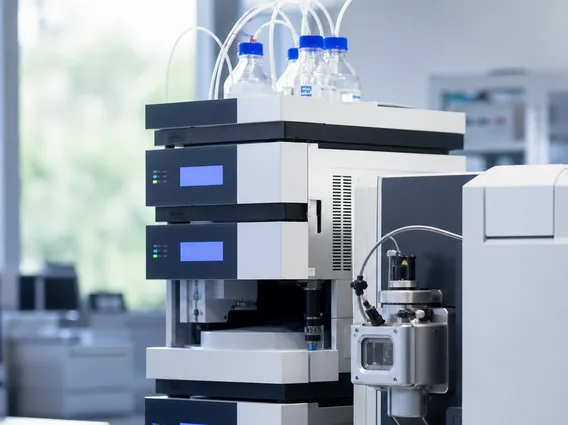
Key Takeaways
- LC-MS is an analytical technique that couples liquid chromatography with mass spectrometry for compound separation and identification.
- It works by first separating components in a sample using liquid chromatography, then ionizing and detecting them based on their mass-to-charge ratio with a mass spectrometer.
- The technology is crucial for identifying, quantifying, and characterizing a vast array of molecules, even in trace amounts.
- LC-MS finds extensive applications in pharmaceuticals, clinical diagnostics, environmental monitoring, and food safety.
What is LC-MS (Liquid Chromatography-Mass Spectrometry)?
Liquid Chromatography-Mass Spectrometry (LC-MS) is an advanced analytical chemistry technique that integrates the separation capabilities of liquid chromatography (LC) with the detection and identification power of mass spectrometry (MS). This hyphenated technique allows scientists to separate individual components within a complex mixture and then precisely identify and quantify each separated component. The synergy between LC and MS makes it an indispensable tool for analyzing a wide range of chemical and biological samples, from small molecules to large biomolecules.
The primary goal of LC-MS is to provide both qualitative and quantitative information about compounds present in a sample. It excels at analyzing samples that are non-volatile or thermally unstable, which are difficult to analyze using gas chromatography (GC). By leveraging the strengths of both techniques, LC-MS offers high sensitivity, selectivity, and speed, making it a cornerstone in modern analytical laboratories.
Principles and Mechanism of LC-MS
The operational principle of LC-MS involves a sequential two-step process. First, the sample undergoes separation by liquid chromatography, and then the separated components are introduced into a mass spectrometer for detection. Understanding LC-MS technology involves grasping how these two distinct systems work in concert.
The liquid chromatography (LC) component separates the mixture’s components based on their differential interactions with a stationary phase (packed in a column) and a mobile phase (a solvent system). As the mobile phase carries the sample through the column, different compounds travel at varying speeds, leading to their separation. This separation ensures that individual compounds arrive at the mass spectrometer at different times, preventing co-elution and simplifying subsequent analysis.
After separation, the effluent from the LC column enters the mass spectrometer. Here, the molecules are ionized, typically through techniques like electrospray ionization (ESI) or atmospheric pressure chemical ionization (APCI), which convert them into charged ions. These ions are then accelerated through an electric or magnetic field, and their mass-to-charge (m/z) ratio is measured. The mass spectrometer generates a spectrum that displays the relative abundance of each ion, providing a unique “fingerprint” for each compound. This precise measurement of mass allows for the unambiguous identification and quantification of molecules. This detailed process illustrates precisely how does LC-MS work to deliver comprehensive analytical results.
Applications and Uses of LC-MS
The versatility and high performance of LC-MS have led to its widespread adoption across numerous scientific and industrial sectors. LC-MS principles and applications are fundamental in areas requiring precise analysis of complex matrices. The technique is invaluable for its ability to detect and quantify compounds at very low concentrations, making it critical for various analytical challenges.
Here are some key areas where what is LC-MS used for:
- Pharmaceutical Industry: Essential for drug discovery, development, and quality control. It’s used to identify drug metabolites, monitor drug stability, analyze impurities, and perform pharmacokinetic studies.
- Clinical Diagnostics: Utilized for the detection of biomarkers, therapeutic drug monitoring, newborn screening for metabolic disorders, and toxicology screening. For instance, LC-MS can accurately quantify specific hormones or vitamins in biological fluids, aiding in disease diagnosis and treatment monitoring.
- Environmental Analysis: Plays a crucial role in monitoring pollutants in water, soil, and air. It can identify pesticides, herbicides, and other contaminants, ensuring environmental safety and regulatory compliance.
- Food Safety and Agriculture: Employed to detect residues of pesticides, veterinary drugs, and mycotoxins in food products, as well as to analyze nutritional components and authenticate food origins.
- Forensics and Toxicology: Used to identify illicit drugs, poisons, and their metabolites in biological samples, providing critical evidence in legal and medical investigations.
The ability of LC-MS to provide highly specific and sensitive data makes it an indispensable tool for research, quality assurance, and regulatory compliance across these diverse fields.