
Klatskin Tumor
Klatskin Tumor, a rare and aggressive form of cancer, originates in the bile ducts, specifically at the junction where the hepatic ducts meet. This article provides a comprehensive overview of this challenging condition, covering its nature, identification, and management.
Key Takeaways
- Klatskin Tumor is a rare type of cholangiocarcinoma located at the bifurcation of the hepatic bile ducts.
- Common symptoms include jaundice, itching, and unexplained weight loss, often leading to late diagnosis.
- Diagnosis relies on imaging techniques like MRI and CT scans, confirmed by biopsy.
- Surgical resection is the primary treatment option for curative intent, though often challenging due to tumor location.
- The prognosis is generally poor, but early detection and complete surgical removal significantly improve survival rates.
What is Klatskin Tumor?
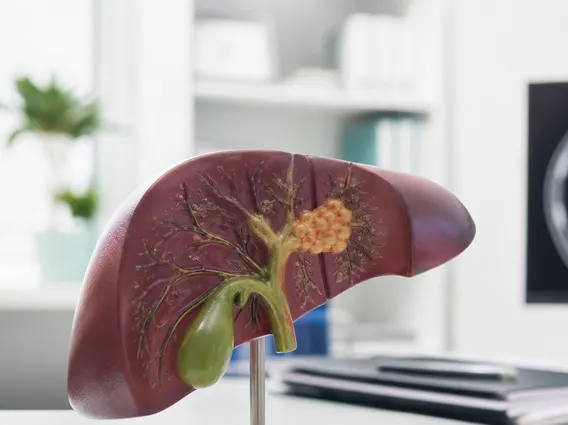
A Klatskin Tumor refers to a specific type of cholangiocarcinoma, which is a cancer of the bile ducts. These tumors are uniquely situated at the confluence of the right and left hepatic ducts, where they merge to form the common hepatic duct. Also known as perihilar cholangiocarcinoma, this malignancy is relatively rare, accounting for approximately 50-60% of all cholangiocarcinomas. Its location makes it particularly challenging to treat, as it can obstruct bile flow from a significant portion of the liver, leading to severe complications.
The exact causes of Klatskin Tumor are not fully understood, but several risk factors have been identified. These include primary sclerosing cholangitis, chronic inflammation of the bile ducts, parasitic infections (such as liver flukes), and certain genetic predispositions. Given its aggressive nature and critical location, early detection is paramount, though often difficult due to non-specific initial symptoms.
Klatskin Tumor Symptoms and Diagnosis
The symptoms of Klatskin Tumor often develop gradually and can be non-specific, leading to delays in diagnosis. The most common initial symptom is jaundice, characterized by yellowing of the skin and eyes, which occurs due to the obstruction of bile flow. Other indicative signs often include:
- Pruritus (severe itching)
- Dark urine and pale stools
- Unexplained weight loss
- Abdominal pain, typically in the upper right quadrant
- Fever and chills, if cholangitis (bile duct infection) develops
- Fatigue and general malaise
The diagnosis of Klatskin Tumor involves a multi-faceted approach. Initial steps typically include a physical examination, blood tests to assess liver function (e.g., bilirubin, alkaline phosphatase levels), and tumor markers like CA 19-9, though this marker is not definitive on its own. Imaging studies are crucial for visualizing the tumor and assessing its extent. These may include ultrasound, computed tomography (CT) scans, and magnetic resonance imaging (MRI) with magnetic resonance cholangiopancreatography (MRCP), which provides detailed images of the bile ducts. Endoscopic retrograde cholangiopancreatography (ERCP) or percutaneous transhepatic cholangiography (PTC) may also be performed to directly visualize the bile ducts, relieve obstruction by placing stents, and obtain tissue samples for biopsy, which is essential for a definitive pathological diagnosis.
Klatskin Tumor Treatment and Prognosis
Managing Klatskin Tumor is complex, and the choice of Klatskin Tumor treatment options depends heavily on the tumor’s stage, resectability, and the patient’s overall health. Surgical resection is the only potentially curative treatment, involving the removal of the tumor along with affected bile ducts and often a portion of the liver (hepatectomy) and regional lymph nodes. However, due to the tumor’s location and tendency for late diagnosis, only a minority of patients are candidates for curative surgery. For those who are eligible, complete surgical removal with clear margins offers the best chance for long-term survival.
For patients whose tumors are unresectable or who cannot undergo surgery, other treatments aim to control the disease and manage symptoms. These include chemotherapy, radiation therapy (often used as an adjuvant to surgery or for palliative care), and photodynamic therapy. Palliative measures, such as stent placement via ERCP or PTC, are critical for relieving bile duct obstruction, managing jaundice, and improving quality of life. In highly selected cases, liver transplantation may be considered, though its role remains controversial and is typically limited to specific early-stage tumors.
The Klatskin Tumor prognosis survival rate is generally poor, primarily due to the tumor’s aggressive nature and the challenges associated with early diagnosis and complete surgical removal. For patients who undergo successful surgical resection, the 5-year survival rate can range from 20% to 40%, depending on factors such as tumor stage, lymph node involvement, and the presence of clear surgical margins. In contrast, for patients with unresectable tumors, the prognosis is significantly worse, with median survival often measured in months. Ongoing research continues to explore new therapeutic strategies to improve outcomes for individuals affected by this challenging cancer.



















