Histone Deacetylase
Histone Deacetylase (HDAC) refers to a class of enzymes that play a critical role in gene regulation by modifying the structure of chromatin. These enzymes are essential for numerous cellular processes, influencing how genes are turned on or off.
Key Takeaways
- Histone Deacetylases (HDACs) are enzymes that remove acetyl groups from histones.
- This deacetylation leads to a more compact chromatin structure, making DNA less accessible for transcription.
- HDACs are crucial for the repression of gene expression.
- Their mechanism involves altering the charge of histone tails, strengthening their interaction with DNA.
- These enzymes are involved in fundamental biological processes like cell differentiation and proliferation.
What is Histone Deacetylase?
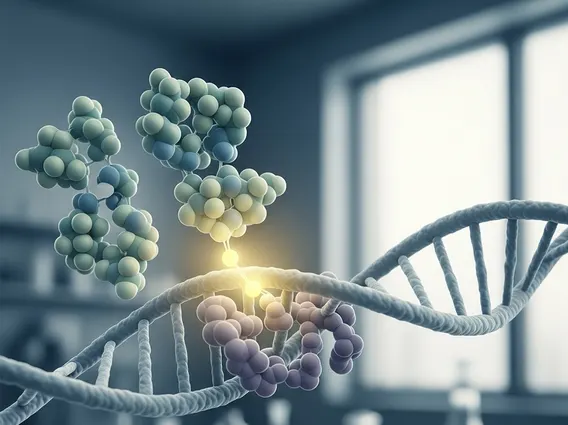
Histone Deacetylase (HDAC) is a family of enzymes that catalyze the removal of acetyl groups from lysine residues on histone proteins. Histones are the primary protein components of chromatin, serving as spools around which DNA winds. The acetylation and deacetylation of these histones are key epigenetic modifications that influence chromatin structure and, consequently, gene activity. By removing acetyl groups, HDACs contribute to the condensation of chromatin, making the DNA less accessible to the transcriptional machinery.
The primary histone deacetylase function is to regulate gene expression by altering the accessibility of DNA. When histones are deacetylated, the positive charge on their lysine residues is restored, increasing their affinity for the negatively charged DNA. This tighter binding results in a more compact chromatin structure, which generally leads to gene silencing or repression. Conversely, histone acetyltransferases (HATs) add acetyl groups, neutralizing the positive charge and promoting a more open chromatin structure, which facilitates gene activation.
Mechanism of Histone Deacetylase (HDAC) Action
The histone deacetylase mechanism of action involves a precise enzymatic process that removes acetyl groups from the ε-amino group of lysine residues on histone tails. This enzymatic activity is crucial for modulating chromatin structure and function. The removal of these acetyl groups leads to a change in the electrostatic interactions between the histones and the DNA. Specifically, the deacetylation restores the positive charge on the lysine residues, which then strengthens the ionic bond between the histones and the negatively charged phosphate backbone of the DNA molecule.
This increased affinity causes the chromatin to adopt a more condensed and compact conformation. In this tightly packed state, the DNA is sterically hindered, meaning that the necessary transcription factors and RNA polymerase enzymes cannot easily access the gene promoters. Consequently, this reduced accessibility effectively represses gene transcription, preventing the synthesis of messenger RNA (mRNA) from specific genes. There are several classes of HDACs, each with distinct structures and substrate specificities, but they all share this fundamental role in chromatin compaction and gene silencing.
Histone Deacetylase Role in Gene Expression
The profound histone deacetylase role in gene expression is central to maintaining cellular homeostasis and enabling proper development. By controlling the acetylation status of histones, HDACs act as crucial regulators that can switch genes off, thereby influencing a wide array of biological processes. This regulatory function is vital for cell differentiation, where specific sets of genes must be silenced to allow a cell to specialize into a particular tissue type. For instance, during embryonic development, HDACs ensure that genes appropriate for one cell lineage are repressed while those for another are activated.
Beyond differentiation, HDACs are also involved in regulating cell proliferation, apoptosis (programmed cell death), and DNA repair mechanisms. Dysregulation of HDAC activity can lead to imbalances in gene expression, which has been implicated in various pathological conditions, including cancer, inflammatory diseases, and neurodegenerative disorders. Understanding the precise mechanisms and specific targets of different HDACs is therefore critical for developing therapeutic strategies that aim to modulate gene expression for medical benefit.