Eus
Endoscopic Ultrasound (EUS) is a sophisticated medical procedure that combines endoscopy and ultrasound technology. It plays a crucial role in the diagnosis and staging of various gastrointestinal and respiratory conditions, offering detailed imaging of internal organs.
Key Takeaways
- EUS integrates endoscopy and ultrasound for high-resolution imaging of internal structures.
- It is essential for diagnosing and staging a range of gastrointestinal and respiratory diseases.
- The procedure involves a flexible endoscope with an ultrasound probe, providing real-time images.
- EUS aids in precise diagnosis, guiding biopsies, and facilitating therapeutic interventions.
- Its development has significantly advanced minimally invasive diagnostic and therapeutic capabilities in medicine.
What is Eus?
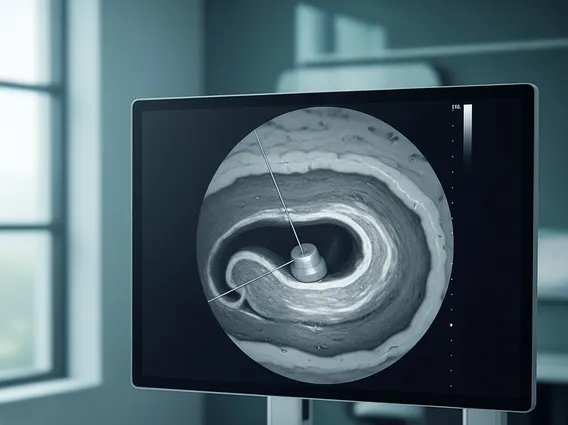
The term Endoscopic Ultrasound (EUS) refers to a minimally invasive medical procedure that utilizes an endoscope equipped with an ultrasound transducer at its tip. This innovative technology allows clinicians to obtain high-resolution images of the walls of the gastrointestinal (GI) tract and nearby organs, such as the pancreas, liver, bile ducts, and lymph nodes. By combining the visual capabilities of endoscopy with the detailed imaging of ultrasound, EUS provides a unique perspective that is often superior to traditional imaging methods for certain conditions.
The primary purpose of EUS is to provide detailed Eus meaning and definition by visualizing structures beyond the lumen of the GI tract, which are not accessible by standard endoscopy. The procedure involves inserting a thin, flexible tube (endoscope) through the mouth or rectum, guided to the area of interest. Once in position, the ultrasound probe emits sound waves that bounce off internal structures, creating real-time images. This allows for precise assessment of lesions, tumors, and other abnormalities, facilitating accurate diagnosis and staging of various diseases. EUS is particularly valuable for:
- Evaluating pancreatic cysts and masses.
- Detecting and staging esophageal, gastric, and rectal cancers.
- Assessing bile duct stones and strictures.
- Characterizing subepithelial lesions in the GI tract.
- Diagnosing chronic pancreatitis and other pancreatic disorders.
EUS is not only diagnostic but also therapeutic. It can be used to guide fine-needle aspiration (FNA) or biopsy of suspicious lesions, allowing for tissue sampling for pathological examination. This capability significantly enhances diagnostic accuracy, especially for cancers of the pancreas, esophagus, stomach, and rectum. Furthermore, EUS can facilitate therapeutic interventions such as drainage of fluid collections (e.g., pancreatic pseudocysts) or celiac plexus block for pain management in pancreatic cancer patients. According to a study published in Gastrointestinal Endoscopy, EUS-guided FNA has a diagnostic accuracy of over 85% for pancreatic masses (Source: American Society for Gastrointestinal Endoscopy).
History and Significance of Eus
The Eus history and facts date back to the early 1980s, with its initial development focused on improving the imaging of the pancreas and bile ducts. Early prototypes were rigid and difficult to maneuver, but technological advancements quickly led to the development of flexible endoscopes with integrated ultrasound transducers. The first clinical applications demonstrated its potential in providing detailed cross-sectional images that were previously unattainable without invasive surgery. Over the decades, continuous innovation has refined the equipment, making EUS a safer, more effective, and widely accessible procedure.
The significance of EUS in modern medicine cannot be overstated. It has revolutionized the approach to diagnosing and staging numerous conditions, particularly in oncology. For example, in pancreatic cancer, EUS provides critical information about Eus by accurately staging tumors, assessing vascular involvement, and guiding biopsies, which are all essential for determining resectability and treatment strategies. Similarly, for esophageal and rectal cancers, EUS offers precise depth of invasion assessment, influencing treatment decisions such as surgery, radiation, or chemotherapy.
Beyond oncology, EUS plays a vital role in the diagnosis of benign conditions. It is invaluable for detecting and characterizing gallstones, common bile duct stones, and chronic pancreatitis. Its ability to visualize small lesions and provide tissue samples has reduced the need for more invasive surgical procedures in many cases. The continuous evolution of EUS technology, including the integration of elastography and contrast-enhanced EUS, further enhances its diagnostic capabilities, allowing for even more refined characterization of tissue properties and vascularity. This ongoing development underscores its enduring importance as a cornerstone of advanced gastroenterological and pulmonological diagnostics.