
Dual Energy X Ray Absorptiometry
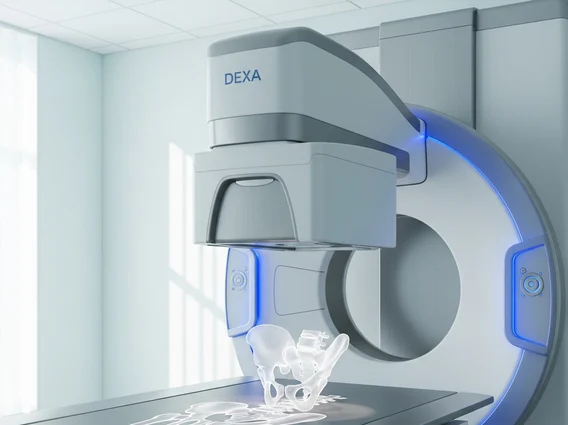
Dual Energy X Ray Absorptiometry is a widely used medical imaging technique that plays a crucial role in assessing bone health and body composition. This non-invasive procedure provides valuable insights into bone mineral density, aiding in the diagnosis and management of various conditions.
Key Takeaways
- Dual Energy X Ray Absorptiometry (DXA) is the gold standard for measuring bone mineral density (BMD).
- It uses two distinct X-ray energies to differentiate between bone and soft tissue, providing precise BMD measurements.
- DXA is primarily used for diagnosing osteoporosis, assessing fracture risk, and monitoring treatment effectiveness.
- The procedure is quick, non-invasive, and involves minimal radiation exposure.
- Beyond bone health, DXA can also be used for body composition analysis, measuring fat and lean mass.
What is Dual Energy X Ray Absorptiometry (DXA)?
Dual Energy X Ray Absorptiometry (DXA) is a specialized X-ray technology used to measure bone mineral density (BMD). It is considered the most accurate and widely accepted method for diagnosing osteoporosis and assessing an individual’s risk of developing fractures. The procedure involves a low-dose X-ray scan, typically focusing on the hip and spine, as these areas are most indicative of overall bone health and are common sites for osteoporotic fractures. Understanding dual energy x-ray absorptiometry is essential for patients and clinicians alike, as it provides critical data for preventive care and treatment planning.
This diagnostic tool is pivotal in identifying bone loss early, often before a fracture occurs. By quantifying the amount of bone mineral present in specific skeletal regions, DXA helps healthcare providers determine if a patient’s bone density is within a healthy range, indicative of osteopenia (low bone mass), or osteoporosis (severe bone loss). According to the National Osteoporosis Foundation, approximately 10 million Americans have osteoporosis, and another 44 million have low bone density, placing them at increased risk for the disease, highlighting the importance of accurate diagnostic methods like DXA.
Principles of Dual Energy X Ray Absorptiometry
Dual Energy X Ray Absorptiometry operates on the principle of differential absorption of X-rays by various tissues. The system emits two distinct X-ray beams, one with high energy and one with low energy, towards the area being examined. As these X-rays pass through the body, bone and soft tissue absorb them at different rates. The high-energy beam is absorbed more by soft tissue, while the low-energy beam is absorbed more by bone.
The DXA scanner then measures the amount of X-ray energy that passes through the body. By comparing the absorption rates of the two energy beams, the system’s software can accurately subtract the soft tissue component and isolate the bone mineral content. This precise measurement allows for the calculation of bone mineral density, typically expressed in grams per square centimeter (g/cm²). The results are then compared to a reference population to generate T-scores and Z-scores, which are standard metrics used to interpret bone health. This is precisely how dual energy x-ray absorptiometry works to provide a clear picture of bone density.
Uses of Dual Energy X Ray Absorptiometry
The primary dual energy x-ray absorptiometry uses revolve around the assessment and management of bone health. Its most significant application is in the diagnosis of osteoporosis, a condition characterized by weakened bones that are prone to fractures. DXA scans are recommended for:
- Postmenopausal women aged 65 and older.
- Men aged 70 and older.
- Individuals with certain risk factors for osteoporosis, such as a family history of the disease, long-term corticosteroid use, or specific medical conditions like rheumatoid arthritis or hyperthyroidism.
- Monitoring the effectiveness of osteoporosis treatments over time.
Beyond bone mineral density, DXA technology is also increasingly utilized for body composition analysis. This application allows for precise measurement of fat mass, lean mass, and bone mass throughout the body. This information can be valuable for athletes, individuals managing weight, and those with metabolic disorders, providing a detailed breakdown of body composition that can inform personalized health and fitness strategies. The versatility of DXA makes it an indispensable tool in both clinical diagnostics and health monitoring.



















