
DNA
Deoxyribonucleic Acid (DNA) is the fundamental molecule carrying the genetic instructions for the development, functioning, growth, and reproduction of all known organisms and many viruses. It serves as the unique blueprint of life, dictating the characteristics of every individual.
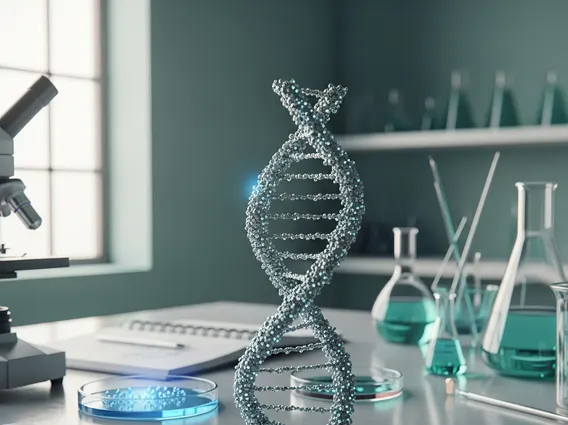
Key Takeaways
- DNA is the hereditary material containing instructions for all life processes.
- Its iconic double helix structure, composed of nucleotides, stores and transmits genetic information.
- DNA’s primary functions include coding for protein synthesis and ensuring heredity.
- It plays a crucial role in determining an individual’s traits and disease predispositions.
- Understanding DNA is vital for advancements in medicine, genetics, and biotechnology.
What is DNA (Deoxyribonucleic Acid) and its Essential Functions?
Deoxyribonucleic Acid (DNA) is a complex macromolecule serving as the hereditary material in humans and almost all other organisms. It contains the unique genetic code that defines each individual, from eye color to disease susceptibility. Primarily found within the nucleus of eukaryotic cells, DNA is essential for life, orchestrating cellular activities and ensuring the continuity of genetic information across generations.
The essential functions of DNA are multifaceted and critical for biological processes. Primarily, it acts as a long-term storage device for genetic information, much like a biological hard drive. This information is meticulously organized into genes, which are specific sequences of DNA that provide instructions for making proteins. Proteins, in turn, perform the vast majority of functions within a cell, crucial for the body’s structure, function, and regulation. Another vital function is replication, where DNA makes exact copies of itself. This process is fundamental for cell division, allowing new cells to receive a complete set of genetic instructions.
The Double Helix: Understanding DNA Structure and How it Works
The structure of DNA is famously known as a double helix, a twisted ladder shape first described by James Watson and Francis Crick in 1953. This elegant architecture is fundamental to how DNA works in the human body. Each strand of the helix is a polymer made up of repeating units called nucleotides. A nucleotide consists of three components: a deoxyribose sugar, a phosphate group, and one of four nitrogenous bases: adenine (A), guanine (G), cytosine (C), or thymine (T).
The two strands of the double helix are held together by hydrogen bonds between complementary base pairs: adenine always pairs with thymine (A-T), and guanine always pairs with cytosine (G-C). This specific pairing rule is crucial for DNA replication and transcription. The sequence of these bases along the DNA strand forms the genetic code, which dictates the order of amino acids in proteins. This intricate structure allows DNA to store vast amounts of information in a compact form and provides a mechanism for its accurate duplication and transmission.
- Phosphate-Sugar Backbone: Forms the structural framework of the DNA strands, providing stability.
- Nitrogenous Bases: Adenine (A), Guanine (G), Cytosine (C), and Thymine (T) are the “letters” of the genetic code.
- Complementary Base Pairing: A always binds with T, and G always binds with C, ensuring accurate replication and repair.
- Antiparallel Strands: The two strands run in opposite directions, vital for the replication machinery.
The Genetic Blueprint: Importance of DNA in Heredity
The importance of DNA in genetics cannot be overstated, as it serves as the ultimate genetic blueprint for all living organisms. DNA is the molecule responsible for heredity, the process by which genetic information is passed from parents to their offspring. Every cell in an individual’s body contains the same set of DNA instructions, inherited from their biological parents. This transmission of genetic traits ensures offspring resemble their parents, while also allowing for the variations that drive evolution.
During reproduction, DNA is faithfully copied and passed down, carrying instructions for physical traits, predispositions to certain diseases, and even some behavioral characteristics. For instance, the Human Genome Project, completed in 2003, mapped the entire human genome, revealing the sequence of all 3 billion DNA base pairs. This monumental effort profoundly advanced our understanding of genetic diseases and personalized medicine. According to the National Human Genome Research Institute, this project enabled the identification of thousands of disease genes, leading to improved diagnostics and targeted therapies. Understanding DNA’s role in heredity is crucial for genetic counseling, forensic science, and the study of evolutionary biology.



















