Diagnosis, Screening, and Early Detection of Esophageal Cancer
Esophageal cancer is a serious condition that, when caught early, offers significantly better treatment outcomes. Understanding the subtle symptoms, knowing when screening is appropriate, and recognizing the diagnostic process are crucial steps in facing this disease.
Key Takeaways
- Early symptoms of esophageal cancer are often subtle and can be easily mistaken for more common digestive problems.
- There is no standard screening test for the general population; screening is generally reserved for people at meaningfully higher risk, such as those with Barrett’s esophagus or long-standing, severe reflux.
- A definitive diagnosis requires an upper endoscopy with biopsy; staging then adds imaging such as endoscopic ultrasound, CT, and PET scans.
- Only about one in five esophageal cancers in the United States are found while still confined to the esophagus, part of why persistent symptoms deserve prompt evaluation.
- If you have difficulty swallowing, unexplained weight loss, or other persistent symptoms, seek medical evaluation promptly.
Symptoms and Early Warning Signs
Early-stage esophageal cancer often produces no clear warning signs, and when symptoms do appear they tend to be vague, easily blending in with everyday digestive complaints. In its earliest stages, the disease may cause no noticeable symptoms at all, which is one reason screening for higher-risk individuals matters more than waiting for symptoms alone. As a tumor grows, certain signs tend to emerge and prompt people to seek care.
The symptom that most often prompts an evaluation is a growing sense that food is catching on its way down, along with several other possible warning signs detailed elsewhere on this site. Because none of these on their own point specifically to cancer, a full medical work-up is the only reliable way to rule it in or out.
Patients may also notice chronic coughing, hoarseness, or regurgitation of undigested food, and in some cases vomiting blood. Persistent or worsening versions of any of these symptoms are reason enough to see a doctor, particularly for people who also have long-standing reflux or other known risk factors.
Esophageal Cancer Screening Options
Doctors do not currently recommend a standard screening test for esophageal cancer in the general population. Instead, screening is reserved for people identified as being at meaningfully higher risk, with the goal of catching precancerous changes — such as Barrett’s esophagus — before they progress to cancer.
The main tool used in these higher-risk groups is upper endoscopy with biopsy: a thin, lighted tube is passed through the mouth and down into the esophagus so the doctor can examine the lining directly, and small tissue samples are taken from several areas and checked under a microscope. This surveillance matters most for people with Barrett’s esophagus, a condition in which chronic acid reflux replaces the normal esophageal lining with tissue resembling that of the intestine. Whether abnormal (dysplastic) cells are found, and how advanced those changes are, shapes how often follow-up endoscopy is recommended; your doctor sets that schedule based on your own biopsy results rather than a fixed calendar that applies to everyone.
Other approaches — including brushing or collecting cells from the esophageal lining and specialized light-based imaging — are being studied but are not yet standard practice. For now, endoscopic surveillance remains the main option for higher-risk individuals. People with long-standing or severe GERD, a smoking history, heavy alcohol use, or obesity should discuss with a doctor whether this kind of monitoring makes sense for them.
The Esophageal Cancer Diagnosis Process
When symptoms raise concern for esophageal cancer, the workup usually starts with a detailed medical history and physical exam, followed by tests to look directly at the esophagus and, once cancer is confirmed, to determine how far it has spread. A series of x-rays taken after swallowing a contrast liquid (a barium swallow) can sometimes show narrowing or other abnormalities, though it does not replace direct visualization and biopsy.
Initial Diagnostic Steps
If persistent dysphagia, unexplained weight loss, or similar symptoms are present, the next step is usually an upper endoscopy. A gastroenterologist passes a thin, lighted tube through the mouth and down the throat to view the esophagus directly, looking for masses, ulcers, or changes in the lining. If anything suspicious is seen, small tissue samples are removed for a pathologist to examine.
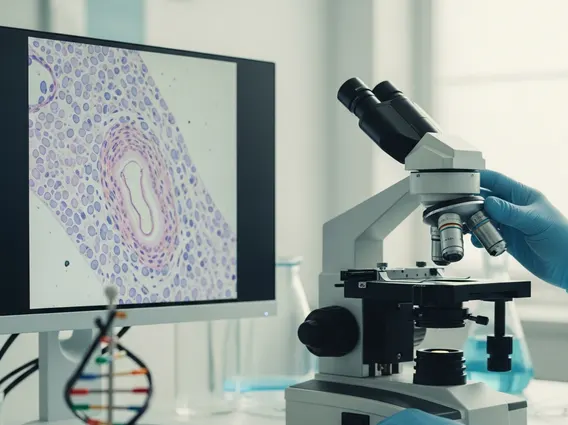
The biopsy is what confirms a diagnosis; imaging alone cannot do this. Under the microscope, the pathologist determines whether cancer cells are present and, if so, which type — squamous cell carcinoma or adenocarcinoma, the two main forms of esophageal cancer, which tend to differ in their risk factors.
Confirmatory and Staging Procedures
Once biopsy confirms cancer, further testing establishes the stage — how large the tumor is, where it sits, and whether it has spread. Endoscopic ultrasound (EUS) combines endoscopy with ultrasound imaging to show the layers of the esophageal wall and nearby lymph nodes, helping assess how deep the tumor has grown and whether nearby lymph nodes are involved. CT scans of the chest, abdomen, and pelvis look for spread to other organs, and a PET scan — sometimes combined with CT as a PET-CT — can help find cancer cells elsewhere in the body, since they tend to take up more of the radioactive tracer used in the scan than normal tissue does. In some cases, a laparoscopy, a minimally invasive surgical look inside the abdomen, is used to check directly for signs of spread. Together, these tests give the care team the information needed to plan treatment.
Why Early Detection Matters
When esophageal cancer is caught while still confined to the esophagus, treatment tends to be less extensive and outcomes tend to be better than when it is found after spreading to lymph nodes or distant organs. Nationally, only about one in five esophageal cancers are diagnosed at this earliest, localized stage — a gap that reflects how subtle early symptoms can be, and part of why screening in higher-risk groups, alongside prompt evaluation of new symptoms, is emphasized throughout this process.
Cancers caught at this earliest stage typically call for less extensive treatment than those found after the disease has spread; the specific options are covered on this site’s treatment page rather than repeated here. Survival also differs considerably by stage at diagnosis, and those figures live on this site’s survival rate page. What can be said here is that catching esophageal cancer early consistently gives people more treatment choices and, in general, a better outlook than a later diagnosis does.
Frequently Asked Questions
What are the primary risk factors for esophageal cancer?
Esophageal cancer has two main types with somewhat different risk factors. Squamous cell carcinoma is linked most strongly to smoking and heavy alcohol use. Adenocarcinoma, the more common type, is linked to Barrett’s esophagus, which can develop from long-standing gastroesophageal reflux disease (GERD); being male and having obesity also raise risk. Talk with a doctor about which of these apply to you and whether screening or closer monitoring is appropriate.
Can lifestyle changes reduce the risk of esophageal cancer?
Yes, several factors within your control affect risk. Not smoking and limiting or avoiding alcohol are the most consistently supported steps, especially for the squamous cell type. If you have severe or long-standing GERD, getting it evaluated and treated helps manage symptoms, though it isn’t firmly established that treating reflux itself lowers adenocarcinoma risk specifically. If you already have Barrett’s esophagus, keeping up with whatever endoscopic monitoring schedule your doctor recommends matters more than any single lifestyle change.
How often should individuals with Barrett’s esophagus be screened?
There isn’t one interval that applies to everyone. Surveillance endoscopy frequency depends on whether dysplasia (abnormal cell changes) is present and how advanced it is; your gastroenterologist sets a personalized schedule from your biopsy results and adjusts it if follow-up testing shows a change. If you have Barrett’s esophagus, keeping to whatever schedule your doctor recommends matters more than any general rule of thumb.
Sources