
Cryoablation
Cryoablation is a minimally invasive medical procedure that uses extreme cold to destroy abnormal tissue. This technique offers a precise and effective alternative for treating various conditions, particularly certain types of tumors.
Key Takeaways
- Cryoablation precisely destroys diseased tissue using extreme cold, forming an ice ball.
- It’s a minimally invasive, image-guided procedure for treating various tumors (e.g., kidney, liver, lung).
- The process involves freezing and thawing cycles that cause cell destruction, which the body then absorbs.
- Benefits include reduced pain, faster recovery, and lower risks compared to open surgery.
- Side effects are generally mild and localized, such as temporary pain, swelling, or nerve irritation.
What is Cryoablation?
Cryoablation is a medical technique employing intensely cold temperatures to destroy diseased or abnormal tissue, including cancerous cells. Often called “ice surgery,” it’s a minimally invasive alternative to traditional surgery, offering a targeted approach to treatment. Its primary goal is to eliminate unwanted tissue while preserving surrounding healthy structures.
How Does Cryoablation Work?
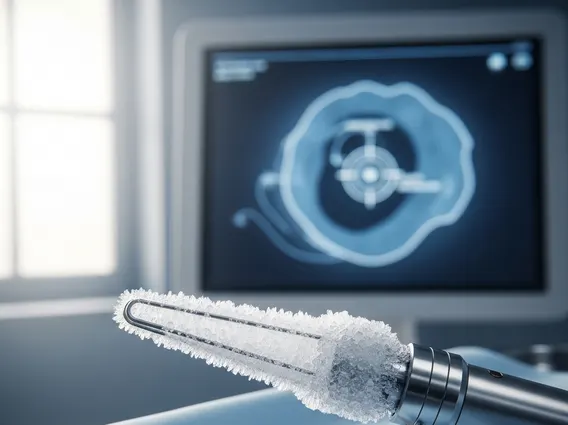
The mechanism behind how does cryoablation work involves inserting thin, hollow needles, called cryoprobes, into the target tissue. These probes circulate extremely cold gases, like argon, to rapidly cool the tip, creating an “ice ball” that encompasses and freezes the targeted cells. This extreme cold forms intracellular ice crystals, disrupting cell membranes. Subsequent thawing, often followed by another freeze-thaw cycle, further damages cells, leading to their death. The body then naturally absorbs the destroyed tissue. Real-time imaging (ultrasound, CT, MRI) guides this precise process, ensuring effective cell destruction with minimal impact on healthy tissue.
Cryoablation Procedure and Treatment Uses
The cryoablation procedure is typically performed on an outpatient basis or with a short hospital stay. Patients receive local anesthesia and often conscious sedation. Using advanced imaging guidance, the physician inserts one or more cryoprobes through a small skin incision directly into the target area. Freezing cycles are initiated, with ice ball formation meticulously monitored to ensure complete coverage of diseased tissue while protecting vital structures. After ablation, probes are removed, and the small incision is bandaged. The versatility of this technique has expanded its cryoablation treatment uses across various medical specialties.
Conditions Treated with Cryoablation
Cryoablation is an effective treatment option for a growing number of conditions, especially when surgery is not feasible or desired.
- Kidney Tumors: Particularly small renal cell carcinomas, offering a less invasive option for non-surgical candidates.
- Liver Tumors: For primary and metastatic liver cancers, especially small, localized lesions.
- Lung Tumors: Used for certain primary or metastatic lung lesions, providing localized treatment.
- Prostate Cancer: As a primary treatment for localized prostate cancer or for recurrent disease.
- Bone Tumors: To alleviate pain and destroy certain benign or metastatic bone lesions.
- Breast Fibroadenomas: For benign breast lumps, an alternative to surgical excision.
- Certain Cardiac Arrhythmias: To create scar tissue blocking abnormal electrical pathways in the heart.
The American Cancer Society notes a growing trend towards minimally invasive procedures like cryoablation for early-stage cancers, reflecting a preference for less aggressive interventions with comparable efficacy in selected cases.
Benefits and Side Effects of Cryoablation
Understanding the full scope of cryoablation side effects and benefits is crucial for patients considering this treatment. The procedure offers several advantages over traditional open surgery.
Benefits of Cryoablation:
- Minimally Invasive: Small incisions, less pain and scarring.
- Faster Recovery: Shorter hospital stays, quicker return to normal activities.
- Reduced Blood Loss: Freezing constricts blood vessels, minimizing bleeding.
- Lower Risk of Complications: Fewer complications compared to major surgery.
- Repeatable: Can be repeated and doesn’t preclude future treatment options.
- Local Anesthesia: Often performed under local anesthesia and sedation.
Potential Side Effects of Cryoablation:
While generally safe, cryoablation can have some side effects, usually mild and temporary:
- Localized Pain/Soreness: At the treatment site, manageable with pain relievers.
- Swelling/Bruising: Around the incision area.
- Nerve Damage: Temporary numbness, tingling, or weakness if a nerve is near the ablation zone, often resolving.
- Skin Changes: Redness, blistering, or discoloration at the probe insertion site.
- Bleeding/Infection: Rare, as with any invasive procedure.
- Organ-Specific Complications: Risks depending on the treated organ (e.g., pneumothorax for lung).
Patients should discuss these potential outcomes with their healthcare provider for an informed decision.



















