
Crispr CAS9
Crispr CAS9 represents a groundbreaking gene-editing technology that has revolutionized molecular biology and holds immense promise for medical advancements. This powerful tool allows scientists to precisely modify DNA, offering new avenues for understanding and treating a wide range of diseases.
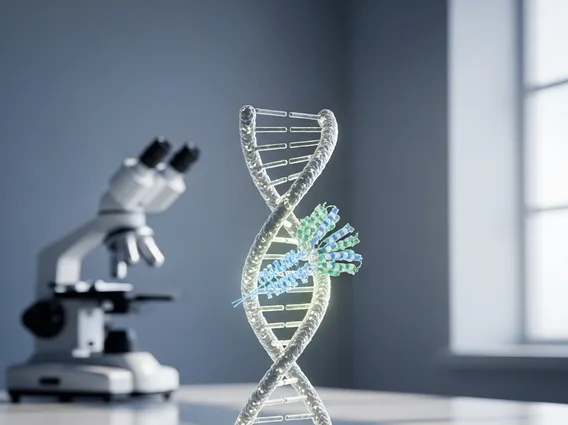
Key Takeaways
- Crispr CAS9 is a revolutionary gene-editing system derived from bacterial immune defenses.
- It enables precise targeting and modification of specific DNA sequences within an organism’s genome.
- The technology involves a guide RNA molecule that directs the Cas9 enzyme to the desired DNA location for cutting.
- Crispr CAS9 holds significant potential for treating genetic disorders, developing new therapies, and advancing biological research.
- Its applications span from correcting disease-causing mutations to enhancing agricultural traits.
What is Crispr CAS9?
Crispr CAS9 is a sophisticated gene-editing tool that allows for precise alterations to DNA sequences. The acronym CRISPR stands for Clustered Regularly Interspaced Short Palindromic Repeats, which are segments of prokaryotic DNA containing short, repetitive base sequences. CAS9 refers to CRISPR-associated protein 9, an enzyme that acts as molecular scissors.
This system originated from a natural defense mechanism found in bacteria and archaea, which use it to detect and destroy viral DNA. Scientists have harnessed this natural process to create a highly efficient and accurate method for editing genes in various organisms, including humans. The mechanism behind Crispr CAS9 gene editing explained involves a guide RNA molecule that directs the Cas9 enzyme to a specific target DNA sequence, where it then makes a precise cut.
How Crispr CAS9 Works
The functionality of Crispr CAS9 hinges on two key components: a guide RNA (gRNA) and the Cas9 enzyme. The gRNA is engineered to match a specific DNA sequence that researchers intend to modify. Once introduced into a cell, this guide RNA leads the Cas9 enzyme directly to the complementary DNA target. Upon arrival, the Cas9 enzyme creates a double-strand break in the DNA at that exact location.
After the DNA is cut, the cell’s natural repair mechanisms are activated. Scientists can then leverage these repair pathways to introduce desired changes. For instance, they can disable a gene by allowing the cell to repair the break imperfectly (non-homologous end joining), or they can insert a new piece of DNA by providing a template for homologous recombination. This precise cutting and subsequent repair manipulation are what make Crispr CAS9 an incredibly powerful tool for genetic engineering.
Applications of Crispr CAS9 Technology
The versatility of Crispr CAS9 has opened up numerous possibilities across medicine, agriculture, and fundamental biological research. In the medical field, Crispr CAS9 technology uses are being explored for treating a wide array of genetic disorders. For example, clinical trials are underway to assess its potential in correcting mutations responsible for conditions like sickle cell disease, beta-thalassemia, and certain forms of inherited blindness. It also shows promise in developing new cancer immunotherapies by modifying immune cells to better target tumor cells.
Beyond human health, Crispr CAS9 is being applied to enhance agricultural productivity and sustainability. Researchers are using it to develop crops with improved resistance to pests and diseases, increased nutritional value, and enhanced resilience to environmental stressors. For instance, the technology can be used to engineer rice varieties that are more resistant to blight or wheat that is less susceptible to fungal infections. This broad applicability underscores its transformative potential across various sectors.



















