Causes and Risk Factors for Myelodysplastic Syndromes
Myelodysplastic syndromes are bone marrow disorders that, in most patients, arise from acquired genetic changes in blood-forming stem cells rather than from an identifiable outside cause. These changes impair normal blood cell development, resulting in low and dysfunctional blood counts. This page reviews what is currently understood about how MDS develops and which factors are associated with higher risk.
Key Takeaways
- According to NCI, in roughly 90% of cases, MDS occurs with no identifiable cause — it develops on its own rather than from a known trigger.
- Advanced age is the most consistently recognized risk factor, tied to the gradual buildup of DNA damage in blood-forming cells.
- Prior chemotherapy or radiation therapy for another cancer can lead to secondary, or treatment-related, MDS.
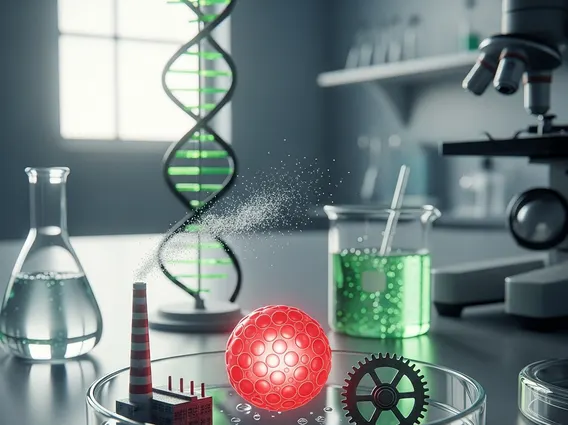
- Environmental and occupational exposures — including tobacco smoke, benzene and related organic chemicals, heavy metals, and certain pesticides — are recognized potential risk factors.
- Inherited conditions explain only a small share of cases; MDS carries a meaningful long-term leukemia-transformation risk (about one in three patients, per MedlinePlus), which is a consequence of disease biology rather than of any specific cause discussed on this page.
How Myelodysplastic Syndromes Develop
Myelodysplastic syndromes begin in the bone marrow, where blood-forming stem cells gradually lose the ability to mature into functioning blood cells. Instead of producing healthy red cells, white cells, and platelets, the marrow generates abnormal cells with structural and functional defects. Many of these defective cells die in the bone marrow or shortly after entering the bloodstream — a process that leaves the blood chronically short of mature, working cells (cytopenia).
This creates what can look like a crowded but inefficient bone marrow: it may be packed with precursor cells, yet those cells are effectively unable to complete development and replenish the blood supply. The result is a state of ongoing vulnerability, since a shortage of mature cells impairs functions such as oxygen delivery, immune defense, and clotting.
Primary Biological Causes of MDS
At the biological level, MDS begins with damage to the DNA of blood-forming stem cells. The National Cancer Institute (NCI) reports that about 90% of MDS cases arise de novo, without any identifiable trigger. In many of these cases, the DNA changes appear to accumulate gradually with age, as the body’s capacity to repair genetic errors declines over time.
When an identifiable cause is not found, the DNA alterations often involve chromosomal abnormalities, such as the loss of part of a chromosome or an extra copy of one. These changes can disrupt the normal checkpoints that would otherwise trigger repair or removal of damaged cells, allowing an abnormal cell population to expand and eventually produce the clinical features of the disease.
Environmental and Occupational Risk Factors
For the smaller share of cases with an identifiable external contributor, several environmental and occupational exposures are recognized as linked to MDS risk:
- Tobacco smoke
- Ionizing radiation
- Organic chemicals such as benzene, toluene, xylene, and chloramphenicol
- Heavy metals
- Herbicides, pesticides, and fertilizers
- Stone and cereal dusts, exhaust gases, and petroleum or diesel derivatives
Benzene in particular is a well-recognized bone marrow toxin: long-term inhalation or skin contact, whether from industrial solvents, fuel, or tobacco smoke, has been linked to DNA damage in developing blood cells. People who work in industries with regular exposure to these substances — such as rubber, petroleum, or chemical manufacturing — are considered to carry a higher cumulative exposure risk, although this does not mean exposure will lead to MDS in a given individual.
Major Risk Factors and Their Impact
Taken together, the factors most consistently associated with MDS risk are summarized below.
| Risk Factor | How It Is Thought to Contribute |
|---|---|
| Advanced age | Cumulative DNA damage and a natural decline in the body’s DNA-repair capacity over time. |
| Prior chemotherapy or radiation | Direct, lasting DNA damage in bone marrow stem cells (secondary/treatment-related MDS). |
| Benzene and related organic chemicals | Direct chemical toxicity to blood-forming stem cells. |
| Tobacco smoke | Delivers benzene and other carcinogens into the bloodstream and bone marrow. |
| Heavy metals and certain pesticides | Associated with increased risk in occupational and environmental exposure studies. |
| Inherited bone marrow failure conditions | Present from birth in a small subset of, usually younger, patients. |
Medical History and Therapy-Related Risks
A patient’s treatment history is one of the clearest identifiable contributors to MDS risk. Previous treatment for another cancer can lead to what is classified as secondary, or treatment-related, MDS, which tends to behave differently — and often more aggressively — than MDS that arises without a prior cancer history.
- Chemotherapy: Certain chemotherapy drug classes, including alkylating agents and topoisomerase II inhibitors, can cause lasting DNA damage in healthy stem cells even as they work to kill cancer cells, and this damage can later manifest as treatment-related MDS.
- Radiation therapy: Radiation directed near major bone marrow-containing structures, such as the pelvis, spine, or sternum, can damage the marrow’s supportive environment and its capacity to regenerate.
- Stem cell transplant history: People who have undergone a stem cell transplant may also be at increased risk, largely because of the high-dose chemotherapy typically given as part of that process.
Treatment-related MDS is generally understood to develop some time after the original cancer therapy rather than immediately, though the exact interval varies from patient to patient and is best discussed with a hematologist familiar with the individual case.
Genetic Predisposition and Inherited Influences
Most MDS is acquired over a person’s lifetime rather than inherited. Still, in a small percentage of patients — more often younger patients — an inherited condition plays a role. Fanconi anemia is one such condition: it is characterized by bone marrow failure from birth, and people with Fanconi anemia may go on to develop myelodysplastic syndrome or acute myeloid leukemia as one of its recognized complications. Identifying an inherited predisposition matters clinically because it can affect screening recommendations and treatment choices, including decisions around stem cell transplantation.
FAQs about for Myelodysplastic Syndromes
Is Myelodysplastic Syndrome Hereditary?
Most cases of myelodysplastic syndrome are acquired and do not run in families; in fact, according to federal cancer-research data, about 90% of cases have no identifiable cause at all, genetic or otherwise. In rare situations, an inherited bone marrow failure condition, such as Fanconi anemia, can increase susceptibility, particularly in younger patients.
What is the difference between primary and secondary Myelodysplastic Syndromes?
Primary MDS occurs without an identifiable external trigger and is most commonly associated with age-related genetic changes in bone marrow stem cells. Secondary MDS, also called treatment-related MDS, follows prior chemotherapy, radiation therapy, or long-term exposure to substances such as benzene.
Does alcohol cause Myelodysplastic Syndromes?
Alcohol is not established as a direct cause of MDS in the NCI and MedlinePlus resources reviewed for this page. That said, heavy or long-term alcohol use is broadly recognized to affect bone marrow function and can interfere with the absorption of nutrients such as folate and vitamin B12, both of which matter for healthy blood cell production. Patients diagnosed with MDS are generally advised to discuss alcohol use with their care team.
Sources