Key Takeaways
- Liver cancer can be primary (originating in the liver) or secondary (spreading from other organs), with Hepatocellular Carcinoma (HCC) being the most common primary type.
- Recognizing symptoms of liver cancer early, such as unexplained weight loss, fatigue, or jaundice, is vital for timely diagnosis.
- Chronic viral hepatitis (B and C), cirrhosis, and non-alcoholic fatty liver disease are significant causes of liver cancer.
- Diagnosis involves imaging, blood tests, and sometimes biopsy, leading to staging that informs liver cancer treatment options.
- Treatment varies based on the stages of liver cancer and liver function, impacting the overall liver cancer prognosis.
What is Liver Cancer?
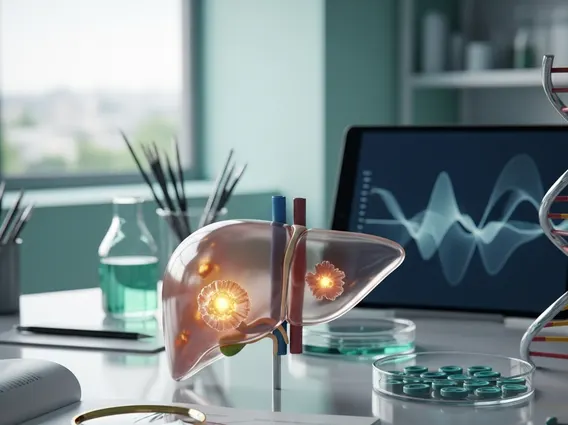
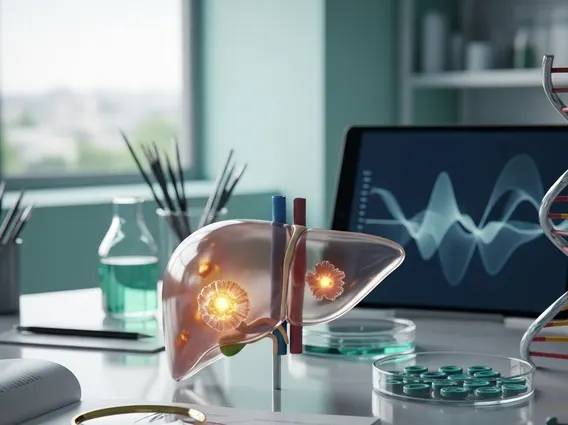
What is liver cancer? It refers to any cancer that begins in the liver. The liver is a vital organ located in the upper right quadrant of the abdomen, responsible for numerous functions including detoxification, protein synthesis, and bile production. When liver cells grow abnormally and uncontrollably, they form tumors, which can be benign (non-cancerous) or malignant (cancerous).
Primary vs. Secondary Liver Cancer
Liver cancer is broadly categorized based on its origin:
- Primary Liver Cancer: This type originates in the liver itself. It is less common than secondary liver cancer in many Western countries but is a significant global health concern.
- Secondary (Metastatic) Liver Cancer: This occurs when cancer cells from another part of the body, such as the colon, lung, or breast, spread to the liver. The liver is a common site for metastasis due to its rich blood supply.
Common Types of Liver Cancer
Among primary liver cancers, the most prevalent type is Hepatocellular Carcinoma (HCC). HCC accounts for about 75-85% of all primary liver cancers and typically develops in people with chronic liver diseases, such as cirrhosis. Other less common types include:
- Cholangiocarcinoma: This cancer originates in the bile ducts, which are tubes that carry bile from the liver to the small intestine. It can be intrahepatic (within the liver) or extrahepatic (outside the liver).
- Angiosarcoma: A rare and aggressive cancer that starts in the blood vessels of the liver.
- Hepatoblastoma: A very rare type of liver cancer that primarily affects young children.
Recognizing Symptoms
The symptoms of liver cancer can be subtle in its early stages, often leading to delayed diagnosis. As the disease progresses, symptoms become more pronounced and can significantly impact a person’s quality of life. It is important to be aware of these indicators, especially for individuals with known risk factors.
Early Signs to Watch For
In its initial phases, liver cancer may not cause any noticeable symptoms. When symptoms do appear, they are often non-specific and can be mistaken for other less serious conditions. Early signs may include:
- Unexplained Weight Loss: Losing weight without trying, often accompanied by a loss of appetite.
- Fatigue and Weakness: Persistent tiredness that doesn’t improve with rest.
- Abdominal Discomfort: A dull ache or discomfort in the upper right abdomen, sometimes radiating to the back or shoulder.
- Nausea and Vomiting: Persistent feelings of sickness or actual vomiting.
- Feeling Full After Small Meals: Due to an enlarged liver pressing on the stomach.
Advanced Stage Indicators
As liver cancer advances, the symptoms typically become more severe and indicative of significant liver impairment. These advanced stage indicators often prompt medical attention:
- Jaundice: Yellowing of the skin and whites of the eyes, caused by the buildup of bilirubin in the blood.
- Abdominal Swelling (Ascites): Fluid accumulation in the abdominal cavity, leading to a distended belly.
- Dark Urine and Pale Stools: Changes in urine and stool color due to impaired bile flow.
- Itching: Generalized skin itching, also a result of bilirubin buildup.
- Enlarged Liver or Spleen: A doctor may be able to feel an enlarged liver (hepatomegaly) or spleen (splenomegaly) during a physical exam.
- Severe Abdominal Pain: More intense and persistent pain in the upper right abdomen.
Causes and Risk Factors
Understanding the causes of liver cancer is essential for prevention and risk assessment. Most cases of primary liver cancer develop in individuals with pre-existing liver damage or chronic liver diseases. These conditions create an environment where liver cells are more prone to cancerous changes.
Underlying Liver Conditions
The most significant risk factor for hepatocellular carcinoma (HCC) is cirrhosis, a condition where healthy liver tissue is replaced by scar tissue. Cirrhosis can result from various chronic liver diseases:
- Chronic Hepatitis B and C Infection: Long-term infection with hepatitis B virus (HBV) or hepatitis C virus (HCV) is a leading cause of liver cancer worldwide. These viruses cause chronic inflammation that can lead to cirrhosis and, subsequently, cancer. According to the World Health Organization (WHO), chronic viral hepatitis is responsible for approximately 80% of all liver cancers globally.
- Non-alcoholic Fatty Liver Disease (NAFLD) and Non-alcoholic Steatohepatitis (NASH): These conditions, often linked to obesity and type 2 diabetes, involve fat accumulation in the liver. NASH, a more severe form of NAFLD, can progress to cirrhosis and liver cancer.
- Alcoholic Liver Disease: Chronic and excessive alcohol consumption can lead to alcoholic hepatitis and cirrhosis, significantly increasing the risk of liver cancer.
- Hemochromatosis: A genetic disorder causing excessive iron accumulation in the liver and other organs, leading to damage and increased cancer risk.
- Primary Biliary Cholangitis (PBC) and Primary Sclerosing Cholangitis (PSC): Autoimmune diseases affecting the bile ducts, which can lead to cirrhosis and increase the risk of cholangiocarcinoma.
Lifestyle & Genetic Influences
Beyond direct liver conditions, certain lifestyle choices and genetic factors can also contribute to the development of liver cancer:
- Obesity and Type 2 Diabetes: These conditions are closely linked to NAFLD and NASH, indirectly increasing liver cancer risk.
- Exposure to Aflatoxins: These are toxic substances produced by certain molds that can grow on crops like peanuts, corn, and tree nuts. Ingesting aflatoxin-contaminated food is a significant risk factor, especially in regions with poor food storage practices.
- Smoking: Tobacco smoking is a known risk factor for various cancers, including liver cancer.
- Anabolic Steroids: Long-term use of anabolic steroids has been linked to an increased risk of liver tumors.
- Certain Genetic Syndromes: Rare genetic conditions like alpha-1 antitrypsin deficiency can increase susceptibility to liver disease and cancer.
Diagnosing & Staging
Accurate diagnosis and staging are critical steps in managing liver cancer, as they guide treatment decisions and provide insights into the patient’s prognosis. A combination of imaging, blood tests, and sometimes biopsy is used to confirm the presence of cancer and determine its extent.
Key Diagnostic Procedures
When liver cancer is suspected, doctors employ several diagnostic tools:
- Blood Tests:
- Alpha-fetoprotein (AFP): Elevated levels of this tumor marker can indicate HCC, though not all HCCs produce AFP, and other conditions can also raise its levels.
- Liver Function Tests: Assess the overall health and function of the liver.
- Hepatitis Virus Tests: To check for chronic HBV or HCV infections.
- Imaging Tests: These provide detailed pictures of the liver and can detect tumors.
- Ultrasound: Often the first imaging test, it can identify masses in the liver.
- Computed Tomography (CT) Scan: Provides detailed cross-sectional images, useful for assessing tumor size, number, and spread.
- Magnetic Resonance Imaging (MRI) Scan: Offers even more detailed images of soft tissues and can help differentiate between benign and malignant lesions.
- Biopsy: In some cases, a liver biopsy (removing a small tissue sample for microscopic examination) may be performed to confirm the diagnosis, especially if imaging results are inconclusive. However, for typical HCC in cirrhotic livers, a biopsy may not be necessary if characteristic imaging features are present.
Understanding Cancer Stages
Once liver cancer is diagnosed, doctors determine the stages of liver cancer. Staging describes the size of the tumor, whether it has spread to nearby lymph nodes, and if it has metastasized to distant parts of the body. The most commonly used system for staging is the TNM system (Tumor, Node, Metastasis), along with systems that consider liver function, such as the Barcelona Clinic Liver Cancer (BCLC) staging system.
The BCLC system is particularly relevant for liver cancer because it integrates tumor characteristics, liver function, and the patient’s overall health status to recommend specific treatment strategies. It categorizes liver cancer into five stages:
| BCLC Stage | Description | Typical Treatment Approach |
|---|---|---|
| Stage 0 (Very Early) | Single tumor <2 cm, good liver function, excellent performance status. | Curative treatments (resection, ablation). |
| Stage A (Early) | 1-3 tumors <3 cm, good liver function, good performance status. | Curative treatments (resection, transplantation, ablation). |
| Stage B (Intermediate) | Multiple tumors, good liver function, good performance status. | Loco-regional therapies (transarterial chemoembolization – TACE). |
| Stage C (Advanced) | Tumor with vascular invasion or extrahepatic spread, or impaired performance status. | Systemic therapies (targeted therapy, immunotherapy). |
| Stage D (Terminal) | Severe liver dysfunction, poor performance status. | Symptomatic treatment, palliative care. |
This comprehensive staging helps tailor the most appropriate treatment plan for each individual.
Liver Cancer Treatment & Outlook
The management of liver cancer is complex and highly individualized, depending on the cancer stage, the extent of liver damage, and the patient’s overall health. Advances in medical science have expanded the range of liver cancer treatment options, offering hope for improved outcomes.
Overview of Treatment Options
Treatment strategies for liver cancer can be broadly categorized into curative and palliative approaches. Curative treatments aim to eliminate the cancer, while palliative treatments focus on controlling the disease, alleviating symptoms, and improving quality of life.
- Surgical Treatments:
- Surgical Resection: Removal of the cancerous part of the liver. This is an option for patients with early-stage cancer, good liver function, and no spread to blood vessels or distant sites.
- Liver Transplantation: Replacing the diseased liver with a healthy donor liver. This is a potentially curative option for select patients with small tumors or a limited number of tumors, especially those with underlying cirrhosis.
- Loco-regional Therapies: These treatments target the cancer directly within the liver, often used for intermediate-stage disease or when surgery is not feasible.
- Ablation: Techniques like radiofrequency ablation (RFA) or microwave ablation (MWA) use heat to destroy cancer cells. Cryoablation uses extreme cold.
- Embolization: Procedures such as Transarterial Chemoembolization (TACE) or Transarterial Radioembolization (TARE/SIRT) deliver chemotherapy drugs or radioactive particles directly to the tumor via the hepatic artery, cutting off its blood supply.
- Radiation Therapy: Stereotactic Body Radiation Therapy (SBRT) delivers high doses of radiation precisely to the tumor while minimizing damage to surrounding healthy liver tissue.
- Systemic Therapies: These treatments use drugs that travel through the bloodstream to target cancer cells throughout the body, often used for advanced-stage cancer or when other treatments are not suitable.
- Targeted Therapy: Drugs like sorafenib, lenvatinib, and regorafenib target specific pathways involved in cancer growth and survival.
- Immunotherapy: Medications such as pembrolizumab and nivolumab boost the body’s immune system to recognize and destroy cancer cells.
- Chemotherapy: While less effective for HCC compared to other cancers, it may be used in certain situations, often in combination with other treatments.
Prognosis and Survival Rates
The liver cancer prognosis varies significantly based on several factors, including the stage of cancer at diagnosis, the patient’s overall liver function, the presence of underlying liver disease, and the response to treatment. Early detection and intervention are crucial for improving outcomes.
According to the American Cancer Society, the 5-year relative survival rate for localized liver cancer (cancer confined to the liver) is approximately 36%. If the cancer has spread to regional lymph nodes, the 5-year survival rate drops to about 12%. For distant metastatic disease, the 5-year survival rate is around 3%. These statistics highlight the importance of early diagnosis and the challenges in treating advanced liver cancer. However, these are general statistics and individual outcomes can vary widely based on specific circumstances and the effectiveness of modern therapies.
Ongoing research continues to develop new and more effective treatments, offering improved prospects for patients diagnosed with liver cancer.
Liver Cancer FAQs
The primary risk factors for liver cancer include chronic infections with hepatitis B or C viruses, alcoholic liver disease, and non-alcoholic fatty liver disease (NAFLD) which can progress to non-alcoholic steatohepatitis (NASH) and cirrhosis. Other factors include exposure to aflatoxins, obesity, type 2 diabetes, and certain genetic conditions like hemochromatosis. Managing these underlying conditions is key to reducing risk.
While not all cases are preventable, the risk of liver cancer can be significantly reduced. Key preventive measures include vaccination against hepatitis B, practicing safe sex and avoiding shared needles to prevent hepatitis B and C transmission, limiting alcohol consumption, maintaining a healthy weight to prevent NAFLD, and managing conditions like diabetes. Regular screening for individuals at high risk can also lead to earlier detection.
Primary liver cancer originates in the liver cells, with Hepatocellular Carcinoma (HCC) being the most common type. In contrast, secondary (metastatic) liver cancer occurs when cancer cells from another organ, such as the colon or breast, travel to and grow in the liver. The distinction is critical because treatment strategies differ significantly; primary liver cancer treatments target liver-specific tumors, while metastatic cancer treatments focus on the original cancer type.