Bladder Cancer Awareness

Bladder Cancer Awareness

Bladder Cancer Awareness

Bladder Cancer Awareness is a critical public health priority, as bladder cancer remains one of the most commonly diagnosed cancers in the United States. Understanding this disease — from its origins and warning signs to its treatment and prognosis — can help individuals seek timely care and improve outcomes.

Key Takeaways

  • Bladder cancer develops when abnormal cells grow uncontrollably in the bladder lining, most often as urothelial carcinoma.
  • Blood in the urine is the most common early warning sign and should never be ignored.
  • Smoking is the single largest risk factor, responsible for approximately half of all bladder cancer cases.
  • When detected early, bladder cancer has a favorable prognosis, with five-year survival rates exceeding 90% for localized disease.
  • May is Bladder Cancer Awareness Month, a time dedicated to education, early detection, and research advocacy.

What Is Bladder Cancer and How Does It Develop

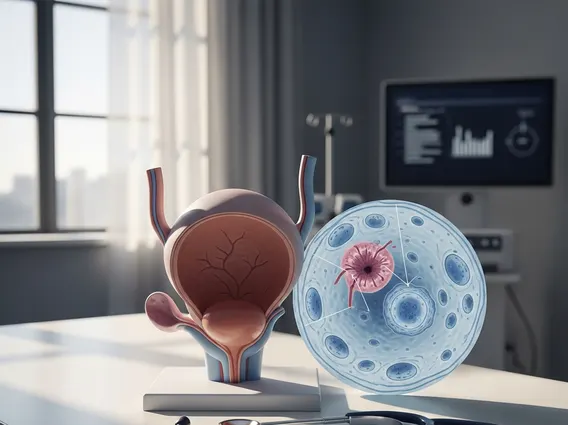
Bladder cancer is a disease in which malignant cells form in the tissues of the bladder, the hollow, muscular organ in the lower abdomen responsible for storing urine. It is the sixth most common cancer in the United States, according to the American Cancer Society. The vast majority of cases — roughly 90% — begin in the urothelial cells that line the inner surface of the bladder, a type known as urothelial carcinoma (UC), formerly called transitional cell carcinoma.

Less common types include squamous cell carcinoma, which is often linked to chronic bladder irritation or infection, and adenocarcinoma, which arises from glandular cells and accounts for a small percentage of diagnoses. The type of bladder cancer present directly influences treatment planning and expected outcomes.

The development of bladder cancer typically follows a progression of cellular changes. Repeated exposure to carcinogens — substances capable of causing DNA damage — can cause mutations in urothelial cells. Over time, these mutations may lead to uncontrolled cell growth. Bladder cancer is categorized as either non-muscle-invasive, in which abnormal cells remain confined to the inner layers, or muscle-invasive, in which cancer penetrates the deeper muscular wall and carries a higher risk of spreading to other organs.

Bladder Cancer Symptoms, Risk Factors, and Causes

Recognizing bladder cancer symptoms and early warning signs is essential for prompt diagnosis. The most common and notable symptom is hematuria — blood in the urine — which may cause urine to appear pink, orange, or red. In some cases, blood may be present in amounts detectable only under a microscope, a condition known as microscopic hematuria. Other symptoms include frequent urination, a persistent urge to urinate, painful urination, and lower back or pelvic pain. These symptoms are not exclusive to bladder cancer and may indicate other urinary conditions, but they should always be evaluated by a healthcare provider.

Understanding bladder cancer risk factors and causes helps identify individuals who may benefit from closer monitoring. The following are among the most well-established contributors to bladder cancer risk:

  • Tobacco smoking — the single greatest modifiable risk factor, linked to approximately 50% of all cases
  • Occupational chemical exposure — prolonged contact with aromatic amines found in dye, rubber, and leather industries
  • Chronic bladder irritation — from recurrent infections, kidney stones, or long-term catheter use
  • Prior cancer treatment — certain chemotherapy drugs (e.g., cyclophosphamide) and pelvic radiation therapy
  • Age and sex — bladder cancer is more common in individuals over 55 and significantly more prevalent in men than women
  • Personal or family history — previous bladder cancer diagnosis or inherited gene mutations that affect DNA repair

Race also plays a role in bladder cancer incidence. White Americans are diagnosed at roughly twice the rate of Black Americans, though Black patients tend to be diagnosed at more advanced stages, contributing to disparities in outcomes. Researchers continue to study the genetic and environmental interactions that drive these differences to support more equitable cancer care.

Bladder Cancer Diagnosis, Treatment Options, and Survival Rates

A timely and accurate evaluation is the foundation of effective care. Bladder cancer diagnosis and treatment options have evolved considerably, giving patients access to a broader range of interventions than in previous decades. Diagnosis typically begins with a thorough medical history review and urinalysis, followed by imaging studies such as computed tomography (CT) urography to visualize the urinary tract. The definitive diagnostic procedure is cystoscopy, in which a thin, flexible instrument is passed through the urethra to examine the interior of the bladder directly. During this procedure, a biopsy — removal of a small tissue sample — is performed to confirm malignancy and determine the cancer’s grade and stage.

Treatment is guided by the stage, grade, and type of cancer, as well as the patient’s overall health and preferences. For non-muscle-invasive bladder cancer, transurethral resection of bladder tumor (TURBT) is the primary surgical option, often followed by intravesical therapy — delivering medication directly into the bladder. Bacillus Calmette-Guérin (BCG) immunotherapy is the most commonly used intravesical agent and works by stimulating the immune system to attack residual cancer cells. For muscle-invasive bladder cancer, radical cystectomy (surgical removal of the bladder) combined with chemotherapy is the standard approach, though bladder-sparing protocols using radiation and chemotherapy together are an option for carefully selected patients.

Advanced or metastatic bladder cancer may be treated with systemic chemotherapy, immunotherapy agents such as immune checkpoint inhibitors, targeted therapies, or enrollment in clinical trials. The table below summarizes key treatment approaches by disease stage.

Stage Description Common Treatment Options
Non-Muscle-Invasive (Stage 0–I) Cancer confined to bladder lining or submucosa TURBT, intravesical BCG or chemotherapy
Muscle-Invasive (Stage II–III) Cancer penetrates muscular wall or nearby tissues Radical cystectomy, neoadjuvant chemotherapy, chemoradiation
Metastatic (Stage IV) Cancer has spread to distant organs Systemic chemotherapy, immunotherapy, targeted therapy, clinical trials

Bladder cancer survival rates and prognosis explained in the context of stage reveal a clear pattern: earlier detection leads to markedly better outcomes. According to the National Cancer Institute’s Surveillance, Epidemiology, and End Results (SEER) program, the five-year relative survival rate for localized bladder cancer is approximately 96%. For regional disease that has spread to nearby lymph nodes or tissues, the rate drops to around 39%, and for distant metastatic disease, it falls to approximately 8%. These figures underscore the importance of early detection and routine follow-up care, particularly for high-risk individuals.

Bladder Cancer Awareness Month: Key Facts and U.S. Statistics

May is recognized as Bladder Cancer Awareness Month, an annual observance dedicated to increasing public knowledge, supporting patients and caregivers, and advocating for expanded research funding. Organizations such as the Bladder Cancer Advocacy Network (BCAN) lead campaigns to encourage early symptom reporting and promote equity in access to care. The awareness ribbon associated with this cause is marigold yellow, chosen to symbolize hope and visibility for a cancer that is frequently under-discussed despite its prevalence.

Bladder cancer awareness month facts and statistics highlight just how significant this disease is on a national scale. The American Cancer Society estimates that approximately 83,000 new cases of bladder cancer are diagnosed each year in the United States, with around 17,000 deaths annually. Men are approximately three to four times more likely to develop bladder cancer than women over their lifetime, making it the fourth most common cancer among American men. Despite this, women are often diagnosed at a later stage, partly because hematuria in women may be initially attributed to menstruation or urinary tract infections.

How common is bladder cancer in the United States becomes clear when examining lifetime risk data: about 1 in 27 men and 1 in 89 women will be diagnosed with bladder cancer at some point in their lives, according to the American Cancer Society. It is also notable for its high recurrence rate — among the highest of any cancer type — which means that patients who have completed treatment require ongoing surveillance through regular cystoscopy and urinalysis for years following their initial diagnosis. This long-term monitoring contributes significantly to the overall healthcare burden associated with bladder cancer.

Public awareness efforts during May and throughout the year aim to reduce the time between symptom onset and diagnosis, promote smoking cessation, and encourage occupational safety practices that limit chemical exposure. Increased awareness translates directly into earlier diagnoses and, by extension, better survival outcomes for patients across all demographics.

Frequently Asked Questions

Can bladder cancer be prevented?

While there is no guaranteed method of prevention, several steps significantly reduce risk. Quitting smoking — or never starting — is the most impactful action an individual can take. Staying well-hydrated, limiting exposure to industrial chemicals, and maintaining routine medical check-ups also contribute to lower risk. Early detection through prompt evaluation of urinary symptoms remains the most effective strategy for improving outcomes when the disease does occur.

Is bladder cancer hereditary?

Most bladder cancers are not directly inherited, but genetic factors can play a role. Individuals with certain inherited gene mutations — such as those affecting DNA mismatch repair, associated with Lynch syndrome — have a higher lifetime risk. A family history of bladder cancer may also modestly increase one’s risk. Genetic counseling may be appropriate for individuals with multiple affected family members or early-onset diagnoses.

What should I do if I notice blood in my urine?

Any visible blood in the urine, even if painless or intermittent, should be evaluated by a healthcare provider without delay. While many causes of hematuria are benign — such as urinary tract infections or kidney stones — it is also one of the most consistent early signs of bladder cancer. A prompt medical evaluation including urinalysis, imaging, and possibly cystoscopy can determine the underlying cause and, if necessary, allow treatment to begin at the earliest possible stage.


[EN] Cancer Types
Cancer Clinical Trial Options

Specialized matching specifically for oncology clinical trials and cancer care research.

Your Birthday


By filling out this form, you're consenting only to release your medical records. You're not agreeing to participate in clinical trials yet.

Bladder Cancer Awareness is a critical public health priority, as bladder cancer remains one of the most commonly diagnosed cancers in the United States. Understanding this disease — from its origins and warning signs to its treatment and prognosis — can help individuals seek timely care and improve outcomes.

Key Takeaways

  • Bladder cancer develops when abnormal cells grow uncontrollably in the bladder lining, most often as urothelial carcinoma.
  • Blood in the urine is the most common early warning sign and should never be ignored.
  • Smoking is the single largest risk factor, responsible for approximately half of all bladder cancer cases.
  • When detected early, bladder cancer has a favorable prognosis, with five-year survival rates exceeding 90% for localized disease.
  • May is Bladder Cancer Awareness Month, a time dedicated to education, early detection, and research advocacy.

What Is Bladder Cancer and How Does It Develop

Bladder cancer is a disease in which malignant cells form in the tissues of the bladder, the hollow, muscular organ in the lower abdomen responsible for storing urine. It is the sixth most common cancer in the United States, according to the American Cancer Society. The vast majority of cases — roughly 90% — begin in the urothelial cells that line the inner surface of the bladder, a type known as urothelial carcinoma (UC), formerly called transitional cell carcinoma.

Less common types include squamous cell carcinoma, which is often linked to chronic bladder irritation or infection, and adenocarcinoma, which arises from glandular cells and accounts for a small percentage of diagnoses. The type of bladder cancer present directly influences treatment planning and expected outcomes.

The development of bladder cancer typically follows a progression of cellular changes. Repeated exposure to carcinogens — substances capable of causing DNA damage — can cause mutations in urothelial cells. Over time, these mutations may lead to uncontrolled cell growth. Bladder cancer is categorized as either non-muscle-invasive, in which abnormal cells remain confined to the inner layers, or muscle-invasive, in which cancer penetrates the deeper muscular wall and carries a higher risk of spreading to other organs.

Bladder Cancer Symptoms, Risk Factors, and Causes

Recognizing bladder cancer symptoms and early warning signs is essential for prompt diagnosis. The most common and notable symptom is hematuria — blood in the urine — which may cause urine to appear pink, orange, or red. In some cases, blood may be present in amounts detectable only under a microscope, a condition known as microscopic hematuria. Other symptoms include frequent urination, a persistent urge to urinate, painful urination, and lower back or pelvic pain. These symptoms are not exclusive to bladder cancer and may indicate other urinary conditions, but they should always be evaluated by a healthcare provider.

Understanding bladder cancer risk factors and causes helps identify individuals who may benefit from closer monitoring. The following are among the most well-established contributors to bladder cancer risk:

  • Tobacco smoking — the single greatest modifiable risk factor, linked to approximately 50% of all cases
  • Occupational chemical exposure — prolonged contact with aromatic amines found in dye, rubber, and leather industries
  • Chronic bladder irritation — from recurrent infections, kidney stones, or long-term catheter use
  • Prior cancer treatment — certain chemotherapy drugs (e.g., cyclophosphamide) and pelvic radiation therapy
  • Age and sex — bladder cancer is more common in individuals over 55 and significantly more prevalent in men than women
  • Personal or family history — previous bladder cancer diagnosis or inherited gene mutations that affect DNA repair

Race also plays a role in bladder cancer incidence. White Americans are diagnosed at roughly twice the rate of Black Americans, though Black patients tend to be diagnosed at more advanced stages, contributing to disparities in outcomes. Researchers continue to study the genetic and environmental interactions that drive these differences to support more equitable cancer care.

Bladder Cancer Diagnosis, Treatment Options, and Survival Rates

A timely and accurate evaluation is the foundation of effective care. Bladder cancer diagnosis and treatment options have evolved considerably, giving patients access to a broader range of interventions than in previous decades. Diagnosis typically begins with a thorough medical history review and urinalysis, followed by imaging studies such as computed tomography (CT) urography to visualize the urinary tract. The definitive diagnostic procedure is cystoscopy, in which a thin, flexible instrument is passed through the urethra to examine the interior of the bladder directly. During this procedure, a biopsy — removal of a small tissue sample — is performed to confirm malignancy and determine the cancer’s grade and stage.

Treatment is guided by the stage, grade, and type of cancer, as well as the patient’s overall health and preferences. For non-muscle-invasive bladder cancer, transurethral resection of bladder tumor (TURBT) is the primary surgical option, often followed by intravesical therapy — delivering medication directly into the bladder. Bacillus Calmette-Guérin (BCG) immunotherapy is the most commonly used intravesical agent and works by stimulating the immune system to attack residual cancer cells. For muscle-invasive bladder cancer, radical cystectomy (surgical removal of the bladder) combined with chemotherapy is the standard approach, though bladder-sparing protocols using radiation and chemotherapy together are an option for carefully selected patients.

Advanced or metastatic bladder cancer may be treated with systemic chemotherapy, immunotherapy agents such as immune checkpoint inhibitors, targeted therapies, or enrollment in clinical trials. The table below summarizes key treatment approaches by disease stage.

Stage Description Common Treatment Options
Non-Muscle-Invasive (Stage 0–I) Cancer confined to bladder lining or submucosa TURBT, intravesical BCG or chemotherapy
Muscle-Invasive (Stage II–III) Cancer penetrates muscular wall or nearby tissues Radical cystectomy, neoadjuvant chemotherapy, chemoradiation
Metastatic (Stage IV) Cancer has spread to distant organs Systemic chemotherapy, immunotherapy, targeted therapy, clinical trials

Bladder cancer survival rates and prognosis explained in the context of stage reveal a clear pattern: earlier detection leads to markedly better outcomes. According to the National Cancer Institute’s Surveillance, Epidemiology, and End Results (SEER) program, the five-year relative survival rate for localized bladder cancer is approximately 96%. For regional disease that has spread to nearby lymph nodes or tissues, the rate drops to around 39%, and for distant metastatic disease, it falls to approximately 8%. These figures underscore the importance of early detection and routine follow-up care, particularly for high-risk individuals.

Bladder Cancer Awareness Month: Key Facts and U.S. Statistics

May is recognized as Bladder Cancer Awareness Month, an annual observance dedicated to increasing public knowledge, supporting patients and caregivers, and advocating for expanded research funding. Organizations such as the Bladder Cancer Advocacy Network (BCAN) lead campaigns to encourage early symptom reporting and promote equity in access to care. The awareness ribbon associated with this cause is marigold yellow, chosen to symbolize hope and visibility for a cancer that is frequently under-discussed despite its prevalence.

Bladder cancer awareness month facts and statistics highlight just how significant this disease is on a national scale. The American Cancer Society estimates that approximately 83,000 new cases of bladder cancer are diagnosed each year in the United States, with around 17,000 deaths annually. Men are approximately three to four times more likely to develop bladder cancer than women over their lifetime, making it the fourth most common cancer among American men. Despite this, women are often diagnosed at a later stage, partly because hematuria in women may be initially attributed to menstruation or urinary tract infections.

How common is bladder cancer in the United States becomes clear when examining lifetime risk data: about 1 in 27 men and 1 in 89 women will be diagnosed with bladder cancer at some point in their lives, according to the American Cancer Society. It is also notable for its high recurrence rate — among the highest of any cancer type — which means that patients who have completed treatment require ongoing surveillance through regular cystoscopy and urinalysis for years following their initial diagnosis. This long-term monitoring contributes significantly to the overall healthcare burden associated with bladder cancer.

Public awareness efforts during May and throughout the year aim to reduce the time between symptom onset and diagnosis, promote smoking cessation, and encourage occupational safety practices that limit chemical exposure. Increased awareness translates directly into earlier diagnoses and, by extension, better survival outcomes for patients across all demographics.

Frequently Asked Questions

Can bladder cancer be prevented?

While there is no guaranteed method of prevention, several steps significantly reduce risk. Quitting smoking — or never starting — is the most impactful action an individual can take. Staying well-hydrated, limiting exposure to industrial chemicals, and maintaining routine medical check-ups also contribute to lower risk. Early detection through prompt evaluation of urinary symptoms remains the most effective strategy for improving outcomes when the disease does occur.

Is bladder cancer hereditary?

Most bladder cancers are not directly inherited, but genetic factors can play a role. Individuals with certain inherited gene mutations — such as those affecting DNA mismatch repair, associated with Lynch syndrome — have a higher lifetime risk. A family history of bladder cancer may also modestly increase one’s risk. Genetic counseling may be appropriate for individuals with multiple affected family members or early-onset diagnoses.

What should I do if I notice blood in my urine?

Any visible blood in the urine, even if painless or intermittent, should be evaluated by a healthcare provider without delay. While many causes of hematuria are benign — such as urinary tract infections or kidney stones — it is also one of the most consistent early signs of bladder cancer. A prompt medical evaluation including urinalysis, imaging, and possibly cystoscopy can determine the underlying cause and, if necessary, allow treatment to begin at the earliest possible stage.

[EN] Cancer Types
Cancer Clinical Trial Options

Specialized matching specifically for oncology clinical trials and cancer care research.

Your Birthday


By filling out this form, you're consenting only to release your medical records. You're not agreeing to participate in clinical trials yet.

Massive Bio has onboarded over 160,000+ cancer patients to find their clinical trial

Most Recent Article