
Accelerated Partial Breast Irradiation
Accelerated Partial Breast Irradiation (APBI) is an advanced radiation therapy technique designed for select patients with early-stage breast cancer. It offers a more focused and condensed treatment schedule compared to traditional whole breast irradiation.
Key Takeaways
- Accelerated Partial Breast Irradiation (APBI) is a targeted radiation therapy for early-stage breast cancer, focusing only on the tumor bed.
- It significantly reduces treatment time, often from several weeks to just a few days.
- APBI aims to minimize radiation exposure to healthy tissues like the heart and lungs.
- Various techniques, including external beam and brachytherapy, are used to deliver APBI.
- Patient selection is crucial, as APBI is suitable for specific types and stages of breast cancer.
What is Accelerated Partial Breast Irradiation (APBI)?
Accelerated Partial Breast Irradiation (APBI) refers to a specialized form of radiation therapy used in the treatment of early-stage breast cancer. Unlike traditional whole breast irradiation, which treats the entire breast, APBI delivers radiation only to the specific area where the tumor was removed, known as the tumor bed, plus a small margin of surrounding tissue. This targeted approach is designed to reduce the overall treatment duration and minimize radiation exposure to healthy breast tissue and adjacent organs.
The primary goal of APBI is to achieve local cancer control with a more convenient schedule for patients. Conventional whole breast irradiation typically involves daily treatments over three to six weeks. In contrast, APBI condenses this timeline significantly, often completing treatment within one to two weeks, or even as few as five days, depending on the technique used. This accelerated schedule can greatly improve patient convenience and adherence to treatment, making it a valuable option for eligible individuals.
Benefits of Accelerated Partial Breast Irradiation
The adoption of Accelerated Partial Breast Irradiation (APBI) in clinical practice is driven by several compelling advantages, particularly for carefully selected patients. These benefits primarily revolve around improved convenience, reduced treatment burden, and a more focused approach to radiation delivery.
One of the most significant benefits is the substantial reduction in treatment time. Patients undergoing APBI can complete their radiation therapy in a fraction of the time required for whole breast irradiation, which can be particularly advantageous for those with geographical or logistical challenges. Furthermore, the targeted nature of APBI means that less healthy tissue is exposed to radiation, potentially leading to fewer side effects and a better cosmetic outcome. Studies have indicated that for appropriate candidates, APBI offers comparable local control rates to whole breast irradiation. For instance, according to data from the American Society for Radiation Oncology (ASTRO), APBI has demonstrated similar efficacy in preventing local recurrence for carefully selected patients.
Key benefits of APBI include:
- Shorter Treatment Duration: Significantly reduces the number of treatment days, often from weeks to days.
- Reduced Radiation Exposure: Minimizes radiation to surrounding healthy tissues, such as the heart, lungs, and contralateral breast.
- Improved Patient Convenience: Less time spent at treatment centers, enhancing quality of life during therapy.
- Potentially Fewer Side Effects: Lower risk of skin irritation, fatigue, and other radiation-related side effects due to localized treatment.
- Comparable Efficacy: For suitable candidates, it offers similar rates of local tumor control as whole breast irradiation.
Understanding Partial Breast Radiation Therapy
Partial breast radiation therapy information encompasses various techniques used to deliver radiation specifically to the tumor bed following a lumpectomy. The choice of technique for APBI breast cancer treatment explained depends on factors such as tumor characteristics, patient anatomy, and the expertise available at the treatment center. These methods are designed to precisely target the area at highest risk of recurrence while sparing surrounding healthy tissue.
Common techniques for delivering APBI include:
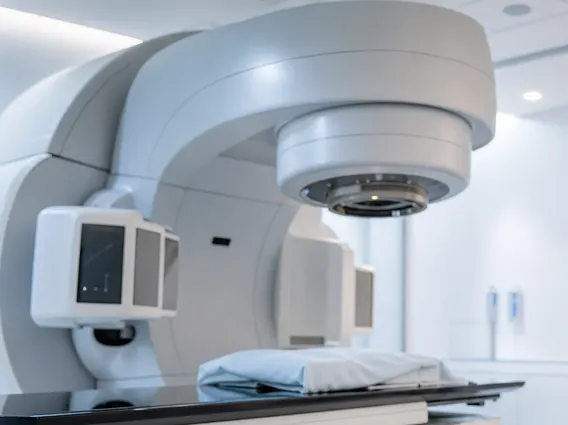
- External Beam Partial Breast Irradiation (EB-PBI): This involves using a linear accelerator to deliver radiation from outside the body. It typically requires daily treatments over one to two weeks. Advanced planning and imaging are used to ensure precise targeting.
- Brachytherapy: This involves placing a radioactive source directly into the tumor bed. It can be delivered through:
- Interstitial Brachytherapy: Multiple catheters are temporarily inserted into the breast tissue around the lumpectomy cavity.
- Intracavitary Brachytherapy: A balloon catheter (e.g., MammoSite, Contura) is placed into the lumpectomy cavity, and a radioactive source is temporarily inserted into the balloon.
Brachytherapy treatments are often completed in five days, with two treatments per day.
Patient selection is paramount for APBI. It is typically considered for women aged 50 or older with early-stage, hormone receptor-positive, lymph node-negative invasive breast cancer, or ductal carcinoma in situ (DCIS) of low to intermediate grade, with tumors generally smaller than 3 cm. A multidisciplinary team evaluates each patient to determine if APBI is the most appropriate and effective treatment option, ensuring that the benefits outweigh any potential risks.



















