Acetate
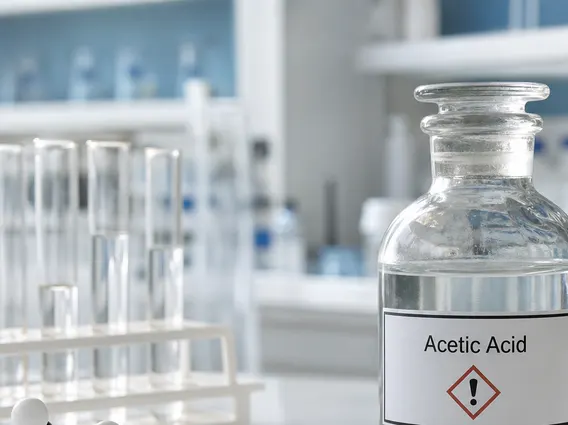
Acetate refers to the salt or ester of acetic acid, a crucial organic compound involved in numerous biological and industrial processes. In a clinical context, it plays significant roles as a metabolic intermediate and as a component in various medical solutions and pharmaceutical formulations.
Key Takeaways
- Acetate is the conjugate base of acetic acid, vital for metabolism and found in medical applications.
- Its chemical properties include high solubility and its role as a precursor to bicarbonate in the body.
- Production occurs naturally through metabolic pathways and industrially from acetic acid.
- Medically, acetate is used in intravenous fluids, dialysis solutions, and as part of drug formulations.
- Different types of acetate materials, such as cellulose acetate, find applications in drug delivery and medical textiles.
What is Acetate?
Acetate is the anion (CH3COO-) derived from acetic acid, or any salt or ester of acetic acid. In biological systems, it is a fundamental metabolic intermediate, playing a central role in the citric acid cycle and fatty acid synthesis. For instance, acetyl-CoA, a derivative of acetate, is a key molecule linking glycolysis to the citric acid cycle, essential for energy production in cells. Clinically, acetate is often administered intravenously as part of solutions like Ringer’s Acetate or in total parenteral nutrition (TPN) formulations. Its primary function in these contexts is to serve as a metabolic precursor to bicarbonate, helping to correct metabolic acidosis without directly introducing carbon dioxide, which can be problematic in some patients.
Chemical Properties and Production of Acetate
The chemical properties of acetate are characterized by its structure, which includes a methyl group (CH3) attached to a carboxylate group (COO-). This structure makes it a relatively small, highly soluble anion. As the conjugate base of a weak acid (acetic acid), acetate can act as a buffer, helping to maintain pH balance in solutions. When acetate chemical properties are explained in a physiological context, its metabolism is key. In the body, acetate is rapidly metabolized, primarily in the liver and muscles, into acetyl-CoA. This conversion consumes hydrogen ions, effectively generating bicarbonate and contributing to the body’s acid-base balance.
Regarding how acetate is made, it is produced both endogenously and exogenously. In the human body, acetate is generated through various metabolic pathways, including the breakdown of carbohydrates, fats, and certain amino acids. For example, it can be formed from pyruvate or through the beta-oxidation of fatty acids. Industrially, acetate is primarily produced through the carbonylation of methanol to acetic acid, followed by esterification or salt formation. This process allows for the large-scale synthesis of various acetate compounds used across different sectors, including the pharmaceutical and medical industries.
Applications and Types of Acetate Materials
Acetate is widely utilized in medical and clinical settings for several critical applications. For instance, acetate is used for its role in intravenous fluids, where it serves as a bicarbonate precursor. This makes it valuable in treating metabolic acidosis, as it is metabolized to bicarbonate, which helps neutralize excess acid in the blood. Acetate is also a common component in hemodialysis and peritoneal dialysis solutions, where it helps maintain electrolyte balance and buffer pH in patients with kidney failure. Furthermore, many pharmaceutical drugs are formulated as acetate salts (e.g., prednisolone acetate, hydrocortisone acetate) to improve their solubility, stability, or bioavailability.
There are also different types of acetate material that find applications in healthcare. These materials are typically polymers or derivatives of acetate:
- Cellulose Acetate: This is a synthetic compound derived from cellulose. It is widely used in medical applications for manufacturing films, fibers, and plastics. Examples include semi-permeable membranes for dialysis, drug delivery systems (e.g., coatings for controlled-release tablets), and certain medical textiles.
- Calcium Acetate: A specific salt of acetate, it is medically used as a phosphate binder for patients with end-stage renal disease. It helps reduce the absorption of dietary phosphate, preventing hyperphosphatemia.
- Polyvinyl Acetate (PVA): While more commonly known for adhesives, modified forms of PVA can be found in certain medical devices or drug formulations, though less directly than cellulose acetate.
These diverse applications highlight acetate’s versatility and importance in modern medicine, from maintaining physiological balance to facilitating drug delivery and medical device functionality.