Chromatography
Chromatography is a fundamental analytical technique widely utilized across various scientific disciplines, particularly in medical, clinical, and oncology settings for separating and analyzing complex mixtures.
Key Takeaways
- Chromatography is a powerful laboratory technique used to separate components of a mixture.
- It operates on the principles of chromatography, involving a stationary phase and a mobile phase that differentially interact with mixture components.
- The process of how chromatography works relies on the varying affinities of substances for these two phases, leading to their separation.
- There are several different types of chromatography, each suited for specific analytical needs in clinical diagnostics and research.
- This technique is crucial for identifying, quantifying, and purifying substances in biological samples, aiding in disease diagnosis and drug development.
What is Chromatography?
Chromatography is a sophisticated laboratory technique essential for separating components within a complex mixture. This method is extensively applied in medical and clinical fields, including oncology, for tasks such as identifying biomarkers, detecting drugs and metabolites in biological fluids, and purifying therapeutic proteins. It enables scientists and clinicians to isolate individual substances from a sample, allowing for their precise identification, quantification, and further analysis.
The versatility of Chromatography makes it indispensable in various stages of clinical research and diagnostics. For instance, it plays a critical role in toxicology screens, therapeutic drug monitoring, and the analysis of metabolic disorders by providing detailed insights into the molecular composition of patient samples.
Principles and How Chromatography Works
The underlying principles of chromatography involve the differential distribution of components of a mixture between two phases: a stationary phase and a mobile phase. The stationary phase is a fixed bed, column, or layer, while the mobile phase is a fluid (liquid or gas) that moves through or over the stationary phase, carrying the sample components with it.
Understanding how chromatography works involves recognizing that as the mobile phase carries the sample through the stationary phase, each component in the mixture interacts differently with both phases. Components that have a stronger affinity for the stationary phase will move more slowly, while those with a greater affinity for the mobile phase will travel faster. This differential interaction, often based on properties like size, charge, polarity, or specific binding affinity, causes the components to separate from each other over time, emerging from the stationary phase at different rates.
Different Types of Chromatography
The field of Chromatography encompasses a wide array of techniques, each tailored to specific separation challenges and sample types. These variations allow for precise analysis across diverse applications in clinical and research settings. The choice of method depends on the nature of the sample, the properties of the analytes, and the desired resolution.
Some of the commonly employed different types of chromatography include:
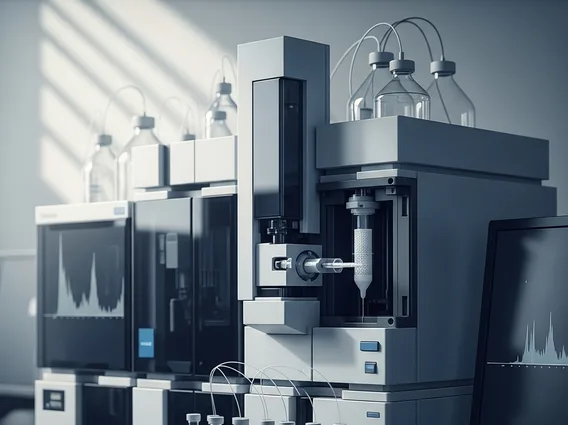
- Liquid Chromatography (LC): Utilizes a liquid mobile phase and a solid stationary phase. High-Performance Liquid Chromatography (HPLC) is a widely used form, offering high resolution and sensitivity for separating non-volatile compounds, such as pharmaceuticals, peptides, and proteins, in clinical diagnostics.
- Gas Chromatography (GC): Employs a gaseous mobile phase and a liquid or solid stationary phase. It is ideal for separating volatile and semi-volatile compounds, often used in toxicology for drug screening or in metabolic profiling.
- Ion-Exchange Chromatography (IEC): Separates molecules based on their net charge. It is frequently used for purifying proteins, amino acids, and nucleic acids, which is vital in biochemical and clinical research.
- Affinity Chromatography: Leverages specific binding interactions between a target molecule and a ligand immobilized on the stationary phase. This highly selective method is crucial for purifying specific biomolecules like antibodies or enzymes from complex biological mixtures.
- Size-Exclusion Chromatography (SEC): Separates molecules based on their size. Larger molecules elute first as they cannot enter the pores of the stationary phase, while smaller molecules are retained longer. This is useful for protein purification and determining molecular weight.
Each type offers unique advantages, contributing significantly to advancements in medical diagnostics, drug discovery, and the understanding of biological processes.