Choroid
The choroid is a vital component of the eye, playing a crucial role in maintaining ocular health and function. This highly vascular layer provides essential nourishment to the retina and helps regulate eye temperature.
Key Takeaways
- The choroid is a highly vascular, pigmented layer located between the retina and the sclera.
- Its primary function is to supply oxygen and nutrients to the outer retinal layers.
- It also absorbs excess light and helps regulate the eye’s internal temperature.
- The choroid consists of several sub-layers, including the choriocapillaris and Bruch’s membrane.
- Conditions like choroidal neovascularization and central serous chorioretinopathy can significantly impact vision.
What is the Choroid?
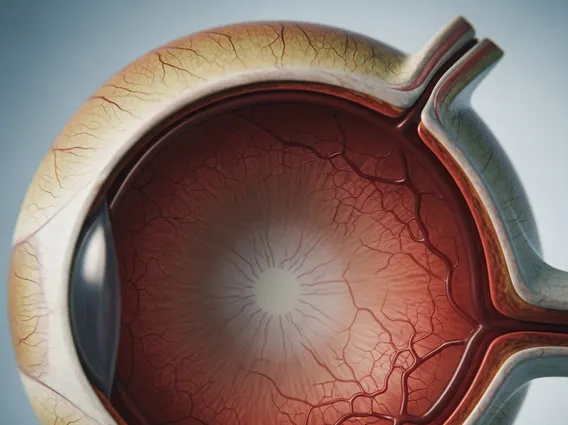
The Choroid is a highly vascular, pigmented layer of the eye, located between the retina and the sclera. It forms the posterior part of the uvea, which is the middle layer of the eye wall. Its primary role is to provide oxygen and nutrients to the outer layers of the retina, which are responsible for photoreception. Additionally, the choroid helps absorb excess light, preventing reflections within the eye that could interfere with clear vision, and plays a role in regulating the eye’s internal temperature.
Anatomy and Function of the Choroid Layer
The anatomy of the choroid layer is complex, consisting of several distinct sub-layers that work in concert to support retinal health. Moving from the outside in, these include the suprachoroidal lamina, a transitional zone; the choroidal stroma, which contains a rich network of blood vessels, nerves, and pigment-producing melanocytes; and the choriocapillaris, a dense, single layer of capillaries directly adjacent to the retina. Bruch’s membrane forms the innermost layer, acting as a barrier between the choroid and the retinal pigment epithelium.
This intricate vascular network is crucial for the eye’s metabolic demands. The primary Choroid function in the eye encompasses several vital roles:
- Nutrient and Oxygen Supply: It delivers essential oxygen and nutrients to the outer layers of the retina, particularly the photoreceptors, which are critical for vision.
- Waste Removal: It facilitates the removal of metabolic waste products from the retina.
- Light Absorption: Its dark pigmentation, due to melanocytes, helps absorb excess light entering the eye, preventing internal reflections that could blur vision.
- Temperature Regulation: It plays a significant role in dissipating heat generated by light absorption and metabolic activity, maintaining a stable ocular environment.
Common Choroid Eye Conditions Explained
Various conditions can affect this vital layer, leading to impaired vision and potentially severe ocular complications. Choroid eye conditions explained often involve disruptions to its delicate vascular supply or structural integrity. One of the most significant is choroidal neovascularization (CNV), where abnormal, fragile blood vessels grow from the choroid into the subretinal space or under the retinal pigment epithelium. This pathological growth can lead to leakage of fluid and blood, causing retinal damage, distortion, and severe vision loss. CNV is a hallmark feature of the ‘wet’ form of age-related macular degeneration (AMD), which, according to the World Health Organization (WHO), is a leading cause of vision impairment and blindness globally, affecting millions of people, particularly those over 50 years of age.
Another condition is central serous chorioretinopathy (CSC), characterized by the accumulation of fluid under the retina due to a defect in the retinal pigment epithelium and choroid. This often results in blurred vision, distorted images, and a blind spot, and is frequently linked to stress, type A personality, or corticosteroid use. Choroiditis, an inflammation of the choroid, can also occur, often associated with systemic inflammatory diseases, autoimmune conditions, or infections. Symptoms may include blurred vision, floaters, and light sensitivity. Early diagnosis and appropriate treatment, which can range from observation to medications or laser therapy, are crucial for managing these conditions and preserving vision.