Capsule Endoscope
A Capsule Endoscope is a revolutionary medical device used to visualize the lining of the gastrointestinal tract, particularly the small intestine, which is difficult to reach with traditional endoscopic methods. This non-invasive tool has transformed the diagnosis and management of various digestive conditions.
Key Takeaways
- A Capsule Endoscope is a tiny, swallowable camera that captures images of the digestive tract.
- It is primarily used to examine the small intestine, an area challenging for conventional endoscopy.
- The procedure involves swallowing the capsule, which then transmits images wirelessly to a recorder worn by the patient.
- Key applications include diagnosing obscure gastrointestinal bleeding, Crohn’s disease, and small bowel tumors.
- Capsule endoscopy offers a non-invasive, comfortable, and comprehensive way to visualize the small bowel.
What is a Capsule Endoscope?
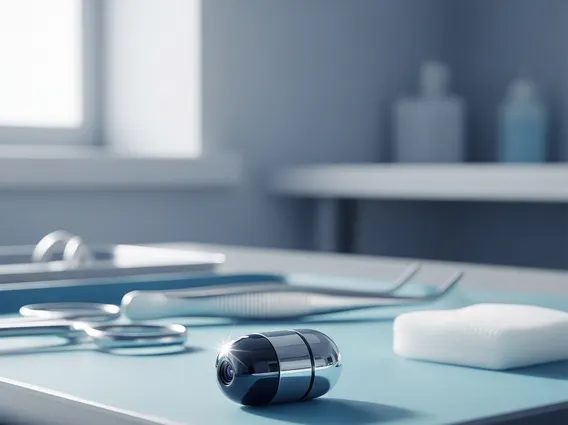
A Capsule Endoscope is a small, disposable device, roughly the size of a large vitamin pill, equipped with a miniature camera, light source, battery, and a radio transmitter. Its primary purpose is to capture high-resolution images of the digestive tract as it passes naturally through the body. This innovative technology allows for a detailed examination of areas beyond the reach of conventional upper endoscopy and colonoscopy, specifically the entirety of the small intestine.
The capsule is designed to be swallowed by the patient, after which it autonomously navigates through the esophagus, stomach, and small intestine, taking thousands of pictures per second. These images are then wirelessly transmitted to a data recorder worn on a belt around the patient’s waist. This non-invasive approach provides clinicians with crucial diagnostic information without the need for sedation or uncomfortable tubes.
Capsule Endoscopy: Procedure and Function
The Capsule endoscopy procedure explained involves several straightforward steps. Patients typically undergo a period of fasting before the procedure to ensure a clear view of the digestive lining. On the day of the examination, a small data recorder and sensor array are attached to the patient’s abdomen. The patient then simply swallows the capsule endoscope with a small amount of water.
Once swallowed, the capsule begins its journey through the gastrointestinal tract, propelled by natural peristalsis. As it travels, its integrated camera continuously captures images, usually at a rate of two to six frames per second, for approximately eight to twelve hours. These images are wirelessly transmitted to the external data recorder. The patient can typically resume light activities during this period, making the procedure highly convenient. After the recording period, the patient returns the data recorder to the clinic. The capsule itself passes naturally out of the body with a bowel movement and does not need to be retrieved.
Applications and Advantages of Capsule Endoscopy
The primary Capsule endoscope uses and benefits lie in its ability to visualize the small intestine, an area traditionally difficult to assess. It is particularly valuable for diagnosing conditions such as obscure gastrointestinal bleeding, where the source of bleeding cannot be identified by upper endoscopy or colonoscopy. It also plays a crucial role in detecting and monitoring inflammatory bowel diseases like Crohn’s disease, identifying small bowel tumors, polyps, and celiac disease complications.
The advantages of capsule endoscopy are significant:
- Non-invasive: It eliminates the need for sedation, intubation, or air insufflation, making it more comfortable for patients.
- Comprehensive View: It provides a complete and detailed visualization of the entire small bowel, an area often missed by other endoscopic techniques.
- Patient Comfort: Patients can go about most of their daily activities during the procedure, enhancing convenience and reducing anxiety.
- High Diagnostic Yield: Clinical studies consistently show its effectiveness in identifying abnormalities in the small intestine that would otherwise go undetected.
This technology has significantly improved the diagnostic capabilities for small bowel disorders, allowing for earlier detection and more targeted treatment strategies.