Bowen Disease
Bowen Disease is a persistent, slow-growing form of early-stage squamous cell carcinoma, a common type of skin cancer. It is confined to the outermost layer of the skin, known as the epidermis, and has not yet spread to deeper tissues.
Key Takeaways
- Bowen Disease is an early form of skin cancer, specifically squamous cell carcinoma in situ.
- It typically appears as a red, scaly patch on the skin, often mistaken for other common skin conditions.
- Prolonged exposure to ultraviolet (UV) radiation is a primary risk factor.
- Diagnosis involves a skin biopsy, and treatment options range from surgical removal to topical therapies.
- Early detection and treatment are crucial to prevent progression to invasive cancer.
What is Bowen Disease?
Bowen Disease is a non-invasive form of squamous cell carcinoma (SCC) that is confined to the epidermis, the outermost layer of the skin. It is often referred to as squamous cell carcinoma in situ, meaning the cancerous cells are present but have not penetrated the basement membrane to invade deeper skin layers. This condition represents an early stage of skin cancer, making prompt identification and treatment important.
As a type of Bowen disease skin condition info, it typically manifests as a reddish-brown, scaly, or crusted patch on the skin. While it can occur anywhere on the body, it is most commonly found on sun-exposed areas such as the head, neck, lower legs, and hands. It is a slow-growing condition, and if left untreated, it has a small risk (around 3-5%) of progressing to invasive squamous cell carcinoma, which can spread to other parts of the body.
Bowen Disease: Symptoms and Causes
The primary Bowen disease symptoms and causes involve characteristic skin lesions. Bowen Disease typically presents as a well-defined, reddish-brown patch that is often scaly, crusted, or rough to the touch. These patches can vary in size, from a few millimeters to several centimeters, and may slowly enlarge over time. Unlike some other skin conditions, they are usually asymptomatic, meaning they do not typically cause pain, itching, or bleeding, although some individuals may experience mild itching.
The development of Bowen Disease is strongly linked to several risk factors, primarily chronic exposure to ultraviolet (UV) radiation from sunlight or tanning beds. Other contributing factors include:
- Long-term exposure to arsenic.
- Immunosuppression, such as in organ transplant recipients.
- Infection with certain types of human papillomavirus (HPV), particularly in genital and perianal areas.
- Previous radiation therapy.
- Fair skin type, increasing susceptibility to sun damage.
These factors can lead to genetic mutations in skin cells, promoting uncontrolled growth within the epidermis.
Diagnosing and Treating Bowen Disease
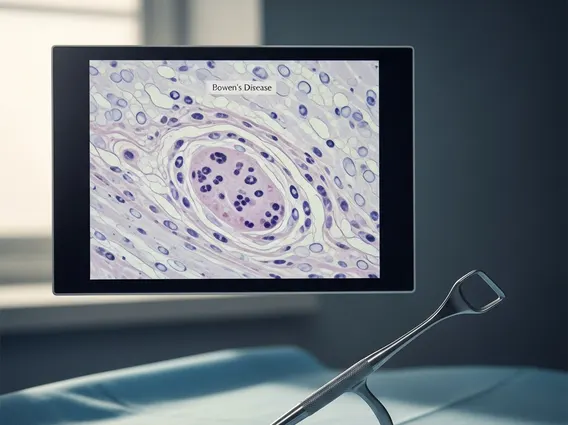
The diagnosis of Bowen disease diagnosis and treatment typically begins with a thorough clinical examination by a dermatologist. Due to its resemblance to other common skin conditions like eczema, psoriasis, or fungal infections, a definitive diagnosis requires a skin biopsy. During a biopsy, a small sample of the affected skin is removed and examined under a microscope to confirm the presence of cancerous cells confined to the epidermis.
Treatment options for Bowen Disease aim to remove the cancerous cells and prevent progression to invasive SCC. The choice of treatment depends on factors such as the size, location, and number of lesions, as well as the patient’s overall health. Common treatment modalities include:
- Surgical Excision: The lesion is surgically cut out, along with a small margin of healthy skin. This is often the preferred method for smaller lesions.
- Cryotherapy: Freezing the lesion with liquid nitrogen, which destroys the abnormal cells.
- Topical Therapies: Creams containing 5-fluorouracil (5-FU) or imiquimod, which are applied to the lesion over several weeks to destroy cancerous cells.
- Photodynamic Therapy (PDT): A light-sensitizing cream is applied to the lesion, followed by exposure to a special light source, which activates the cream to destroy the abnormal cells.
- Curettage and Electrodesiccation: The lesion is scraped off with a curette, and the base is then burned with an electric needle to destroy remaining cells.
With appropriate treatment, the prognosis for Bowen Disease is generally excellent, with high cure rates. Regular follow-up examinations are crucial after treatment to monitor for recurrence or the development of new lesions, especially given the ongoing risk factors like sun exposure. Patients are also advised to practice sun protection measures to reduce future risk.