Bnct
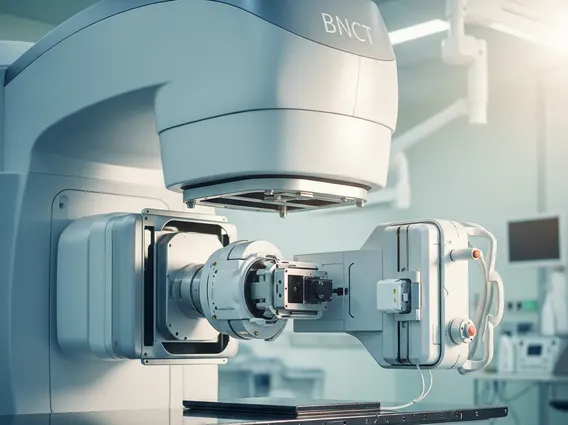
Boron Neutron Capture Therapy (BNCT) represents an innovative and highly targeted approach in the field of cancer treatment. This therapy harnesses the power of nuclear reactions at a cellular level to precisely destroy malignant cells while minimizing harm to surrounding healthy tissues.
Key Takeaways
- BNCT is a binary cancer therapy involving a boron-containing drug and a neutron beam.
- It targets cancer cells by concentrating boron-10, which then undergoes a nuclear reaction when hit by neutrons.
- The resulting alpha particles and lithium nuclei have a very short range, causing highly localized cell destruction.
- BNCT holds promise for treating difficult-to-manage cancers, such as glioblastoma and certain head and neck tumors.
- Ongoing research and clinical trials are exploring its efficacy and expanding its potential applications.
What is BNCT (Boron Neutron Capture Therapy)?
Boron Neutron Capture Therapy (BNCT) is a unique, experimental radiation therapy designed to selectively destroy cancer cells with minimal damage to adjacent healthy tissue. Unlike conventional radiation therapies that deliver external beams of photons or protons, BNCT relies on a two-step process involving a non-toxic boron-containing compound and a low-energy neutron beam. This approach makes BNCT a fascinating area of study in oncology, particularly for tumors that are difficult to treat with standard methods.
The fundamental principle behind BNCT cancer treatment is to introduce a stable isotope, boron-10, into tumor cells. Once the boron has accumulated sufficiently within the cancerous tissue, the area is irradiated with a beam of thermal or epithermal neutrons. This specific interaction triggers a nuclear reaction that releases high-energy alpha particles and lithium nuclei, which are highly destructive but have an extremely short range, typically less than the diameter of a single cell. This localized energy deposition is what allows for the precise targeting of malignant cells.
How Does BNCT Therapy Work?
The mechanism of action for BNCT therapy is elegantly precise, leveraging nuclear physics at a microscopic scale. The process begins with the administration of a boron-10 delivery agent, such as borocaptate sodium (BSH) or boronophenylalanine (BPA), which is designed to preferentially accumulate in cancer cells over healthy cells. This selective uptake is crucial for the therapy’s effectiveness and safety.
Once the boron-10 concentration is optimized within the tumor, the patient is exposed to a neutron beam. When a neutron strikes a boron-10 nucleus, it is “captured,” leading to an unstable boron-11 compound. This compound immediately fissions, producing two high-energy particles:
- An alpha particle (helium-4 nucleus)
- A lithium-7 nucleus
These particles travel only a very short distance (approximately 5-9 micrometers), which is roughly the diameter of a cell. Consequently, the destructive energy released from this nuclear reaction is confined almost entirely to the boron-laden cancer cell, causing irreparable damage to its DNA and cellular structures, ultimately leading to cell death. Healthy cells, which contain significantly less boron-10, remain largely unaffected, making BNCT a highly targeted form of radiation therapy.
Benefits and Potential Applications of BNCT
The primary benefit of BNCT lies in its remarkable selectivity. By concentrating the destructive power within individual cancer cells, it offers the potential for effective tumor control while sparing surrounding healthy tissues and critical organs. This is particularly advantageous for tumors that are invasive, diffuse, or located in sensitive areas where conventional radiation might cause significant side effects. The localized nature of the energy deposition also means that BNCT can potentially treat microscopic tumor extensions that are often difficult to target with other methods.
BNCT is currently being investigated for a range of challenging cancers. Historically, much research has focused on aggressive brain tumors like glioblastoma multiforme, which are notoriously difficult to treat due to their infiltrative nature and proximity to vital brain structures. Other potential applications include certain types of head and neck cancers, recurrent tumors, and melanoma. As an informational guide to BNCT, it is important to note that while promising, this therapy is still largely considered experimental or in advanced clinical trial stages in many regions globally, with ongoing research continually refining its techniques and expanding its therapeutic scope.