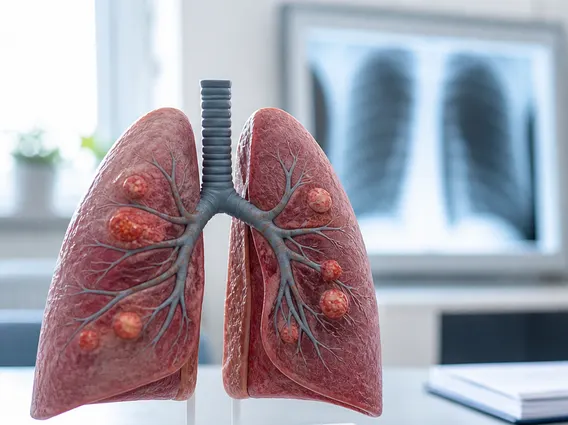
Benign
In a medical context, the term Benign refers to a condition, growth, or tumor that is not cancerous and does not spread to other parts of the body. Understanding this classification is crucial for patient education and clinical management, as it distinguishes non-threatening conditions from those requiring aggressive intervention.

Key Takeaways
- Benign conditions are non-cancerous and do not invade surrounding tissues or spread to distant sites.
- While generally not life-threatening, benign growths can still cause symptoms due to size or location.
- Key differences from malignant conditions include slower growth, distinct borders, and lack of metastasis.
- Diagnosis often involves imaging and biopsy to confirm the benign nature.
- Monitoring or removal may be necessary depending on the condition’s impact on health.
What is Benign?
Benign, in medical terminology, describes a condition or growth that is not malignant, meaning it is not cancerous. These growths typically remain localized and do not invade nearby tissues or spread to other parts of the body through the bloodstream or lymphatic system. Cells within a benign growth usually resemble normal cells and grow at a much slower rate compared to malignant cells.
A benign tumor definition refers to an abnormal mass of cells that is non-cancerous. These tumors often have a clear border or capsule, making them distinct from surrounding healthy tissue. While they can grow quite large, their primary characteristic is their inability to metastasize, or spread. Examples include fibroids, lipomas, and many types of moles.
Benign vs. Malignant: Key Differences
Distinguishing between benign and malignant conditions is fundamental in medical diagnosis and treatment planning. The primary difference lies in their potential for harm and spread. Malignant conditions, or cancers, are characterized by uncontrolled cell growth, the ability to invade surrounding tissues, and the capacity to metastasize to distant organs, posing a significant threat to life. In contrast, benign vs malignant conditions highlights that benign growths typically do not exhibit these aggressive behaviors.
Here is a comparison of key characteristics:
| Characteristic | Benign | Malignant |
|---|---|---|
| Growth Rate | Slow, often stops or regresses | Rapid and uncontrolled |
| Cell Appearance | Well-differentiated, similar to normal cells | Poorly differentiated, abnormal appearance |
| Invasiveness | Non-invasive, often encapsulated | Invasive, infiltrates surrounding tissue |
| Metastasis | Does not spread to distant sites | Spreads to distant sites (metastasizes) |
| Recurrence after Removal | Less likely to recur | More likely to recur |
The diagnostic process often involves imaging studies and a biopsy to examine tissue samples under a microscope, which helps pathologists determine whether a growth is benign or malignant based on these cellular and architectural features.
Understanding the Seriousness of Benign Conditions
While benign conditions are not cancerous and generally do not pose a direct threat to life, their seriousness can vary depending on several factors. A benign growth can still be problematic if it grows large enough to press on nerves, blood vessels, or organs, causing pain, dysfunction, or other symptoms. For instance, a benign brain tumor, though not cancerous, can be life-threatening if it grows in a critical area and causes increased intracranial pressure.
Reasons why a benign condition might require medical attention or intervention include:
- Compression: Pressure on surrounding tissues, nerves, or organs leading to pain, impaired function, or other symptoms.
- Cosmetic Concerns: Visible growths that affect appearance, particularly on the skin.
- Hormone Production: Certain benign tumors, like those in endocrine glands, can produce excess hormones, disrupting bodily functions.
- Risk of Malignant Transformation: Although rare, some benign conditions have a small potential to evolve into malignant ones over time, necessitating monitoring.
- Bleeding or Infection: Some benign growths can ulcerate, bleed, or become infected.
Therefore, even if a condition is classified as benign, regular monitoring by a healthcare professional is often recommended. Treatment, if necessary, typically involves surgical removal, medication to manage symptoms, or watchful waiting, depending on the specific condition and its impact on the individual’s health and quality of life.