
Histologic Grade
Histologic Grade is a critical diagnostic factor in oncology, providing essential insights into the biological behavior of a tumor. It helps medical professionals assess the aggressiveness of cancer cells and guides treatment decisions.
Key Takeaways
- Histologic Grade evaluates how much cancer cells resemble normal cells under a microscope.
- It indicates the potential aggressiveness and growth rate of a tumor.
- This grading system is crucial for predicting cancer prognosis and tailoring treatment strategies.
- A lower grade generally suggests a less aggressive cancer, while a higher grade implies greater aggressiveness.
What is Histologic Grade?
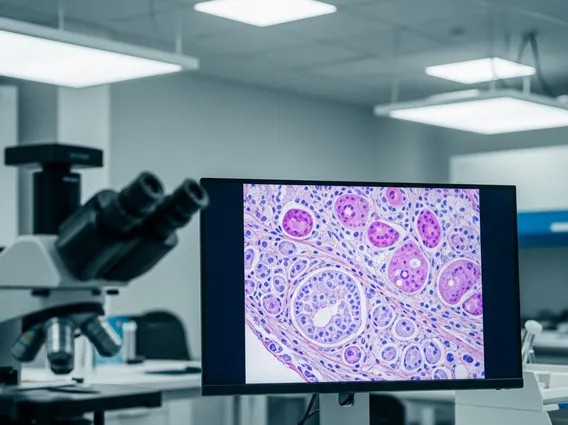
Histologic Grade refers to a system used by pathologists to describe the appearance of cancer cells and tissue architecture when viewed under a microscope. It assesses how differentiated the cancer cells are, meaning how much they resemble the normal cells of the tissue from which they originated. This evaluation provides a crucial Histologic grade cancer explanation, indicating the likely biological behavior of the tumor.
Cancers with cells that closely resemble normal cells are considered “well-differentiated” and typically assigned a lower grade. Conversely, cancers with cells that look very abnormal and bear little resemblance to their normal counterparts are termed “poorly differentiated” or “undifferentiated” and are given a higher grade. This distinction is vital because the degree of differentiation often correlates with the tumor’s growth rate and its potential to spread.
Understanding the Histologic Grading System
The process of Understanding histologic grading system involves a pathologist examining a tissue sample (biopsy) to evaluate several features of the cancer cells. These features include the size and shape of the cells and their nuclei, the number of cells undergoing division (mitotic activity), and the overall architectural pattern of the tumor within the tissue. Different types of cancer may use specific grading systems, such as the Gleason score for prostate cancer or the Nottingham histologic grade for breast cancer, but the underlying principle remains consistent.
Generally, histologic grades are categorized into a numerical scale, often from 1 to 3 or 4, where a lower number indicates a less aggressive tumor and a higher number signifies a more aggressive one. For instance:
- Grade 1 (Low Grade): Well-differentiated cells that closely resemble normal cells; typically slow-growing and less likely to spread.
- Grade 2 (Intermediate Grade): Moderately differentiated cells; exhibit some abnormal features but retain some resemblance to normal cells.
- Grade 3 (High Grade): Poorly differentiated or undifferentiated cells; appear very abnormal, grow rapidly, and are more likely to spread.
This systematic classification helps standardize the assessment of tumor aggressiveness across different patients and medical institutions.
Importance of Histologic Grade in Cancer Prognosis
The Importance of histologic grade diagnosis cannot be overstated, as it is a fundamental factor in determining a patient’s prognosis and guiding treatment decisions. Along with the cancer stage (which describes the size of the tumor and whether it has spread), the histologic grade provides a comprehensive picture of the disease’s potential trajectory. Higher-grade tumors are generally associated with a higher risk of recurrence and metastasis (spread to distant sites) and may require more aggressive treatment approaches, such as intensive chemotherapy, radiation, or surgery.
For example, in breast cancer, a higher Nottingham histologic grade (Grade 3) often indicates a more aggressive tumor that may benefit from systemic therapies in addition to local treatment. Similarly, in prostate cancer, a higher Gleason score suggests a greater likelihood of rapid progression. According to the American Cancer Society, understanding the grade helps oncologists predict how quickly the cancer might grow and spread, allowing them to personalize treatment plans to optimize outcomes and improve patient survival rates.



















