
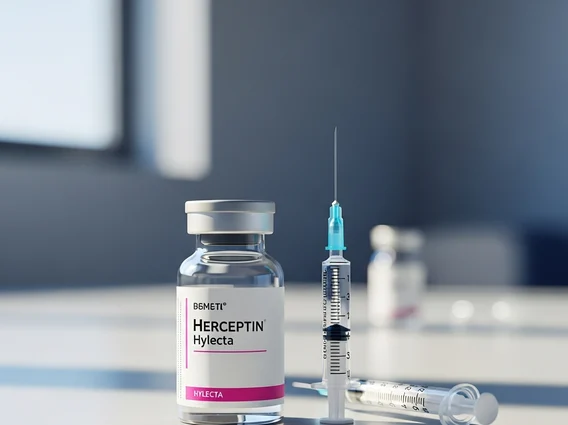
Herceptin Hylecta
Herceptin Hylecta is a targeted therapy used in the treatment of specific types of cancer. It combines a well-established anti-cancer drug with an enzyme to facilitate its administration.
Key Takeaways
- Herceptin Hylecta is a subcutaneous formulation combining trastuzumab and hyaluronidase, designed to treat HER2-positive cancers.
- It works by targeting and blocking the HER2 protein on cancer cells, inhibiting their growth and survival.
- This medication is primarily used for HER2-positive breast cancer and certain types of HER2-positive gastric cancer.
- Common side effects include fatigue, nausea, and diarrhea, with more serious risks like cardiac toxicity requiring careful monitoring.
- Patients receive Herceptin Hylecta via subcutaneous injection administered by a healthcare professional, emphasizing the importance of adherence to treatment schedules and reporting any adverse reactions.
What is Herceptin Hylecta?
Herceptin Hylecta refers to a specific co-formulation of trastuzumab and hyaluronidase-oysk. Trastuzumab is a monoclonal antibody that targets the human epidermal growth factor receptor 2 (HER2) protein, which is overexpressed in certain aggressive cancers. The addition of hyaluronidase-oysk, an enzyme, allows for subcutaneous (under the skin) administration, making the treatment process potentially more convenient for patients compared to intravenous infusions. This formulation is designed to deliver the therapeutic benefits of trastuzumab in a more accessible manner, maintaining its efficacy against HER2-positive malignancies.
The development of subcutaneous formulations like Herceptin Hylecta represents an advancement in cancer care, aiming to reduce administration time and improve patient experience. It is a critical component in the therapeutic arsenal against cancers that exhibit HER2 overexpression, a characteristic found in approximately 15-20% of breast cancers, according to the World Health Organization (WHO).
How Herceptin Hylecta Works and Its Uses
Herceptin Hylecta works primarily through its active component, trastuzumab. Trastuzumab binds specifically to the extracellular domain of the HER2 protein, which is found on the surface of HER2-positive cancer cells. By binding to HER2, trastuzumab prevents the receptor from signaling for cell growth and division, effectively inhibiting the proliferation of cancer cells. It also marks these cancer cells for destruction by the body’s immune system, leading to a multi-pronged attack against the tumor. The hyaluronidase component facilitates the dispersion and absorption of trastuzumab when administered subcutaneously, ensuring the drug reaches systemic circulation effectively.
Herceptin Hylecta is used for the treatment of specific cancers where HER2 overexpression is a key driver of disease progression. The primary indications for which Herceptin Hylecta is used include:
- HER2-positive early breast cancer: Used after surgery, chemotherapy, and radiation (adjuvant setting) to reduce the risk of recurrence.
- HER2-positive metastatic breast cancer: Employed in patients whose cancer has spread to other parts of the body, often in combination with chemotherapy.
- HER2-positive metastatic gastric or gastroesophageal junction adenocarcinoma: Used in combination with chemotherapy for advanced stages of these stomach and esophageal cancers.
This targeted approach ensures that the treatment specifically attacks cancer cells while minimizing harm to healthy cells, a hallmark of modern oncology.
Herceptin Hylecta Side Effects and Patient Information
As with any potent medication, Herceptin Hylecta can cause side effects. Understanding Herceptin Hylecta side effects is crucial for both patients and healthcare providers to manage treatment effectively. Common side effects often include fatigue, nausea, diarrhea, constipation, headache, and rash. More serious, though less common, side effects can include cardiac toxicity (heart problems), pulmonary toxicity (lung problems), and infusion-related reactions. Patients are closely monitored for these serious adverse events, particularly for cardiac function, throughout their treatment.
Comprehensive Herceptin Hylecta patient information is vital for safe and effective use. Patients should be aware that this medication is administered by a healthcare professional via subcutaneous injection, typically in the thigh. It is not intended for self-administration. Patients must adhere to their prescribed treatment schedule and report any new or worsening symptoms to their doctor immediately. Key information for patients includes:
- Cardiac Monitoring: Regular heart function tests (e.g., echocardiograms) are necessary before and during treatment due to the risk of heart problems.
- Allergic Reactions: Patients should be monitored for signs of allergic reactions during and after administration.
- Pregnancy and Breastfeeding: Herceptin Hylecta can harm a fetus and is not recommended during pregnancy or breastfeeding. Effective contraception should be used during treatment and for several months afterward.
- Drug Interactions: Patients should inform their doctor about all other medications, supplements, and herbal products they are taking.
This information is supportive and does not replace professional medical advice. Always consult with a qualified healthcare provider for diagnosis and treatment recommendations.