EGFR
EGFR, or Epidermal Growth Factor Receptor, is a crucial protein found on the surface of cells that plays a vital role in cell growth, division, and survival. Understanding its normal function and its involvement in disease is fundamental in medical science.
Key Takeaways
- EGFR is a protein receptor on cell surfaces that regulates cell growth and division.
- Normally, it binds to growth factors, initiating a signaling pathway essential for healthy cellular processes.
- Dysregulation or mutations in EGFR can lead to uncontrolled cell proliferation, a hallmark of cancer.
- EGFR is a significant therapeutic target in various cancers, particularly non-small cell lung cancer.
What is EGFR (Epidermal Growth Factor Receptor)?
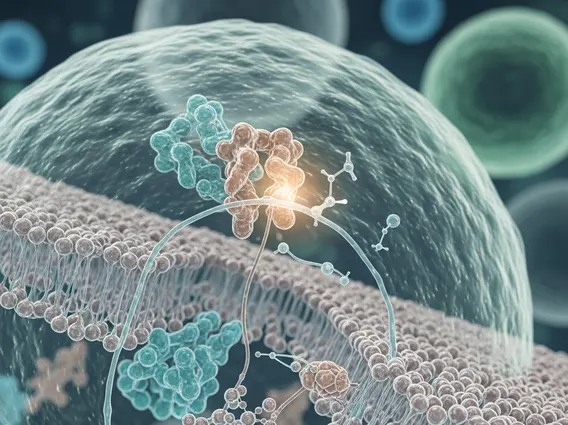
Epidermal Growth Factor Receptor (EGFR) is a protein located on the surface of many cells throughout the body. It belongs to a family of receptor tyrosine kinases, which are critical for transmitting signals from outside the cell to the inside. When activated, EGFR initiates a cascade of intracellular events that influence fundamental cellular processes. This protein is essential for normal physiological functions, including cell proliferation, differentiation, migration, and survival.
The term what is EGFR refers to this transmembrane protein that acts as a receptor for epidermal growth factor (EGF) and other related growth factors. Its structure typically includes an extracellular ligand-binding domain, a transmembrane domain, and an intracellular tyrosine kinase domain. The binding of specific ligands to the extracellular domain triggers a conformational change, leading to the activation of the intracellular kinase and subsequent phosphorylation of various proteins, thereby relaying signals within the cell.
EGFR’s Normal Cellular Function and Signaling Pathway
The EGFR function in body is primarily to regulate cell growth, division, and survival. It acts as a cellular antenna, receiving external cues in the form of growth factors. When an epidermal growth factor (EGF) or a similar ligand binds to EGFR, it causes two EGFR proteins to come together and form a dimer. This dimerization activates the tyrosine kinase domain inside the cell, leading to the phosphorylation of specific tyrosine residues on the receptor itself and on other intracellular proteins.
This activation initiates the complex EGFR pathway explained as a series of downstream signaling events. These pathways include the RAS/RAF/MEK/ERK (MAPK) pathway, the PI3K/AKT/mTOR pathway, and the JAK/STAT pathway. These pathways collectively control critical cellular activities such as gene expression, protein synthesis, cell cycle progression, and inhibition of apoptosis (programmed cell death). In healthy tissues, this signaling is tightly regulated, ensuring that cells grow and divide only when necessary, contributing to processes like wound healing, tissue repair, and maintaining the integrity of various organs.
The Role of EGFR in Cancer Development
The EGFR role in cancer is profound, as its dysregulation is a common feature in many human malignancies. When EGFR signaling becomes uncontrolled, it can drive tumor growth and progression. This dysregulation often occurs through several mechanisms:
- Mutations: Specific mutations in the EGFR gene, particularly in the tyrosine kinase domain, can lead to constitutive activation of the receptor, meaning it is always “on” even without ligand binding.
- Gene Amplification: An increased number of EGFR gene copies can result in an overabundance of EGFR proteins on the cell surface, making the cell hypersensitive to even low levels of growth factors.
- Overexpression: Elevated levels of EGFR protein, without gene amplification or mutation, can also lead to enhanced signaling.
These abnormalities result in continuous activation of the downstream signaling pathways, promoting uncontrolled cell proliferation, increased cell survival, angiogenesis (formation of new blood vessels to feed the tumor), and metastasis (spread of cancer to other parts of the body). For instance, activating EGFR mutations are found in approximately 10-30% of non-small cell lung cancers (NSCLC), making EGFR a significant target for precision therapies in these patients. (Source: World Health Organization, American Cancer Society).