Mutate
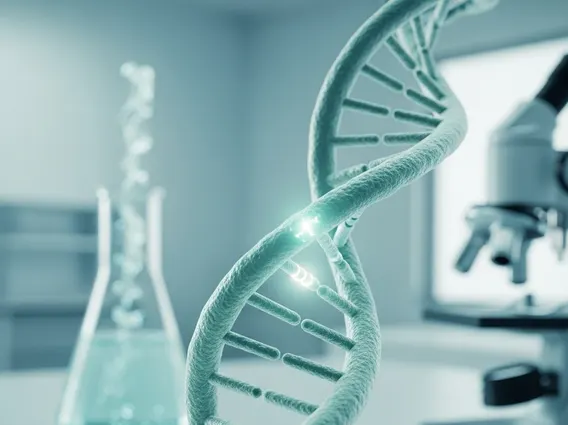
The term Mutate refers to a fundamental process in biology, signifying a change in the genetic material of an organism. These alterations are crucial for understanding evolution, genetic diversity, and the development of various diseases.
Key Takeaways
- Mutate describes a change in an organism’s DNA or RNA sequence, forming the basis of genetic variation.
- Mutations can arise spontaneously from errors during DNA replication or be induced by environmental factors.
- There are various types of mutations, ranging from single nucleotide changes to large chromosomal rearrangements.
- The impact of mutations on living organisms can be neutral, beneficial, or harmful, influencing evolution and disease.
What is Mutate in Biology?
To Mutate in biology means to undergo a change in the nucleotide sequence of an organism’s deoxyribonucleic acid (DNA) or ribonucleic acid (RNA). This alteration can affect a single base pair or larger segments of chromosomes. A mutation is the result of this process, representing a permanent change in the genetic material. These changes are the ultimate source of all genetic variation, providing the raw material for natural selection and evolution.
Mutations can occur in germ cells (sperm and egg cells), which can then be passed down to offspring, or in somatic cells (non-reproductive cells), which affect only the individual in whom they arise and are not inherited. Understanding mutations is vital in fields such as genetics, medicine, and evolutionary biology, as they underpin both the diversity of life and the etiology of many genetic disorders and cancers.
How Genes Mutate and Types of Mutations
Genes mutate through various mechanisms, primarily errors during DNA replication or repair, or exposure to mutagens. During DNA replication, the cellular machinery can sometimes insert an incorrect nucleotide, leading to a point mutation. Environmental factors, known as mutagens, such as radiation (e.g., UV light, X-rays) and certain chemicals, can also damage DNA, causing changes that are not correctly repaired. These changes then become permanent mutations.
There are several different types of mutations explained by their nature and extent:
- Point Mutations: These involve a change in a single nucleotide base.
- Silent mutations: Change a base but do not alter the amino acid sequence due to redundancy in the genetic code.
- Missense mutations: Result in a codon that codes for a different amino acid.
- Nonsense mutations: Change a codon to a premature stop codon, leading to a truncated protein.
- Frameshift Mutations: Involve the insertion or deletion of nucleotides that are not multiples of three, shifting the reading frame of the genetic code and drastically altering the resulting protein.
- Chromosomal Mutations: Large-scale changes affecting entire chromosomes or significant parts of them. These include deletions, duplications, inversions, and translocations of chromosomal segments.
Impact of Mutation on Living Organisms
The impact of mutation on living organisms can vary widely, ranging from neutral to highly beneficial or severely detrimental. Many mutations are neutral, meaning they have no discernible effect on an organism’s survival or reproduction. This can be due to silent mutations or changes in non-coding regions of DNA. Other mutations can be beneficial, providing an organism with an advantage in a particular environment, such as resistance to a disease or improved adaptation, driving evolutionary change.
Conversely, many mutations are harmful, leading to genetic disorders or diseases. For instance, mutations in tumor suppressor genes or proto-oncogenes can lead to uncontrolled cell growth, contributing to the development of cancer. According to the World Health Organization (WHO), cancer is a leading cause of death worldwide, with genetic mutations playing a significant role in its initiation and progression. For example, specific mutations in the BRCA1 and BRCA2 genes are known to significantly increase the risk of breast and ovarian cancers. Understanding these impacts is crucial for developing treatments and preventative strategies in medicine.