Monitor
A Monitor, in a clinical context, refers to a medical device or a systematic process used to observe, measure, and record various physiological parameters or clinical conditions over time. This continuous assessment is crucial for diagnosis, guiding treatment, and ensuring patient safety and well-being.
Key Takeaways
- A medical monitor is a device or process for continuous observation of physiological parameters.
- Its primary purpose is to detect changes, aid diagnosis, guide treatment, and ensure patient safety.
- Medical monitors function by using sensors to collect data, which is then processed and displayed for healthcare professionals.
- Key technologies include biosensors, signal processing, and display interfaces tailored for clinical environments.
- There are various types of medical monitors, each specialized for specific physiological functions or conditions.
What is a Monitor and Its Purpose?
In healthcare, a Monitor is an essential tool for tracking a patient’s health status. It can be a sophisticated electronic device that continuously measures vital signs, such as heart rate, blood pressure, oxygen saturation, and body temperature. Beyond devices, the term also encompasses the systematic observation of a patient’s condition by medical staff.
The primary purpose of a medical monitor is multifaceted. It enables early detection of changes in a patient’s condition, which can be critical for timely intervention and preventing adverse outcomes. For instance, continuous cardiac monitoring can alert clinicians to arrhythmias, allowing for immediate treatment. Monitors also play a vital role in assessing the effectiveness of treatments, guiding medication dosages, and providing crucial data during surgical procedures or in intensive care units. According to the World Health Organization (WHO), effective patient monitoring is a cornerstone of quality healthcare, significantly reducing morbidity and mortality rates in various clinical settings.
How Medical Monitors Function and Their Underlying Technology
Medical monitors operate on principles that involve sensing, processing, and displaying physiological data. The process begins with specialized sensors placed on or within the patient’s body. These sensors convert physiological signals (e.g., electrical activity from the heart, pressure changes in blood vessels) into electrical signals. For example, an electrocardiogram (ECG) monitor uses electrodes to detect the heart’s electrical impulses.
Once collected, these raw electrical signals are transmitted to a processing unit within the monitor. This unit filters out noise, amplifies the signals, and converts them into digital data. Advanced algorithms then analyze this data to derive meaningful clinical parameters. For instance, an algorithm might calculate heart rate from ECG data or mean arterial pressure from blood pressure waveforms. Understanding medical monitor technology involves appreciating the intricate interplay between these biosensors, signal processing capabilities, and user-friendly interfaces that present complex data in an understandable format for healthcare professionals.
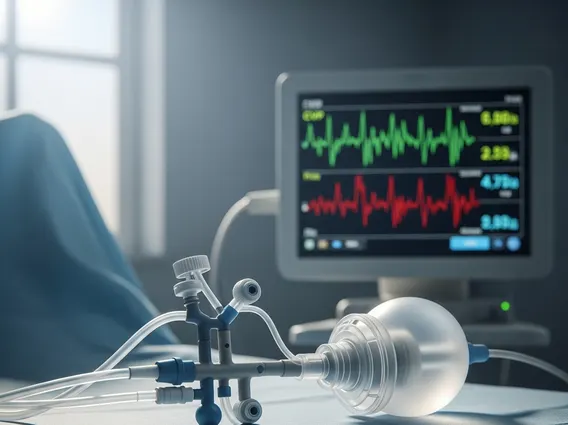
The processed data is then displayed on a screen, often with real-time waveforms, numerical values, and trend graphs. Many modern monitors also incorporate alarm systems that alert staff to deviations from pre-set normal ranges, ensuring immediate attention to critical changes in a patient’s condition. Connectivity features allow data to be integrated into electronic health records (EHRs), facilitating comprehensive patient management and long-term tracking.
Different Types of Medical Monitors
The field of medical monitoring is vast, with various devices tailored to specific physiological functions and clinical needs. These devices range from simple, portable units to complex, multi-parameter systems used in critical care. Each type of medical monitor is designed to provide precise, real-time information about a particular aspect of a patient’s health.
Here are some common types of medical monitors:
- Cardiac Monitors: These track the heart’s electrical activity (ECG), heart rate, and rhythm. They are essential for detecting arrhythmias, ischemia, and assessing cardiac function.
- Blood Pressure Monitors: Used to measure systolic and diastolic blood pressure, either continuously (invasive) or intermittently (non-invasive). They are vital for managing hypertension, hypotension, and assessing cardiovascular stability.
- Pulse Oximeters: These non-invasive devices measure oxygen saturation in the blood (SpO2) and pulse rate. They are crucial for assessing respiratory function and oxygen delivery to tissues.
- Temperature Monitors: Provide continuous or intermittent measurement of body temperature, important for detecting fever, hypothermia, and monitoring during surgery.
- Glucose Monitors: Used by patients with diabetes to measure blood glucose levels, aiding in disease management and insulin dosing. Continuous glucose monitors (CGMs) provide real-time readings.
- Fetal Monitors: Employed during pregnancy and labor to track the fetal heart rate and uterine contractions, ensuring the well-being of the baby.
- Neurological Monitors: Such as electroencephalography (EEG) for brain activity or intracranial pressure (ICP) monitors, used in neurology and neurosurgery to assess brain function and detect abnormalities.
The selection of a specific monitor depends on the patient’s condition, the clinical setting, and the parameters that need to be observed. Advances in technology continue to make these devices more accurate, less invasive, and more integrated into comprehensive patient care systems.