
Mitotic Activity
Mitotic Activity is a fundamental biological process essential for the growth, development, and repair of multicellular organisms. It represents the rate at which cells divide, playing a critical role in maintaining tissue homeostasis and responding to cellular damage.
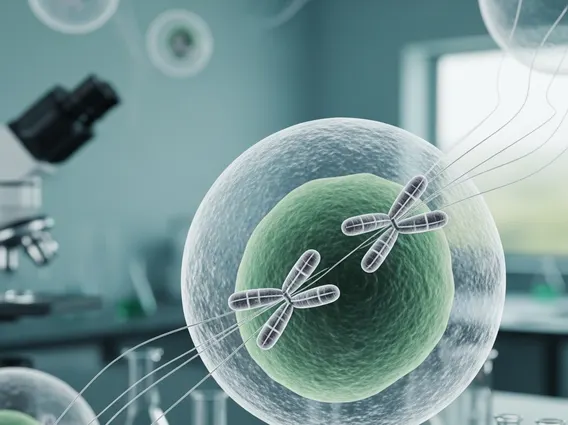
Key Takeaways
- Mitotic Activity quantifies the rate of cell division through mitosis, a process where a single cell divides into two identical daughter cells.
- It is crucial for organismal growth, development, and the repair and replacement of damaged or old cells.
- Abnormal mitotic activity in cell division explained can lead to various health issues, including uncontrolled cell proliferation seen in cancer.
- The significance of mitotic activity in clinical settings, particularly oncology, lies in its use as a prognostic indicator for tumor aggressiveness and response to treatment.
- Measuring mitotic activity definition and function helps clinicians assess disease progression and tailor therapeutic strategies.
What is Mitotic Activity?
Mitotic Activity refers to the frequency or rate at which cells in a tissue or population undergo mitosis, the process of cell division. Mitosis is a vital biological mechanism where a single parent cell divides to produce two genetically identical daughter cells. This process is essential for growth, tissue repair, and the replacement of old or damaged cells throughout an organism’s life. The measurement of mitotic activity provides insight into the proliferative state of a cell population, indicating how rapidly new cells are being generated.
The evaluation of mitotic activity typically involves counting the number of mitotic figures (cells visibly undergoing division) within a specific area or number of cells in a tissue sample, often expressed as a mitotic index. A higher index suggests more rapid cell turnover. Understanding mitotic activity definition and function is crucial for assessing normal physiological processes, such as embryonic development and wound healing, as well as pathological conditions where cell proliferation is dysregulated.
The Role of Mitotic Activity in Cell Division
Mitotic activity in cell division explained is the engine driving the expansion and maintenance of tissues and organs. During development, it ensures the precise increase in cell numbers required for the formation of complex structures. In mature organisms, controlled mitotic activity facilitates tissue renewal, such as the continuous replacement of skin cells, blood cells, and the lining of the gastrointestinal tract. This constant regeneration is vital for maintaining the integrity and function of various bodily systems.
The regulation of mitotic activity is tightly controlled by a complex network of internal and external signals, ensuring that cells divide only when and where necessary. Disruptions in this regulation can have profound consequences. For instance, insufficient mitotic activity can impair healing and lead to degenerative conditions, while excessive or uncontrolled mitotic activity is a hallmark of cancer. The precision of this process underscores its fundamental importance to life.
- Growth and Development: Enables the increase in cell number from a single zygote to a complex multicellular organism.
- Tissue Repair: Replaces damaged or lost cells following injury, ensuring functional recovery.
- Cell Replacement: Continuously renews short-lived cells, maintaining tissue homeostasis.
Clinical Significance of Mitotic Activity
The significance of mitotic activity is particularly pronounced in clinical medicine, especially in the field of oncology. Pathologists routinely assess mitotic activity in tumor biopsies to help determine the aggressiveness of a cancer. A higher mitotic count often correlates with a more rapidly growing and potentially more aggressive tumor, which can influence prognosis and treatment decisions. For example, in breast cancer, a high mitotic index is associated with a poorer prognosis and may indicate the need for more intensive therapy.
Measuring mitotic activity aids in the grading of tumors, which is a system used to classify cancer cells based on their appearance and behavior under a microscope. Tumors with high mitotic activity are typically graded higher, reflecting their increased proliferative potential. This information is critical for clinicians to tailor treatment strategies, including chemotherapy or radiation, which often target rapidly dividing cells. According to a study published in the Journal of Clinical Oncology, mitotic activity is a key independent prognostic factor in various solid tumors, including melanoma and soft tissue sarcomas, highlighting its enduring value in cancer management.



















