Spinal Cord
The Spinal Cord is a vital component of the central nervous system, serving as the primary pathway for communication between the brain and the rest of the body. It plays a crucial role in transmitting sensory information, motor commands, and mediating reflexes essential for daily functioning.
Key Takeaways
- The Spinal Cord is a central nervous system component, facilitating communication between the brain and body.
- Its anatomy includes gray and white matter, protected by vertebrae, meninges, and cerebrospinal fluid.
- Common conditions affecting the Spinal Cord range from inflammatory diseases like Multiple Sclerosis to structural issues like spinal stenosis.
- Spinal Cord injuries often result from trauma, leading to varied symptoms depending on the injury’s location and severity.
- Symptoms of Spinal Cord injury can include paralysis, sensory loss, and impaired autonomic functions.
What is the Spinal Cord: Anatomy and Function
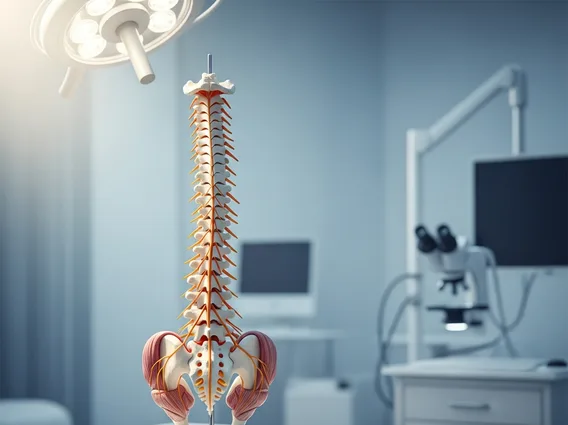
The Spinal Cord is a long, fragile, tube-like structure that extends from the base of the brain down the back. It is encased within the vertebral column, which provides bony protection. This intricate structure is a critical part of the central nervous system, responsible for relaying nerve signals throughout the body. Understanding spinal cord function and anatomy is essential to grasp its importance.
Anatomically, the Spinal Cord consists of gray matter, which contains nerve cell bodies, and white matter, composed of myelinated nerve fibers. These fibers form tracts that carry information up to the brain (sensory pathways) and down from the brain (motor pathways). The primary functions of the Spinal Cord include transmitting sensory information from the body to the brain, sending motor commands from the brain to muscles and glands, and mediating reflex actions independently of the brain. For instance, the rapid withdrawal of a hand from a hot surface is a spinal reflex, demonstrating its immediate protective capabilities.
Common Spinal Cord Diseases
A range of conditions can affect the Spinal Cord, leading to significant neurological impairments. These diseases of the spinal cord can arise from various causes, including inflammation, degeneration, infection, and tumors. Early diagnosis and intervention are crucial for managing these complex conditions and improving patient outcomes.
Some common diseases include:
- Multiple Sclerosis (MS): An autoimmune disease where the immune system attacks the protective myelin sheath covering nerve fibers, leading to disrupted signal transmission.
- Spinal Stenosis: A narrowing of the spinal canal, which can compress the Spinal Cord and nerves, often caused by age-related degeneration.
- Transverse Myelitis: An inflammatory condition characterized by inflammation across one section of the Spinal Cord, leading to symptoms like pain, muscle weakness, and sensory problems.
- Spinal Cord Tumors: Abnormal growths that can develop within or near the Spinal Cord, compressing nerves and causing neurological deficits.
According to the National Institute of Neurological Disorders and Stroke (NINDS), conditions like spinal stenosis affect a significant portion of the aging population, highlighting the prevalence of these issues.
Spinal Cord Injury: Symptoms and Causes
A Spinal Cord injury (SCI) refers to damage to the Spinal Cord that results in a loss of function, such as mobility or sensation. The severity and location of the injury determine the extent of impairment. Recognizing spinal cord injury symptoms is vital for immediate medical attention and long-term management.
The most common causes of Spinal Cord injuries are traumatic events, including:
- Motor vehicle accidents (approximately 38% of SCIs, according to the National Spinal Cord Injury Statistical Center).
- Falls (around 32%).
- Acts of violence, such as gunshot wounds (about 14%).
- Sports and recreation injuries (approximately 8%).
Symptoms vary widely depending on whether the injury is complete (total loss of function below the injury level) or incomplete (some function remains) and its location along the vertebral column. Common symptoms can include loss of movement (paralysis), loss of sensation (including the ability to feel heat, cold, and touch), loss of bowel or bladder control, exaggerated reflex activities or spasms, and changes in sexual function, fertility, and sensitivity. Injuries higher up the Spinal Cord, particularly in the cervical region, typically result in more widespread paralysis and functional loss, potentially affecting breathing and heart rate regulation.