Slit Lamp Biomicroscopy
Slit lamp biomicroscopy is a fundamental diagnostic tool in ophthalmology, providing a magnified, three-dimensional view of the eye’s anterior and posterior structures. This non-invasive examination is crucial for detecting and monitoring a wide range of ocular conditions, offering unparalleled insight into the health of the eye.
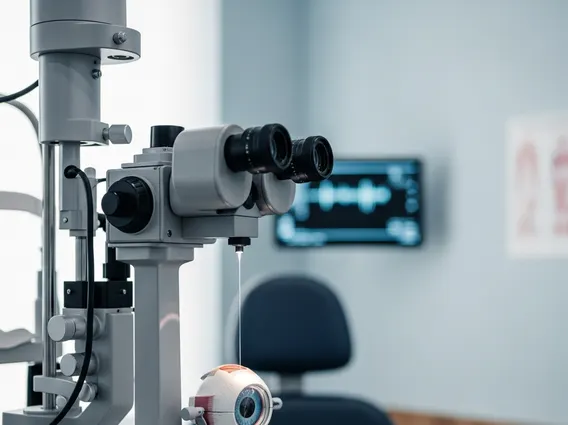
Key Takeaways
- Slit Lamp Biomicroscopy offers a highly magnified, 3D view of the eye’s internal and external structures.
- It combines a bright, adjustable light source with a binocular microscope for detailed examination.
- The procedure is essential for diagnosing conditions such as cataracts, glaucoma, corneal abrasions, and retinal disorders.
- It allows ophthalmologists to thoroughly assess the health of the eyelids, conjunctiva, cornea, iris, lens, and vitreous.
- This quick, painless examination is a standard and vital component of comprehensive eye check-ups.
What is Slit Lamp Biomicroscopy?
Slit Lamp Biomicroscopy is a sophisticated diagnostic technique utilized by eye care professionals, primarily ophthalmologists and optometrists, to conduct a thorough examination of the eye. It employs a specialized instrument known as a slit lamp, which integrates a powerful, adjustable light source with a low-power binocular microscope. This combination allows for a highly magnified, stereoscopic (three-dimensional) view of the eye’s structures, from the front surface (anterior segment) to the back (posterior segment). The slit lamp biomicroscopy explanation emphasizes its unique capability to illuminate thin cross-sections of ocular tissues. This method enables clinicians to meticulously observe the intricate details of the cornea, iris, lens, and even parts of the retina and optic nerve, facilitating the identification of subtle abnormalities and diseases that might otherwise go unnoticed during a standard visual inspection. Understanding what is Slit Lamp Biomicroscopy reveals its importance as a cornerstone in modern ophthalmic diagnostics.
How Does a Slit Lamp Work?
A slit lamp functions by projecting a narrow, intense beam of light, which can be adjusted in width, height, and angle, into the patient’s eye. The patient comfortably rests their chin on a chin rest and their forehead against a band to ensure stability during the examination. Simultaneously, the examiner views the illuminated eye structures through a binocular microscope, which provides a magnified, stereoscopic image. This stereoscopic view is critical as it allows for depth perception, enabling the clinician to assess the three-dimensional characteristics of ocular tissues and any lesions. The light beam, often referred to as a “slit,” can be moved across different planes of the eye, effectively creating optical cross-sections of transparent structures like the cornea and lens. By systematically adjusting the focus, magnification, and the position of both the light source and the microscope, the eye care professional can meticulously examine various parts of the eye, layer by layer.
- Adjustable Light Source: Projects a bright, focused slit beam, allowing for variable illumination angles and depths.
- Binocular Microscope: Offers a magnified, stereoscopic view, essential for perceiving depth and subtle tissue changes.
- Patient Positioning System: Includes a chin rest and forehead band to maintain a stable head position, crucial for precise examination.
- Control Joystick: Enables the examiner to smoothly maneuver the light and microscope, and fine-tune parameters like slit width, length, and intensity.
This intricate interplay of light and magnification allows for an unparalleled detailed assessment of the eye’s internal architecture.
Uses of Slit Lamp Examination
The slit lamp examination uses are incredibly diverse, making it an indispensable tool across virtually all aspects of ophthalmology. It is routinely employed for the detection, diagnosis, and ongoing monitoring of a vast spectrum of ocular conditions affecting both the anterior and posterior segments of the eye.
Key applications include:
- Assessment of the Cornea: Identifying and evaluating conditions such as corneal abrasions, ulcers, infections (e.g., keratitis), dystrophies, and foreign bodies lodged in the cornea.
- Lens Evaluation: Crucial for detecting and classifying cataracts, assessing their density, location, and impact on vision. It also helps in monitoring their progression over time.
- Glaucoma Detection: Used to examine the anterior chamber angle (where the iris meets the cornea) and, with specialized lenses, to assess the optic nerve head for signs of glaucomatous damage.
- Retinal and Vitreous Examination: When combined with high-power condensing lenses (e.g., 90D or 78D lenses), the slit lamp provides excellent views of the retina, optic nerve, and vitreous humor. This enables the diagnosis of conditions such as diabetic retinopathy, macular degeneration, retinal tears or detachments, and vitreous hemorrhages.
- Eyelid and Conjunctival Disorders: Facilitates the diagnosis of common conditions like blepharitis (eyelid inflammation), conjunctivitis (pink eye), styes, chalazia, and other inflammatory or infectious processes affecting the external eye.
- Contact Lens Fit and Complications: Essential for assessing how contact lenses fit on the cornea, checking for any associated complications like corneal edema, neovascularization, or allergic reactions.
Through its ability to provide high-resolution, three-dimensional views, the slit lamp examination remains a vital procedure for comprehensive eye care, enabling early intervention and improved patient outcomes.