Skin Patch
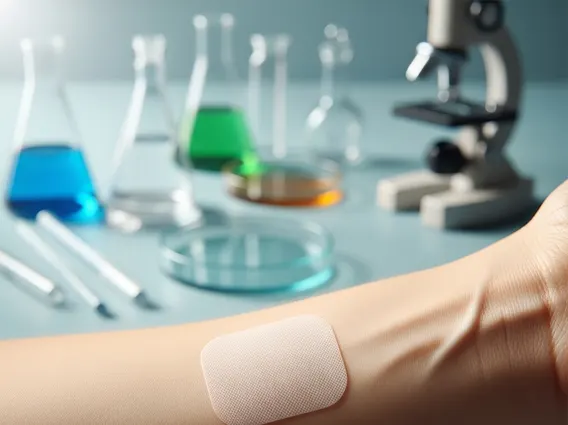
A Skin Patch is a medical device designed to deliver medication through the skin and into the bloodstream. This method offers a convenient and effective alternative to traditional oral medications or injections, providing a steady release of therapeutic agents.
Key Takeaways
- Skin patches deliver medication transdermally, offering a non-invasive and consistent drug delivery method.
- They work by allowing active pharmaceutical ingredients to pass through the skin layers into systemic circulation.
- Various types of patches exist, including matrix, reservoir, and drug-in-adhesive systems, each suited for different medications.
- Benefits include improved patient adherence, reduced systemic side effects, and sustained drug levels.
- Applications range from pain management and hormone therapy to smoking cessation and cardiovascular treatment.
What is a Skin Patch?
A Skin Patch, also known as a transdermal patch, is a medicated adhesive patch that is placed on the skin to deliver a specific dose of medication through the skin and into the bloodstream. This method bypasses the digestive system and liver metabolism, often leading to more consistent drug levels in the body. The primary goal of what is a skin patch is to provide a controlled release of medication over an extended period, which can range from hours to several days.
The concept of transdermal drug delivery has revolutionized patient care by offering a non-invasive, user-friendly option for various treatments. The skin patch benefits and uses are extensive, including improved patient adherence due to less frequent dosing, reduced gastrointestinal side effects common with oral medications, and the ability to terminate drug delivery quickly by simply removing the patch. This delivery system is particularly beneficial for drugs that have a short half-life, require continuous administration, or are poorly absorbed orally.
Mechanism of Skin Patches
Skin patches work by facilitating the passage of active pharmaceutical ingredients (APIs) from the patch, across the skin layers, and into the systemic circulation. This process, known as transdermal absorption, relies on the drug’s ability to permeate the stratum corneum—the outermost layer of the skin—which acts as the primary barrier. Once past the stratum corneum, the drug diffuses through the deeper epidermal and dermal layers, eventually reaching the capillaries and entering the bloodstream.
Most patches are designed with several layers: a backing layer that protects the patch from the external environment, a drug reservoir or matrix containing the medication, an adhesive layer that secures the patch to the skin, and a release liner that is removed before application. The rate of drug delivery is carefully controlled by the patch’s design, which may include a rate-controlling membrane or by the inherent properties of the drug and adhesive matrix. Factors influencing absorption include the drug’s molecular size, lipid solubility, and the condition of the skin at the application site. According to the World Health Organization (WHO), transdermal drug delivery systems are increasingly recognized for their potential to enhance therapeutic outcomes and patient quality of life, especially for chronic conditions.
Types and Applications of Skin Patches
The types of skin patches vary significantly in their design and the mechanism by which they deliver medication. Understanding these variations is crucial for appreciating their diverse applications in medicine. Here are some common types:
- Single-Layer Drug-in-Adhesive: In this design, the drug is uniformly dispersed directly within the adhesive layer. This type is simple and cost-effective, with drug release controlled by the adhesive matrix itself.
- Multi-Layer Drug-in-Adhesive: Similar to the single-layer type but with multiple layers of drug-in-adhesive, allowing for different release rates or larger drug loads.
- Reservoir System: These patches have a separate drug layer (reservoir) in liquid or gel form, separated from the adhesive by a rate-controlling membrane. This membrane regulates the diffusion of the drug to the skin.
- Matrix System: The drug is dispersed in a polymer matrix, which also serves as the adhesive. Drug release is controlled by the diffusion rate through the matrix.
- Vapor Patch: While not delivering medication to the bloodstream, these patches release essential oils or other volatile compounds for local effects, such as decongestion.
Skin patches are widely used across various medical fields. Common applications include pain management (e.g., fentanyl, lidocaine patches), hormone replacement therapy (e.g., estrogen, testosterone patches), smoking cessation (nicotine patches), and cardiovascular conditions (e.g., nitroglycerin patches for angina). They are also used for motion sickness (scopolamine patches) and certain neurological disorders. The continuous, controlled delivery offered by skin patches helps maintain therapeutic drug concentrations, minimizing fluctuations that can occur with intermittent oral dosing and thereby improving treatment efficacy and patient comfort.