Sil
Sil refers to a class of silicon-based compounds or structures that hold significant relevance within medical, clinical, and oncology contexts. These entities are explored for their unique chemical properties and their diverse applications in biological systems and therapeutic strategies.

Key Takeaways
- Sil encompasses silicon-based chemical entities with specific medical, clinical, or oncological implications.
- Silicon, a metalloid element, forms the backbone of these compounds, exhibiting unique semiconductor and bonding properties.
- Silicates are mineral compounds containing silicon and oxygen, found widely in nature and sometimes studied for their biological interactions.
- Silicone materials, derived from silicon, are extensively used in medicine due to their biocompatibility and versatility.
- Understanding the chemical nature and properties of these materials is crucial for their safe and effective application in healthcare.
What is Sil: Defining its Chemical Nature
The term Sil, in a medical and clinical context, refers to a category of chemical entities fundamentally built upon silicon. While not a single, universally defined compound, it encapsulates various silicon-containing structures that are investigated for their biological interactions, diagnostic potential, or therapeutic applications. The sil chemical definition centers on compounds where silicon plays a crucial role in their molecular architecture, often influencing their stability, reactivity, and interaction with biological tissues. These compounds can range from simple inorganic silicates to complex organosilicon polymers, each with distinct properties relevant to health sciences.
The study of Sil involves understanding how these silicon-based materials behave within the human body, including their biocompatibility, degradation pathways, and potential for targeted delivery. For instance, some forms of Sil are explored for their role in drug delivery systems, medical implants, or as components in diagnostic imaging agents. The precise nature of a specific “Sil” entity would depend on its exact chemical composition and intended application, always adhering to rigorous safety and efficacy standards in medical research and development.
Properties of Silicon and Silicate Compounds
Understanding the fundamental silicon element properties is essential for appreciating the broader category of Sil. Silicon (Si) is the second most abundant element in the Earth’s crust, a metalloid with atomic number 14. Its unique electronic configuration allows it to form strong covalent bonds, particularly with oxygen, leading to highly stable compounds. Key properties include its semiconductor nature, high melting point, and ability to form extensive polymeric structures. In biological systems, while not considered an essential trace element for humans in the same way as iron or zinc, silicon is present in connective tissues and bone, and its role in biological mineralization is an area of ongoing research.
Silicates are compounds containing silicon and oxygen, often with other metal ions. They form the vast majority of the Earth’s crust and are characterized by the SiO₄ tetrahedron as their fundamental building block. These tetrahedra can link together in various ways, forming diverse structures such as chains, sheets, and three-dimensional frameworks. In a medical context, silicates are sometimes encountered as components of medical-grade ceramics, bone cements, or as excipients in pharmaceuticals. For example, certain magnesium aluminum silicates are used as antacids or as suspending agents in drug formulations. The biological impact of silicates can vary significantly based on their solubility, particle size, and crystalline structure, with some forms being inert while others may elicit cellular responses.
Diverse Uses of Silicone Materials
Silicone materials, a class of synthetic polymers, are derived from silicon and oxygen atoms, often combined with organic groups such as methyl, ethyl, or phenyl. These materials are renowned for their unique combination of properties, making them indispensable in numerous industries, particularly in medicine. The silicone material uses in healthcare are extensive due to their excellent biocompatibility, thermal stability, chemical inertness, flexibility, and resistance to oxidation and UV radiation. They are also hydrophobic, which can be advantageous in certain medical applications.
Common medical applications of silicone include:
- Implants: Breast implants, joint replacements, and facial prosthetics utilize silicone’s soft, flexible, and biocompatible nature.
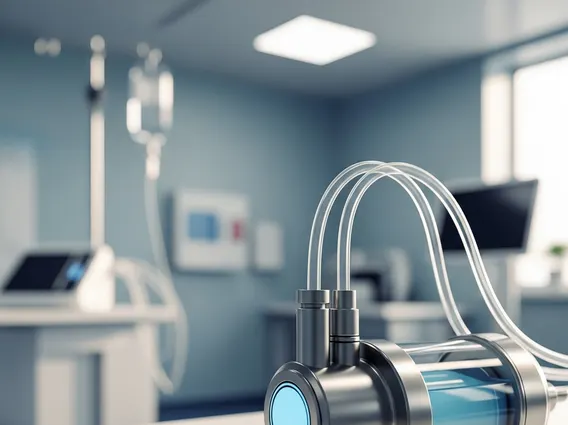
- Medical Devices: Catheters, tubing, surgical drains, and respiratory masks benefit from silicone’s flexibility, durability, and non-reactivity.
- Wound Care: Silicone dressings provide a moist healing environment, are non-adherent to wounds, and minimize trauma upon removal.
- Drug Delivery: Silicone matrices can be engineered for controlled release of medications, such as in contraceptive implants or ocular inserts.
- Surgical Tools: Components of surgical instruments and sterilization equipment often incorporate silicone for its heat resistance and ease of cleaning.
The versatility of silicone materials continues to drive innovation in medical technology, offering solutions that enhance patient care, improve surgical outcomes, and enable advanced therapeutic interventions.