
Signet Ring Cell Carcinoma
Signet Ring Cell Carcinoma is a rare and aggressive form of adenocarcinoma characterized by the distinctive appearance of its cells under a microscope. This cancer type can originate in various organs, most commonly the stomach, but also in the colon, breast, bladder, and other sites.
Key Takeaways
- Signet Ring Cell Carcinoma is a highly aggressive cancer identified by its unique “signet ring” shaped cells.
- It most frequently originates in the stomach but can affect other organs, often presenting with non-specific symptoms.
- The exact causes are not fully understood, but genetic and environmental factors are believed to play a role.
- Diagnosis typically involves biopsy and imaging, with treatment often requiring a multimodal approach due to its aggressive nature.
What is Signet Ring Cell Carcinoma?
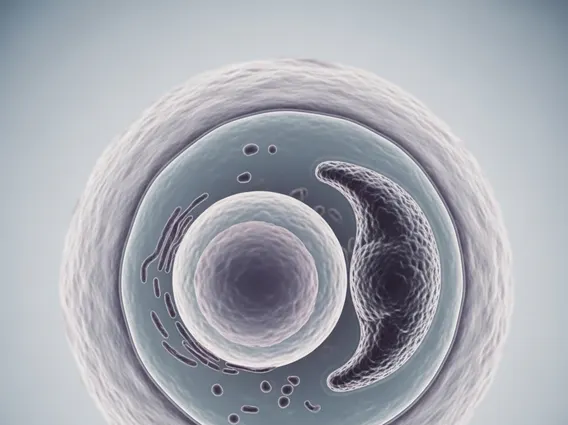
Signet Ring Cell Carcinoma refers to a distinct subtype of adenocarcinoma, a cancer that forms in glandular cells. Its name derives from the characteristic appearance of its cells, which contain a large vacuole of mucin that pushes the nucleus to the periphery, resembling a signet ring. This morphological feature is crucial for its pathological identification. This cancer is known for its aggressive behavior and tendency for early metastasis, making it particularly challenging to treat.
While relatively rare, Signet Ring Cell Carcinoma accounts for a notable proportion of certain cancers, particularly gastric cancer, where it can represent between 1% and 10% of cases, depending on the population studied and diagnostic criteria. Its prevalence varies by geographical region and is often associated with a poorer prognosis compared to other adenocarcinoma subtypes due to its diffuse growth pattern and propensity for peritoneal spread. (Source: Medical literature and oncology registries).
Causes and Symptoms of Signet Ring Cell Carcinoma
The exact causes of Signet Ring Cell Carcinoma are not fully understood, but they are believed to involve a combination of genetic mutations and environmental factors. For gastric Signet Ring Cell Carcinoma, risk factors may include a family history of gastric cancer, certain inherited genetic syndromes such as hereditary diffuse gastric cancer (HDGC) linked to CDH1 gene mutations, and chronic infections like Helicobacter pylori. Other factors, such as diet and lifestyle, may also contribute, though their specific roles are still under investigation.
The signet ring cell carcinoma symptoms are often non-specific and depend heavily on the primary site of the cancer. Because of their diffuse growth pattern, these tumors may not form a distinct mass until later stages, leading to delayed diagnosis. Common symptoms can include:
- Gastrointestinal (e.g., stomach, colon): Abdominal pain or discomfort, unexplained weight loss, nausea, vomiting, changes in bowel habits, or early satiety (feeling full quickly).
- Breast: A palpable lump, skin changes, or nipple discharge.
- General: Fatigue, loss of appetite, and in advanced stages, symptoms related to metastasis such as ascites (fluid accumulation in the abdomen) or jaundice.
Due to the non-specific nature of these symptoms, early detection can be challenging, often leading to diagnosis at more advanced stages when the cancer has already spread.
Diagnosing and Treating Signet Ring Cell Carcinoma
Diagnosing Signet Ring Cell Carcinoma typically involves a multi-pronged approach. Initial suspicion often arises from imaging studies such as CT scans, MRI, or PET scans, which can identify tumor locations and assess for metastasis. However, definitive diagnosis requires a biopsy, where tissue samples are taken from the suspected tumor site and examined under a microscope by a pathologist. The presence of the characteristic signet ring cells confirms the diagnosis. Endoscopy (for gastrointestinal sites) or mammography/ultrasound (for breast) are common procedures to obtain these biopsies.
The signet ring cell carcinoma treatment is complex and often aggressive, reflecting the challenging nature of the disease. Due to its propensity for early metastasis and diffuse growth, a multimodal approach is usually necessary. Treatment options may include:
- Surgery: If the cancer is localized and resectable, surgical removal of the tumor and surrounding affected tissue is often the primary treatment. However, complete surgical resection can be difficult due to the diffuse nature of the cancer.
- Chemotherapy: Systemic chemotherapy is frequently used, either before surgery (neoadjuvant) to shrink the tumor, after surgery (adjuvant) to eliminate remaining cancer cells, or as a primary treatment for advanced or metastatic disease.
- Radiation Therapy: While less commonly a primary treatment, radiation may be used in specific situations, such as for symptom management or to target localized areas of recurrence.
- Targeted Therapy and Immunotherapy: For some patients, newer therapies that target specific molecular pathways or boost the body’s immune response against cancer may be considered, particularly in cases where specific biomarkers are identified.
Given the aggressive nature of Signet Ring Cell Carcinoma, treatment plans are highly individualized, developed by a multidisciplinary team of oncologists, surgeons, and pathologists to provide the best possible outcome for each patient.



















