Prosthetist
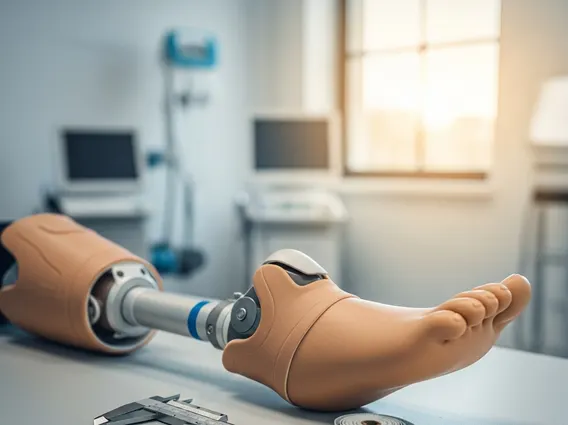
A prosthetist is a highly specialized healthcare professional dedicated to designing, fabricating, and fitting artificial limbs, known as prostheses. Their work significantly enhances the quality of life for individuals who have experienced limb loss.
Key Takeaways
- A prosthetist is a clinical expert who designs, fabricates, and fits custom-made artificial limbs (prostheses).
- Their role involves comprehensive patient care, from initial assessment and design to fitting, training, and ongoing adjustments.
- The typical prosthetist career path requirements include a bachelor’s degree, a master’s degree in orthotics and prosthetics, and a supervised clinical residency.
- Certification by the American Board for Certification in Orthotics, Prosthetics & Pedorthics (ABC) is often required for practice.
- The average prosthetist salary US varies based on experience, geographic location, and practice setting.
What is a Prosthetist?
A Prosthetist is a healthcare professional who specializes in the evaluation, measurement, design, fabrication, fitting, and modification of prostheses. These custom-made artificial limbs are designed to replace a missing body part, most commonly an arm or a leg, due to trauma, disease, or congenital conditions. The primary goal of a prosthetist is to restore function, mobility, and independence for individuals with limb loss, enabling them to engage in daily activities and improve their overall well-being.
This specialized field requires a deep understanding of human anatomy, biomechanics, materials science, and patient psychology. Prosthetists work closely with patients throughout their rehabilitation journey, ensuring that each prosthesis is tailored to the individual’s unique needs, lifestyle, and physical capabilities. They are integral members of a multidisciplinary healthcare team, collaborating with physicians, physical therapists, occupational therapists, and other specialists to provide comprehensive care.
What Does a Prosthetist Do? Career Path and Education
The role of a prosthetist is multifaceted, encompassing a range of clinical and technical responsibilities aimed at optimizing patient outcomes. They begin by conducting thorough patient assessments, which include evaluating the residual limb, understanding the patient’s medical history, functional goals, and lifestyle. Based on this assessment, they design a suitable prosthesis, selecting appropriate materials and components to ensure comfort, functionality, and durability. Fabrication often involves taking molds or scans of the residual limb, followed by the precise creation of the prosthetic socket and assembly of the entire device.
Once the prosthesis is fabricated, the prosthetist performs careful fitting and alignment, making necessary adjustments to achieve optimal comfort and function. They also provide crucial gait training and instruction on how to properly use and care for the prosthesis. Ongoing follow-up appointments are essential for monitoring the patient’s progress, making further adjustments as needed, and addressing any issues that may arise. The prosthetist career path requirements are rigorous, reflecting the complexity and importance of the profession.
To become a certified prosthetist, individuals typically follow a structured educational and training pathway:
- Bachelor’s Degree: A bachelor’s degree is usually the first step, often in a science-related field such as biology, engineering, or exercise science.
- Master’s Degree: The core of prosthetist education and training involves completing a Master of Science (MS) degree in Orthotics and Prosthetics from a program accredited by the Commission on Accreditation of Allied Health Education Programs (CAAHEP). These programs typically last two years.
- Clinical Residency: After completing the master’s program, a supervised clinical residency is required. This usually lasts 12-18 months and provides hands-on experience in patient care under the guidance of experienced certified professionals.
- Certification: Most prosthetists seek certification from the American Board for Certification in Orthotics, Prosthetics & Pedorthics (ABC). This involves passing comprehensive written and practical examinations.
- Licensure: Many states also require licensure to practice, which typically involves meeting educational, residency, and certification requirements.
Average Prosthetist Salary in the US
The average prosthetist salary US can vary significantly based on several factors, including years of experience, geographic location, type of employer, and the specific responsibilities of the role. According to the U.S. Bureau of Labor Statistics (BLS), the median annual wage for orthotists and prosthetists was approximately $78,510 in May 2022. However, this figure represents a national median, and individual salaries can fall above or below this range.
Entry-level prosthetists typically earn less, while those with extensive experience, specialized skills, or leadership roles may command higher salaries. Urban areas and regions with a higher demand for prosthetic services often offer more competitive compensation. The employment of orthotists and prosthetists is projected to grow 14 percent from 2022 to 2032, much faster than the average for all occupations, indicating a strong demand for these skilled professionals (U.S. Bureau of Labor Statistics, 2023).
Here’s a general overview of factors influencing salary:
| Factor | Impact on Salary |
|---|---|
| Experience | Entry-level salaries are lower; experienced professionals command higher wages. |
| Geographic Location | Salaries tend to be higher in metropolitan areas and regions with a higher cost of living or demand. |
| Employer Type | Salaries can vary between private practices, hospitals, rehabilitation centers, and academic institutions. |
| Specialization | Prosthetists specializing in complex cases or specific types of prostheses may earn more. |
| Education/Certification | Holding advanced degrees and ABC certification is essential and positively impacts earning potential. |