
Tendon
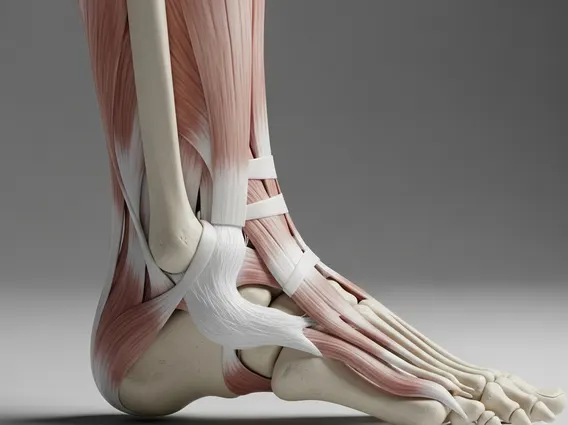
Tendons are vital components of the musculoskeletal system, acting as strong, fibrous connective tissues that play a crucial role in movement and stability. Understanding their structure, function, and common injuries is essential for maintaining overall physical health.
Key Takeaways
- Tendon is a robust connective tissue that links muscles to bones, enabling movement.
- They are primarily composed of collagen fibers, providing strength and flexibility.
- Tendons facilitate the transmission of force from muscles to bones, allowing for a wide range of motion.
- Common injuries include tendinitis (inflammation) and ruptures, often resulting from overuse or sudden trauma.
- Proper care, including rest and rehabilitation, is crucial for tendon health and recovery from injury.
What is a Tendon? Structure and Function
A Tendon is a strong, flexible band of fibrous connective tissue that connects muscle to bone. These remarkable structures are primarily composed of dense, parallel bundles of collagen fibers, giving them immense tensile strength while allowing for some elasticity. This unique composition enables tendons to withstand significant forces generated by muscle contractions.
The primary tendon function in human body is to transmit the mechanical force of muscle contraction to the bones, thereby facilitating movement. When a muscle contracts, the tendon pulls on the attached bone, causing it to move at a joint. Beyond facilitating movement, tendons also play a critical role in absorbing shock and stabilizing joints, protecting them from excessive stress during physical activities. Their intricate structure ensures efficient force transmission, which is fundamental to everyday activities, from walking and running to lifting and grasping.
Types of Tendons and Their Locations
The human body contains numerous types of tendons, each uniquely adapted to its specific location and function. These variations in size, shape, and strength reflect the diverse demands placed upon them throughout the body. Understanding the different types of tendons and their locations helps in identifying potential areas of vulnerability to injury.
Some prominent examples of tendons and their anatomical placements include:
- Achilles Tendon: Located at the back of the ankle, connecting the calf muscles (gastrocnemius and soleus) to the heel bone (calcaneus). It is the largest tendon in the body and crucial for walking, running, and jumping.
- Rotator Cuff Tendons: A group of four tendons (supraspinatus, infraspinatus, teres minor, and subscapularis) surrounding the shoulder joint. They connect the rotator cuff muscles to the humerus (upper arm bone), enabling shoulder rotation and lifting.
- Patellar Tendon: Situated below the kneecap (patella), connecting the patella to the tibia (shin bone). It works with the quadriceps muscle to extend the knee.
- Flexor and Extensor Tendons: Found extensively in the hands and feet, these tendons control the bending (flexion) and straightening (extension) of fingers, toes, and wrists. For example, flexor tendons in the forearm allow gripping, while extensor tendons allow straightening the fingers.
Common Tendon Injuries Explained
Tendons, despite their strength, are susceptible to various injuries, often due to overuse, sudden trauma, or degenerative changes. Understanding common tendon injuries explained can help in prevention and early intervention. According to a study published in the Journal of Orthopaedic & Sports Physical Therapy, tendinopathy, a broad term encompassing tendon pain and pathology, is a prevalent issue, particularly in athletes and individuals engaged in repetitive activities.
The most frequent tendon injuries include:
| Injury Type | Description | Common Causes |
|---|---|---|
| Tendinitis/Tendinopathy | Inflammation or degeneration of a tendon, causing pain, swelling, and impaired function. | Repetitive strain, overuse, sudden increase in activity, improper technique. |
| Tendon Rupture | A complete or partial tear of the tendon, often resulting in severe pain, swelling, and loss of function. | Sudden, forceful contraction of the muscle against resistance, direct trauma, or pre-existing tendinopathy. |
| Tendon Strain | A stretch or partial tear of muscle fibers and their associated tendon, typically less severe than a rupture. | Overstretching, sudden movements, inadequate warm-up before physical activity. |
Treatment for tendon injuries varies depending on the severity but often involves rest, ice, compression, elevation (RICE), pain management, physical therapy, and in severe cases like complete ruptures, surgical repair. Early diagnosis and appropriate management are crucial for optimal recovery and preventing long-term complications.



















