
Endoluminal Laser Therapy
Endoluminal Laser Therapy is a sophisticated medical procedure that utilizes focused laser energy delivered inside body lumens or cavities to treat various conditions. This minimally invasive approach offers precise targeting and numerous benefits for patients.
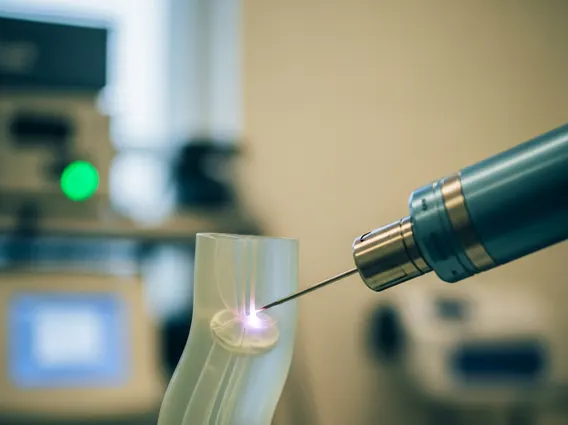
Key Takeaways
- Endoluminal Laser Therapy is a minimally invasive medical procedure using laser energy delivered via a thin fiber into internal body passages.
- It works by precisely targeting and ablating or coagulating diseased tissue with controlled thermal energy.
- The therapy is guided by imaging or endoscopy, ensuring accuracy and minimizing damage to surrounding healthy tissue.
- Common applications include treating varicose veins, benign prostatic hyperplasia, and certain gastrointestinal conditions.
- Benefits often include reduced pain, faster recovery times, and fewer complications compared to traditional open surgeries.
What is Endoluminal Laser Therapy?
Endoluminal Laser Therapy refers to a medical procedure that employs laser energy delivered directly into the lumen (the inner space of a tubular structure) of an organ or vessel. This innovative technique is characterized by its minimally invasive nature, allowing clinicians to treat various conditions without large incisions. The term “endoluminal” signifies “within a lumen,” highlighting the internal delivery method, while “laser therapy” denotes the use of highly focused light to achieve a therapeutic effect.
The core principle behind endoluminal laser therapy explanation is the precise application of thermal energy. A thin, flexible fiber optic cable, which carries the laser light, is inserted into the body through a natural opening or a small puncture. This allows for targeted treatment of diseased tissue, such as abnormal growths or occlusions, while preserving surrounding healthy structures. This precision is a key advantage, contributing to improved patient outcomes and reduced recovery periods.
How Endoluminal Laser Therapy Works
The mechanism of action for Endoluminal Laser Therapy involves the controlled delivery of laser light, which is absorbed by the target tissue. This absorption converts light energy into heat, leading to specific therapeutic effects such as ablation (vaporization of tissue), coagulation (sealing of blood vessels), or photothermolysis (selective destruction of target cells). The choice of laser wavelength and power settings is carefully calibrated based on the tissue type and the desired clinical outcome.
During the procedure, the laser fiber is typically guided to the treatment site using an endoscope or advanced imaging techniques like ultrasound or fluoroscopy. This real-time visualization ensures accurate placement of the fiber and precise application of the laser energy. For instance, in treating varicose veins, the laser fiber is threaded into the affected vein, and as it is slowly withdrawn, the laser energy heats and seals the vein, causing it to collapse and eventually be reabsorbed by the body. This targeted approach minimizes damage to adjacent tissues and reduces the risk of complications.
Applications and Benefits of Endoluminal Laser Treatment
Endoluminal Laser Therapy has a wide range of applications across various medical specialties due to its effectiveness and minimally invasive profile. This versatile treatment is commonly used for conditions affecting the vascular system, gastrointestinal tract, and urogenital system. For example, it is a primary treatment for varicose veins, offering an effective alternative to traditional surgical stripping. It is also utilized in the management of benign prostatic hyperplasia (BPH) to reduce prostate size and alleviate urinary symptoms, and for certain gastrointestinal lesions.
The benefits of Endoluminal laser treatment information highlight its appeal for both patients and clinicians. These advantages often include:
- Minimally Invasive: Procedures typically involve small punctures or natural orifices, leading to less pain and scarring.
- Reduced Recovery Time: Patients often experience quicker recovery and can return to normal activities sooner compared to open surgery.
- High Precision: Laser energy can be precisely directed to target tissue, minimizing damage to surrounding healthy areas.
- Lower Risk of Complications: The reduced invasiveness generally translates to a lower incidence of infection, bleeding, and other surgical risks.
- Outpatient Potential: Many endoluminal laser procedures can be performed on an outpatient basis, enhancing convenience and reducing healthcare costs.
According to a report by the World Health Organization (WHO), minimally invasive procedures, including various laser therapies, have significantly contributed to improved patient outcomes and reduced hospital stays globally, reflecting a broader trend towards less invasive medical interventions.



















